
Free WHS Inspection (Concrete Plant) Template
Download our free WHS Inspection (Concrete Plant) Template to streamline your safety checks.
Free WHS Inspection (Concrete Plant) Template
DOCX • 128 KB + PDF
Updated Oct 2026
No signup required
Purpose of the Free WHS Inspection (Concrete Plant) Template
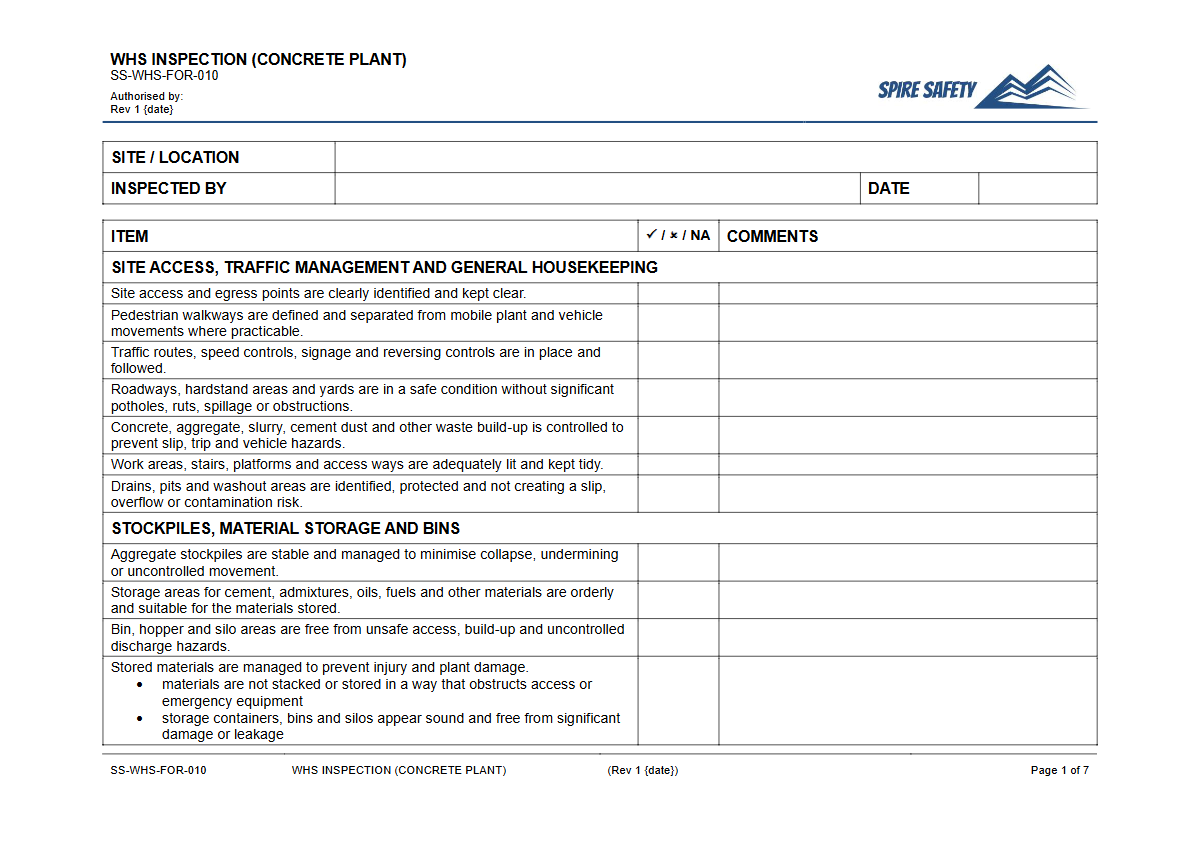
This free WHS Inspection (Concrete Plant) Template provides a structured starting point for conducting thorough safety inspections of concrete batching plants. Its primary purpose is to help your organisation systematically identify, assess, and control hazards specific to this high-risk environment.
Regular inspections are a fundamental part of managing health and safety, helping to prevent incidents before they occur. The template prompts checks on key areas such as machinery guarding, vehicle movement, silo safety, electrical systems, and exposure to hazardous substances like cement dust (silica) and chemical admixtures.
Using a standardised checklist ensures that inspections are consistent and comprehensive, regardless of who performs them. It creates a formal record of your safety diligence, which is essential for demonstrating compliance and continuous improvement.
This process helps maintain the safe operation of plant and equipment, confirms that control measures are effective, and verifies that workers are competent and following safe work procedures. A well-documented inspection can also be used to confirm operator competency, complementing formal assessments like a Verification of Competency for stationary concrete pumps.
Video walkthrough
How to use the Free WHS Inspection (Concrete Plant) Template
Begin by downloading the template in your preferred format, either DOCX for easy editing or PDF for straightforward printing. The document is designed as a comprehensive framework, covering common hazards and checkpoints found in typical Australian concrete plants.
Before use, it is crucial that you review and adapt the contents to align with the specific machinery, layout, materials, and work procedures at your site.
To conduct the inspection, the designated person (e.g., a Plant Manager or WHS Officer) should walk through the site, systematically completing each section of the checklist. For each item, they should observe the condition, check for defects or non-compliance, and record their findings.
The template includes space to note any identified hazards, assess the associated risk level, and outline the corrective actions required. These actions should be assigned to a specific person with a clear deadline for completion to ensure accountability.
Important: It is crucial to customise this template to your specific site, plant, equipment, and processes. We've provided a solid framework aligned with Australian WHS principles, but you must adapt it to reflect your actual operational risks and control measures.
When to use this Inspection Template
Formal plant inspections should be conducted on a regular, scheduled basis. The frequency will depend on factors such as the age and condition of the plant, the intensity of its use, and the level of risk involved.
A common schedule is monthly or quarterly. Additionally, this inspection template should be used in specific circumstances, including:
- After the installation of new machinery or a change in plant layout.
- Following significant repair or maintenance work.
- After an incident, accident, or near miss has occurred.
- Before commissioning second-hand plant or equipment.
- When concerns are raised by workers, supervisors, or health and safety representatives.
Integrating these inspections into your safety calendar is a key component of proactive risk management. It goes beyond daily pre-start checks and forms part of a broader safety assurance program, which may also involve formal WHS compliance auditing to verify the effectiveness of your overall system.
Who should use this Inspection Template
This template is designed for use by personnel with the authority, competence, and responsibility for workplace health and safety. This typically includes:
- Plant Managers and Site Supervisors: They hold primary responsibility for the day-to-day safety of the operation and its workers.
- WHS/HSE Officers and Advisors: These professionals are tasked with implementing and monitoring the organisation's safety management system.
- Maintenance Managers and Engineers: Their input is vital for assessing the mechanical and electrical integrity of the plant.
- Health and Safety Representatives (HSRs): As worker representatives, HSRs can use the template to conduct inspections as part of their functions under WHS legislation.
Effective inspections often involve consultation with the workers who operate the equipment daily. Their direct experience is invaluable for identifying subtle hazards or developing practical control measures.
This collaborative approach fosters a positive safety culture and ensures the entire team is engaged in maintaining a safe work environment. This is just one of many tools available in our free WHS resources library to support your team.
While this template focuses on the fixed plant, separate risk management processes are needed for mobile plant on site. For example, you may need a specific Skidsteer Bobcat Risk Assessment Template to manage the risks associated with its operation in and around the batching plant.
A well-implemented inspection program is a cornerstone of effective safety management. It provides the data needed to make informed decisions, prioritise resources, and build a workplace that is safe and productive.
This proactive approach is a core element of all robust WHS management systems, demonstrating a clear commitment to worker wellbeing and regulatory alignment.
Common mistakes
Common mistakes to avoid
- Failing to customise the template to the specific plant, equipment, and materials used on site.
- Conducting 'pencil-whip' inspections where boxes are ticked without physically verifying the item.
- Not assigning clear responsibility and deadlines for corrective actions identified during the inspection.
- Neglecting to close out actions and verify that controls have been effectively implemented.
Legal references
Legal considerations
The following legal requirements may be relevant to this type of work.
- Work Health and Safety Act (Harmonised) — Provides the primary duties for protecting workers and other people from work health and safety risks.
- Work Health and Safety Regulations (Harmonised) — Sets out requirements supporting the management of workplace hazards and risks.
The following codes may be relevant to this type of work.
- Managing WHS Risks Code of Practice — Provides practical guidance on identifying hazards, assessing risks and applying effective controls.
- Work Health and Safety Consultation, Cooperation and Coordination Code of Practice — Provides practical guidance on consulting workers and coordinating with other duty holders.
- Managing the Work Environment and Facilities Code of Practice — Provides practical guidance on safe work environments, workplace facilities and related controls.
Did you know
Silica Dust Hazard
Cement can contain up to 5% respirable crystalline silica. Uncontrolled exposure to this dust during batching can lead to silicosis, a serious and irreversible lung disease.
Machine Guarding
The Australian Work Health and Safety Strategy has identified machinery and equipment-related incidents as a persistent cause of workplace fatalities and serious injuries, making effective guarding on conveyors and mixers a critical control.
FAQ
Frequently asked questions
01What are the main hazards to look for in a concrete plant inspection?
02How often should a concrete plant be formally inspected?
03What is the difference between a pre-start check and a plant inspection?
04Can I use this template for mobile concrete mixers or pumps?
Share this resource
Free WHS Inspection (Concrete Plant) Template
Browse Categories
How To Use It
- 1Download and open in Word or PDF.
- 2Replace the placeholders with your business details.
- 3Get it reviewed by a WHS specialist before rollout.
Need it customised?
Our WHS consultants can adapt this template to your site, run a gap analysis, or audit what you already have in place.
Book a Free Consultation WHS consulting servicesor call 1300 156 382