
Free WHS Inspection (Convention Centre) Template
Manage safety in your large-scale venue with our structured WHS Inspection Template for convention centres. Identify and control risks. Download today.
Free WHS Inspection (Convention Centre) Template
DOCX • 129 KB + PDF
Updated Oct 2026
No signup required
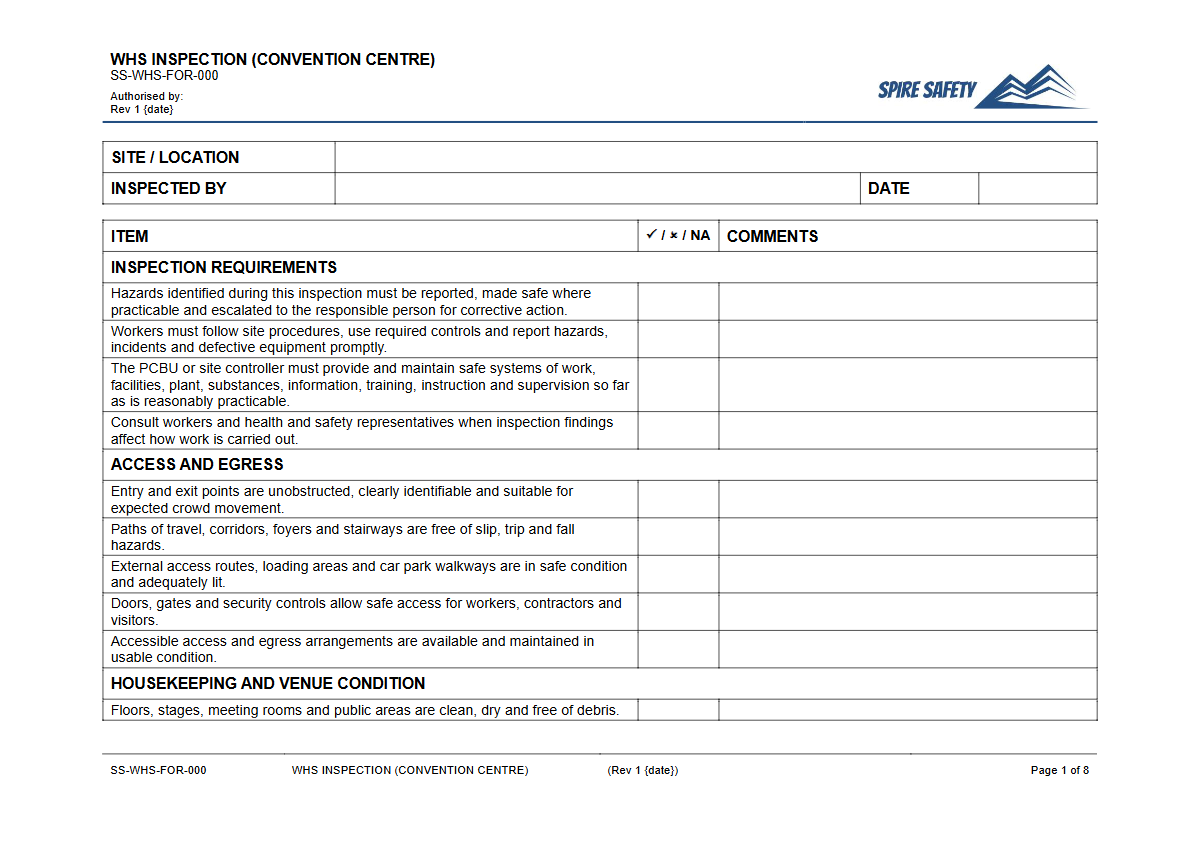
Purpose of the Free WHS Inspection (Convention Centre) Template
A proactive approach to safety is essential in the dynamic environment of a convention centre. Our Free WHS Inspection (Convention Centre) Template provides a structured starting point for systematically identifying and managing hazards across your venue.
This document helps formalise your safety walks and checks, covering everything from public areas and exhibition halls to back-of-house operations, loading docks, and kitchen facilities. Using this template helps your organisation demonstrate due diligence, promote a positive safety culture, and ensure the venue remains safe for staff, contractors, and visitors alike.
The inspection checklist prompts a thorough review of common risk areas unique to large, multi-purpose venues. These include pedestrian and vehicle interaction, electrical safety for exhibitions, fire and emergency preparedness, public liability risks like slips and trips, security, and manual handling during event setup and teardown.
Regular, documented inspections are a cornerstone of effective WHS management systems, providing critical data for risk assessment and continuous improvement.
Video walkthrough
How to use the Free WHS Inspection (Convention Centre) Template
This template is designed to be a comprehensive but adaptable tool for your safety program. It covers key areas such as general access and egress, exhibition halls, meeting rooms, amenities, loading docks, and external grounds. Follow these steps to integrate it into your operations:
- Download: Get the template in your preferred format (DOCX for editing or PDF for printing).
- Customise: Adapt the checklist to include specific areas, plant, and equipment unique to your convention centre. Add or remove sections to match your operational footprint.
- Conduct the Inspection: Walk through the site, either individually or with your safety committee, and systematically complete each section of the checklist. Record any non-conformances, hazards, or opportunities for improvement.
- Document and Assign Actions: Clearly document all findings. For each issue identified, assign a corrective action to a specific person and set a realistic completion deadline.
- Review and Close Out: Follow up on all assigned actions to ensure they are completed effectively. File the completed inspection report as part of your WHS records.
Crucially, this document is a template, not a finished product. You must customise this Inspection checklist to reflect the specific layout, equipment, and operational activities of your own convention centre. We cannot guarantee it covers every risk unique to your site.
When to use the Inspection Template
Regularity is key to maintaining a safe venue. This inspection should be conducted at scheduled intervals as part of your overall safety management plan. Consider using it:
- Quarterly or Bi-Annually: As part of a comprehensive, regularly scheduled venue safety review.
- Pre-Event: Before large or complex exhibitions, conferences, or public events to ensure the space is prepared and safe for the incoming event organiser, contractors, and attendees.
- Post-Incident: Following any significant incident or near-miss to identify underlying system failures or previously unrecognised hazards.
- After Major Works: Following any significant changes to the venue's layout, infrastructure, or key equipment.
The findings from these inspections provide valuable evidence and focus points for more in-depth WHS compliance auditing activities.
Who should use this Inspection Template
This template is valuable for any personnel with responsibility for health and safety within a convention centre or large-scale event venue. Key users include:
- Venue Managers and Operations Managers: For overall oversight and accountability for site safety.
- WHS/OHS Officers and Advisors: As their primary tool for conducting formal workplace inspections.
- Facility Managers: To ensure the building, grounds, and integrated services are maintained in a safe condition. Facility teams can also integrate more specific checklists, such as our Free Pre-Start Checklist (Boom Gate) Template, into their maintenance routines.
- Health and Safety Committee Members: To facilitate collaborative inspections and engage workers in the safety process.
Event setup crews and technical teams can use sections of the inspection to verify their work areas. For example, rigging and logistics teams must manage risks associated with lifting equipment, a process that can be supported with our Free Pre-Start Checklist (Electric Hoist) Template.
Likewise, catering and hospitality teams must manage the safety of commercial kitchen equipment. Their daily checks can be formalised using specific tools like our Free Pre-Start Checklist (Blender) Template for kitchen appliances.
By exploring our extensive free WHS resources library, you can find a wide range of documents to support all facets of your safety management system.
Common mistakes
Common mistakes to avoid
- Failing to adequately induct and monitor contractors working on site.
- Neglecting 'back-of-house' areas like kitchens, storage rooms, and plant rooms during inspections.
- Poor record-keeping, making it difficult to track corrective actions or demonstrate due diligence.
- Not reviewing or updating the inspection checklist after the venue undergoes changes.
Legal references
Legal considerations
The following legal requirements may be relevant to this type of work.
- Work Health and Safety Act (Harmonised) — Provides the primary duties for protecting workers and other people from work health and safety risks.
- Work Health and Safety Regulations (Harmonised) — Sets out requirements supporting the management of workplace hazards and risks.
The following codes may be relevant to this type of work.
- Managing WHS Risks Code of Practice — Provides practical guidance on identifying hazards, assessing risks and applying effective controls.
- Work Health and Safety Consultation, Cooperation and Coordination Code of Practice — Provides practical guidance on consulting workers and coordinating with other duty holders.
- Managing the Work Environment and Facilities Code of Practice — Provides practical guidance on safe work environments, workplace facilities and related controls.
Did you know
Hidden Workforce
For every major conference or exhibition, the number of 'unseen' workers—including caterers, cleaners, security, and technicians—can often be double or triple the number of the event organiser's direct staff.
Temporary Structures
Temporary structures like stages, exhibition booths, and large-scale AV installations are a significant source of risk in convention centres. Engineering sign-offs and diligent inspections are critical to prevent collapses and other incidents.
FAQ
Frequently asked questions
01What specific hazards should a convention centre WHS inspection cover?
02How often should we conduct a full WHS inspection in a convention centre?
03Who is responsible for actioning items found during an inspection?
04Is this template suitable for small event venues as well?
Share this resource
Free WHS Inspection (Convention Centre) Template
Browse Categories
How To Use It
- 1Download and open in Word or PDF.
- 2Replace the placeholders with your business details.
- 3Get it reviewed by a WHS specialist before rollout.
Need it customised?
Our WHS consultants can adapt this template to your site, run a gap analysis, or audit what you already have in place.
Book a Free Consultation WHS consulting servicesor call 1300 156 382