
Free Pre-Start Checklist (Electric Hoist) Template
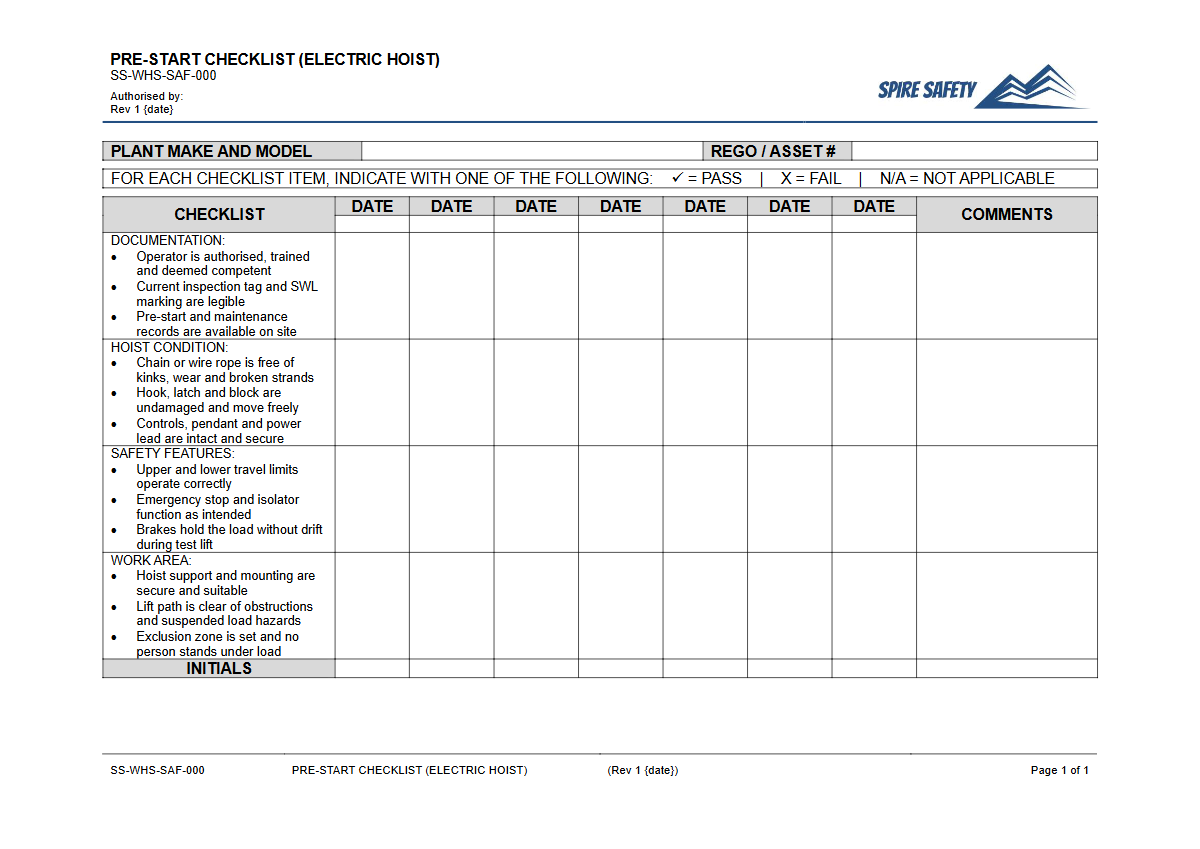
Download our Free Pre-Start Checklist (Electric Hoist) Template in DOCX & PDF. A structured starting point for formalising daily equipment safety inspections.
Free Pre-Start Checklist (Electric Hoist) Template
DOCX • 125 KB + PDF
Updated Oct 2026
No signup required
Purpose of the Free Pre-Start Checklist (Electric Hoist) Template
Regularly inspecting high-risk plant is a fundamental requirement of workplace safety in Australia. This Free Pre-Start Checklist (Electric Hoist) Template provides a structured framework to guide operators through essential safety and operational checks before using the equipment.
Using a checklist helps to formalise and document the inspection process, ensuring that no critical steps are missed. Consistent pre-start inspections are vital for identifying potential faults, mechanical wear, or electrical issues before they can lead to equipment failure, property damage, or serious injury.
By identifying and addressing defects early, organisations can prevent incidents, reduce costly downtime, and demonstrate a proactive approach to risk management.
Integrating these checks into a daily routine is a key component of a robust safety framework. It helps fulfil the duty of care for Persons Conducting a Business or Undertaking (PCBUs) by ensuring plant is safe to use.
A documented system of checks forms part of the evidence that proactive safety measures are in place. Proper implementation of daily equipment checks is a core part of effective WHS management systems, providing a clear record of equipment condition and operator diligence.
Video walkthrough
How to use the Free Pre-Start Checklist (Electric Hoist) Template
This template is provided as a comprehensive starting point in both DOCX and PDF formats. To implement it effectively, the first step is to download the document and adapt it to your specific operational needs.
This involves reviewing the checklist items and adding or removing checks to match the make, model, and configuration of the electric hoists used in your workplace. It's also important to consider the operating environment and the types of loads being lifted, as these factors may introduce unique risks that require specific inspection points.
Once customised, the checklist should be integrated into your standard operating procedures. This involves training all authorised operators on how to properly complete the checklist, what each check entails, and the correct procedure for reporting and tagging out faulty equipment.
You can reinforce these principles with our Pre-Start Checks and Plant Maintenance Toolbox Talk Template. The completed checklists should be retained as a record of due diligence, forming an important part of your plant maintenance and safety documentation.
Important Note: This document is a template only. We provide it as a starting point that you must customise to the specific equipment, hazards, and operational context of your workplace.
Generic documents are not a substitute for a site-specific risk assessment process.
When to use the Electric Hoist Pre-Start Checklist
The pre-start checklist for an electric hoist should be completed before the first use on every shift. If the hoist is used intermittently throughout the day by different operators, it is good practice for each new operator to conduct their own pre-start inspection to verify the equipment's condition.
This frequency ensures that any damage or defects that may have occurred during previous use, or between shifts, are identified before the equipment is put back into service. It creates a clear line of accountability and ensures the operator is confident in the safety of the hoist before commencing a lift.
The checklist should also be used after any maintenance or repair work has been performed on the hoist to verify that it has been returned to a safe operational state. A formal check is also recommended if the hoist has been subjected to an unusual event, such as a shock load, collision, or suspected overload, even if no visible damage is apparent. Beyond daily checks, it's also crucial to ensure workers have the proven skills to operate the machine, which can be documented using a specific assessment like our Verification of Competency (Electric Hoist or Chain Block) Template.
Who should use this checklist
The primary user of this pre-start checklist is the trained and authorised operator of the electric hoist. These individuals are best placed to conduct the inspection, as they are most familiar with the equipment's normal operating look, sound, and feel.
Empowering operators with the responsibility for pre-start checks fosters a strong safety culture and reinforces their role in maintaining a safe work environment for themselves and their colleagues. While operators perform the check, it is the supervisor's or manager's responsibility to ensure the checks are being completed correctly and consistently.
Supervisors and WHS personnel should periodically review completed checklists to identify recurring faults or patterns of wear, which may indicate a need for a review of maintenance schedules or operating procedures. These records are essential documents that can be reviewed during formal safety reviews.
Regular WHS compliance auditing will often involve scrutinising such records to verify that systematic plant inspection processes are being followed as required by WHS regulations. The principle of operator checks applies to various types of equipment, such as that covered in our Verification of Competency (Pallet Jack (Electric)) Template.
For complex lifting operations or if you require assistance in developing a comprehensive plant safety program, specialist advice may be beneficial. Expert consultants can help integrate procedures like pre-start checks into your broader safety framework.
If you need help tailoring this resource or implementing broader safety systems, consider engaging with our WHS consulting team for tailored support.
Common mistakes
Common mistakes to avoid
- Skipping checks on the load chain, looking only at the hook and pendant.
- Failing to test the travel and hoist limit switches before the first lift.
- Ignoring minor issues like twisted chains or frayed pendant cables, which can indicate more serious underlying problems.
- Treating the checklist as a 'tick and flick' exercise without physically inspecting the components.
Legal references
Legal considerations
The following legal requirements may be relevant to this type of work.
- Work Health and Safety Act (Harmonised) — Provides the primary duties for protecting workers and other people from work health and safety risks.
- Work Health and Safety Regulations (Harmonised) — Sets out requirements supporting the management of workplace hazards and risks.
The following codes may be relevant to this type of work.
- Managing WHS Risks Code of Practice — Provides practical guidance on identifying hazards, assessing risks and applying effective controls.
- Work Health and Safety Consultation, Cooperation and Coordination Code of Practice — Provides practical guidance on consulting workers and coordinating with other duty holders.
- Managing the Work Environment and Facilities Code of Practice — Provides practical guidance on safe work environments, workplace facilities and related controls.
Did you know
Chain Reaction
According to Safe Work Australia, being hit by moving objects is a leading cause of injury. A significant portion of these incidents involve failures of lifting equipment like hoists, often due to inadequate inspection and maintenance.
Load Limits Aren't Suggestions
Overloading is a primary cause of hoist failure. The rated capacity, or Working Load Limit (WLL), is the maximum load the hoist can safely lift, and it must never be exceeded.
FAQ
Frequently asked questions
01What is the difference between an electric hoist and a chain block?
02What should I do if I find a defect during an electric hoist pre-start check?
03How often does an electric hoist need a full inspection by a competent person?
04Are pre-start checklist records legally required in Australia?
Share this resource
Free Pre-Start Checklist (Electric Hoist) Template
Browse Categories
How To Use It
- 1Download and open in Word or PDF.
- 2Replace the placeholders with your business details.
- 3Get it reviewed by a WHS specialist before rollout.
Need it customised?
Our WHS consultants can adapt this template to your site, run a gap analysis, or audit what you already have in place.
Book a Free Consultation WHS consulting servicesor call 1300 156 382