
Verification of Competency (Pallet Jack (Electric)) Template
Download our free Verification of Competency (Pallet Jack (Electric)) Template. Assess and document operator skills to confirm safe operation.
Verification of Competency (Pallet Jack (Electric)) Template
DOCX • 138 KB + PDF
Updated Oct 2026
No signup required
Purpose of the Verification of Competency (Pallet Jack (Electric)) Template
This free WHS resource provides a structured framework for conducting a Verification of Competency (VOC) for operators of electric pallet jacks. In Australian workplaces, ensuring that workers operating plant and equipment are competent is a critical aspect of managing work health and safety.
The template assists organisations in systematically assessing an individual's knowledge and practical skills required to safely operate an electric pallet jack, helping to minimise risks associated with its use.
A VOC is more than just a tick-box exercise; it's a proactive measure to confirm ongoing competency, especially after new equipment is introduced, changes to work processes occur, or following an incident. This template supports a robust process for verifying that operators can identify hazards, apply control measures, and operate the machinery in line with manufacturer specifications and safe work procedures.
Video walkthrough
How to use the Verification of Competency (Pallet Jack (Electric)) Template
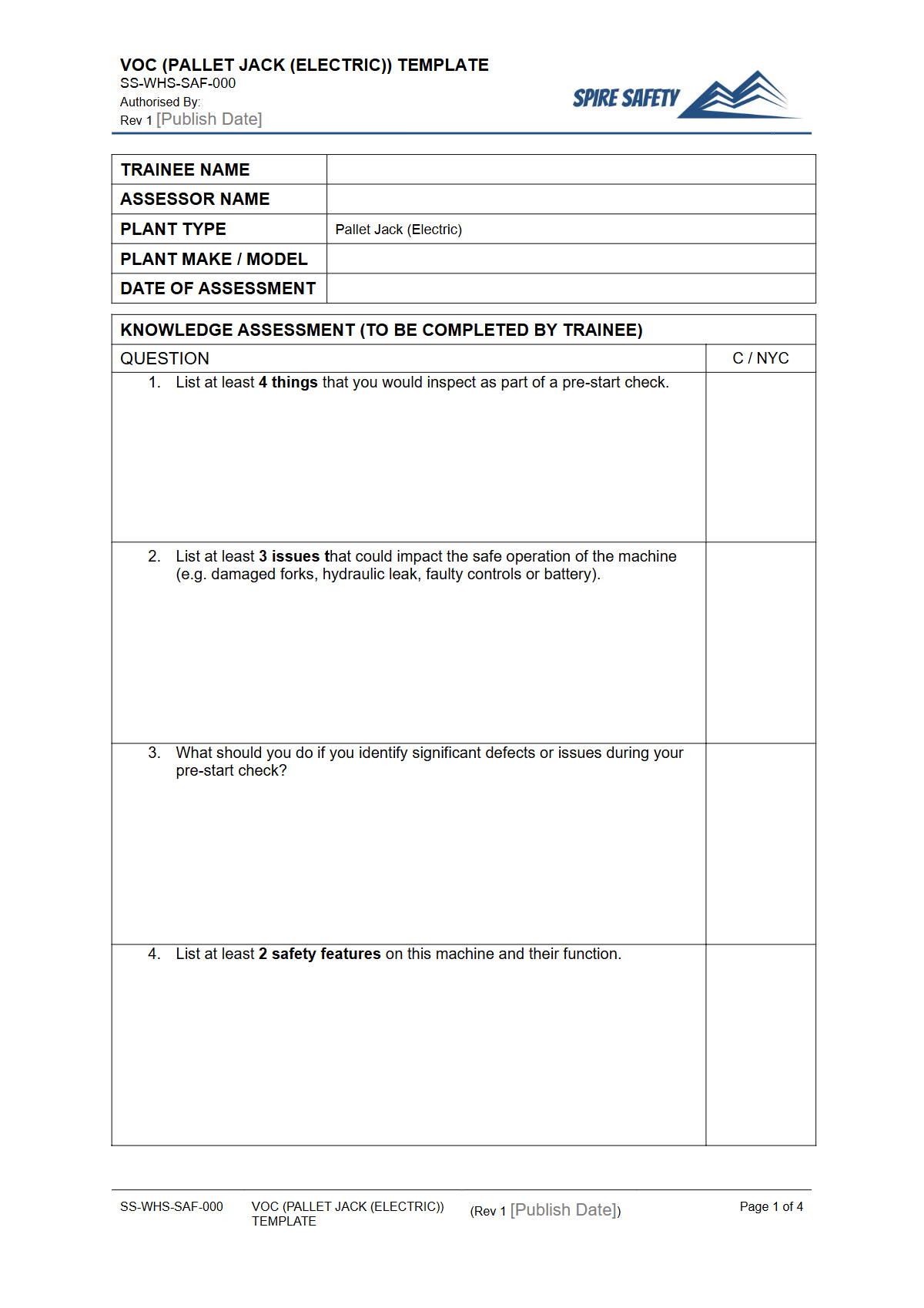
Our Verification of Competency (Pallet Jack (Electric)) Template is designed for ease of use in your workplace. It comes in both DOCX and PDF formats, allowing you to either print and complete it manually or adapt the Word document for digital use.
The template includes sections for recording operator details, assessor information, competency criteria, and assessment outcomes. You'll find areas to document an operator's understanding of pre-operational checks, safe operating procedures, load handling, battery management, and emergency protocols specific to electric pallet jacks.
When utilising this template, it is crucial that it is customised to your specific workplace environment, the exact model of electric pallet jack in use, and the unique tasks undertaken. Consider your organisation's WHS management systems and existing safe work procedures when adapting the content.
This means adding or modifying elements to reflect site-specific hazards, control measures, and any particular operational requirements. Successful implementation of a VOC process relies on a competent assessor who is familiar with the equipment and relevant WHS requirements. For other plant, consider our Grader VOC template or Scissor Lift VOC template.
When to use it
A Verification of Competency for an electric pallet jack operator should be undertaken in several key situations. It's essential when a worker is new to operating this type of plant, even if they hold a relevant licence or certification.
Regular VOCs are also recommended as part of ongoing competency management, particularly where there have been changes in equipment, tasks, or work environment. Following an incident or near-miss involving an electric pallet jack, a VOC can help determine if competency gaps contributed to the event.
Furthermore, if there are concerns about an operator's safe work practices, a targeted VOC can address these issues proactively. Implementing a structured VOC program is a vital component of effective WHS compliance auditing.
Who should use it
This template is invaluable for a range of WHS professionals and managers. Workplace supervisors, WHS officers, training managers, and assessors who are responsible for ensuring operator competency in the use of electric pallet jacks will find this resource highly beneficial.
Any organisation that uses powered mobile plant requires robust processes for verifying and documenting operator skills. Individuals tasked with developing or reviewing WHS procedures will also find the template a useful reference point for structuring competency assessments, ensuring alignment with Australian WHS practices.
Common mistakes
Common mistakes to avoid
- Not customising the VOC template to suit the specific workplace and equipment.
- Using an unqualified or inexperienced person to conduct the competency assessment.
- Failing to conduct VOCs regularly or after significant workplace changes.
- Treating the VOC as a 'one-off' event rather than part of an ongoing competency management strategy.
Legal references
Legal considerations
The following legal requirements may be relevant to this type of work.
- Work Health and Safety Act (Harmonised) — Provides the primary duties for protecting workers and other people from work health and safety risks.
- Work Health and Safety Regulations (Harmonised) — Sets out requirements supporting the management of workplace hazards and risks.
The following codes may be relevant to this type of work.
- Managing WHS Risks Code of Practice — Provides practical guidance on identifying hazards, assessing risks and applying effective controls.
- Work Health and Safety Consultation, Cooperation and Coordination Code of Practice — Provides practical guidance on consulting workers and coordinating with other duty holders.
- Managing the Work Environment and Facilities Code of Practice — Provides practical guidance on safe work environments, workplace facilities and related controls.
Did you know
Pallet Jack Accidents
WorkSafe Victoria statistics indicate incidents involving powered hand pallet trucks have resulted in workers sustaining fractures, lacerations, and crushing injuries, primarily when operators are struck, crushed by loads, or fall from the equipment.
Safe Plant Operation
According to Safe Work Australia, inadequate training and supervision are significant contributing factors in incidents involving plant, underscoring the importance of verifying operator competency.
FAQ
Frequently asked questions
01What is a Verification of Competency (VOC) for an electric pallet jack?
02Why is a VOC important for electric pallet jack operators?
03Does a VOC replace a licence or formal training for operating an electric pallet jack?
04How often should an electric pallet jack operator undergo a VOC?
Share this resource
Verification of Competency (Pallet Jack (Electric)) Template
Browse Categories
How To Use It
- 1Download and open in Word or PDF.
- 2Replace the placeholders with your business details.
- 3Get it reviewed by a WHS specialist before rollout.
Need it customised?
Our WHS consultants can adapt this template to your site, run a gap analysis, or audit what you already have in place.
Book a Free Consultation WHS consulting servicesor call 1300 156 382