
Free WHS Inspection (Cattle Yard) Template
Download our Free WHS Inspection (Cattle Yard) Template to formalise safety checks for gates, fences, and animal handling areas. Get your DOCX & PDF.
Free WHS Inspection (Cattle Yard) Template
DOCX • 129 KB + PDF
Updated Oct 2026
No signup required
Purpose of the Free WHS Inspection (Cattle Yard) Template
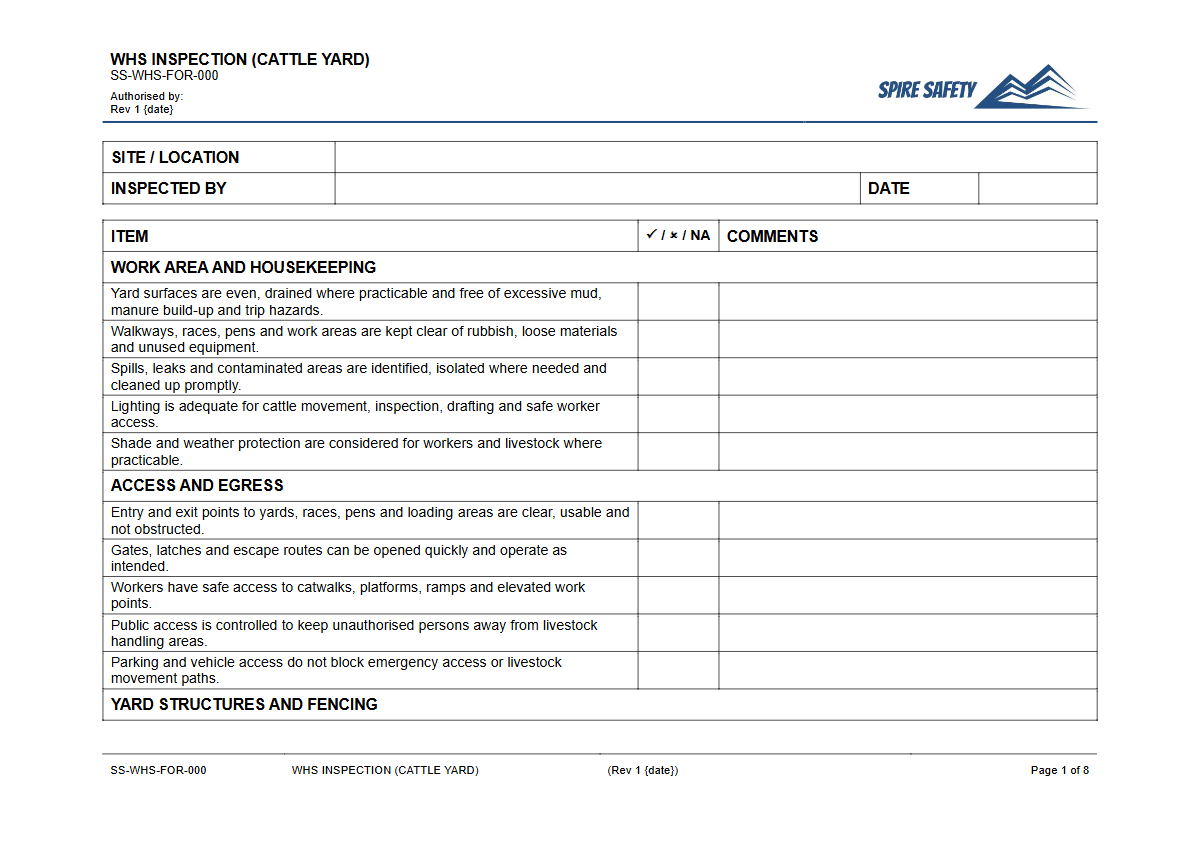
Working with livestock presents significant safety risks, from crush injuries to slips and falls. This Free WHS Inspection (Cattle Yard) Template provides a structured starting point for agricultural businesses to formalise their safety checks and manage these risks effectively.
Regularly inspecting the physical environment where cattle are handled is a critical component of any farm safety program. This template is designed to guide you through a systematic examination of key components in a cattle yard, including gates, latches, races, forcing yards, crushes, and flooring surfaces.
Using this Inspection checklist helps your organisation identify potential hazards before they cause an incident, schedule preventative maintenance, and create a documented record of your safety efforts. Documented inspections are an essential part of demonstrating due diligence and are a cornerstone of effective WHS management systems. By methodically assessing the condition of your facilities, you can take practical steps to ensure the yard is safe for both workers and animals.
Video walkthrough
How to use the Free WHS Inspection (Cattle Yard) Template
To get started, simply download the template in your preferred format. The DOCX file is fully editable, allowing you to tailor the content to the unique layout and features of your specific cattle yard.
The PDF version is ready for immediate printing and use. It is crucial to walk through your yard and add or remove items from the checklist to ensure it accurately reflects your operational environment and equipment.
Important: This is a template, not a finished document. We have drafted it to be as comprehensive as possible, but you must customise it to reflect the specific hazards, equipment, and procedures of your cattle yard.
This could include adding checks for specific powered equipment, such as items covered by our Free Pre-Start Checklist (Feed Mixer) Template, if they are used in or near the yard.
What to Inspect
Your customised inspection should cover all areas and components of the yard. We recommend creating sections that address:
- Entry and Exit Points: Check gates, latches, and surrounding fences for structural integrity and proper function. Automated gates should be checked regularly, much like you would use a Free Pre-Start Checklist (Boom Gate) Template for site access points.
- Races and Forcing Yards: Inspect rails, posts, and sheeting for damage or weakness. Ensure flooring provides adequate traction and is free from hazards that could cause livestock or workers to trip or fall.
- Cattle Crush and Head Bail: Verify that all mechanisms, including emergency releases, are functioning correctly. Check for pinch points, sharp edges, and the condition of hydraulic or pneumatic systems.
- Loading Ramps: Assess the ramp's structural stability, floor surface, and side rails to prevent falls and ensure safe animal loading.
- General Environment: Look at overall lighting, water and drainage systems, and the condition of surrounding areas where workers operate. The safe operation of vehicles and other machinery is also a key consideration, similar to the checks performed with a Free Pre-Start Checklist (Lawn Tractor) Template.
When to use it
The frequency of inspections depends on the level of use and the risks involved. A combination of checks is recommended:
- Pre-use Checks: A quick visual inspection should be conducted by stock handlers before each use to spot any obvious defects.
- Scheduled Inspections: A formal, documented inspection using this template should be completed on a regular basis, such as weekly or monthly, depending on the intensity of yard use.
- Post-Incident: A full inspection should be carried out after any incident or near-miss to identify contributing factors related to the yard's condition.
- After Maintenance or Modification: Following any repairs, upgrades, or changes to the yard layout, a thorough inspection is necessary to verify the safety of the new setup.
These routine inspections are distinct from, but complementary to, more comprehensive periodic reviews. While this template helps with operational safety, you may also require formal WHS compliance auditing to assess your overall safety systems against legislative requirements.
Who should use it
Responsibility for cattle yard safety is shared. This Inspection template can be used by various personnel within an agricultural operation:
- Farm Owners and Managers: To oversee safety standards, schedule maintenance, and supports your compliance efforts obligations are being met.
- Stock Handlers and Yard Staff: To conduct pre-use and regular checks, identify hazards in their direct work area, and report issues immediately.
- WHS Representatives: To facilitate and review inspections as part of their function in monitoring workplace safety.
- Maintenance Personnel: To understand required repairs and to verify the safety of the yard after work has been completed.
Engaging the workers who use the yard daily in the inspection process is vital. Their hands-on experience provides invaluable insight into how the yard functions and where potential problems lie.
For more complex safety challenges, engaging external experts through WHS consulting can provide an objective assessment and practical solutions.
Common mistakes
Common mistakes to avoid
- Failing to customise the template to the specific layout and equipment of the yard.
- Treating the inspection as a 'tick and flick' exercise without genuine observation or action.
- Not following up on identified hazards or required maintenance in a timely manner.
- Poor record-keeping, making it difficult to track trends, schedule repairs, or prove due diligence.
Legal references
Legal considerations
The following legal requirements may be relevant to this type of work.
- Work Health and Safety Act (Harmonised) — Provides the primary duties for protecting workers and other people from work health and safety risks.
- Work Health and Safety Regulations (Harmonised) — Sets out requirements supporting the management of workplace hazards and risks.
The following codes may be relevant to this type of work.
- Managing WHS Risks Code of Practice — Provides practical guidance on identifying hazards, assessing risks and applying effective controls.
- Work Health and Safety Consultation, Cooperation and Coordination Code of Practice — Provides practical guidance on consulting workers and coordinating with other duty holders.
- Managing the Work Environment and Facilities Code of Practice — Provides practical guidance on safe work environments, workplace facilities and related controls.
Did you know
A High-Risk Industry
The agriculture, forestry, and fishing industry consistently has one of the highest rates of serious workers' compensation claims in Australia, with livestock handling being a significant source of injury.
FAQ
Frequently asked questions
01What are the most common hazards in a cattle yard?
02How often should cattle yard inspections be conducted?
03Is this cattle yard inspection template a legal document?
04Who is responsible for safety in a cattle yard?
Share this resource
Free WHS Inspection (Cattle Yard) Template
Browse Categories
How To Use It
- 1Download and open in Word or PDF.
- 2Replace the placeholders with your business details.
- 3Get it reviewed by a WHS specialist before rollout.
Need it customised?
Our WHS consultants can adapt this template to your site, run a gap analysis, or audit what you already have in place.
Book a Free Consultation WHS consulting servicesor call 1300 156 382