
Free WHS Inspection (Dental Surgery) Template
Download our free WHS Inspection Template for Dental Surgeries. A structured starting point for identifying and controlling risks in your practice.
Free WHS Inspection (Dental Surgery) Template
DOCX • 128 KB + PDF
Updated Oct 2026
No signup required
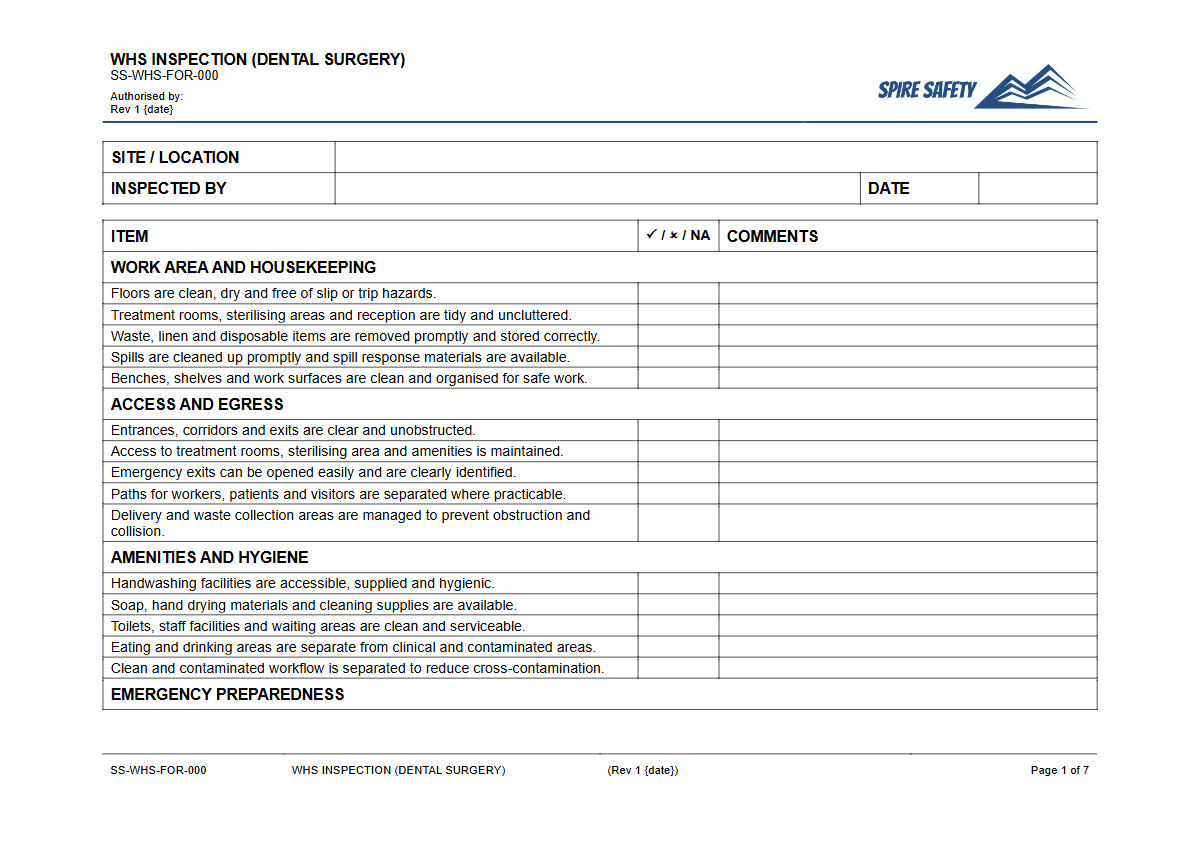
Purpose of the Free WHS Inspection (Dental Surgery) Template
Maintaining a safe environment is paramount in any dental surgery. This Free WHS Inspection (Dental Surgery) Template provides a structured starting point for systematically identifying potential hazards in your practice, from clinical areas to administrative spaces.
Available in both DOCX and PDF formats, this resource is designed to help you formalise your safety checks and foster a proactive safety culture.
A dental surgery presents a unique combination of WHS risks, including sharps, infection control, hazardous substances, radiation, and ergonomic strains. The purpose of this template is to guide you through a methodical review of your workplace to spot these and other hazards before they can cause injury or illness.
Regular inspections form a critical component of all effective WHS management systems, helping you meet your duty of care obligations and continuously improve safety performance.
Key Areas Covered in the Inspection
To be effective, your inspection should cover all aspects of the practice. This template prompts you to consider:
- General Practice Environment: Housekeeping, slip and trip hazards, lighting, fire safety, and clear access and egress.
- Clinical and Sterilisation Areas: Organisation of operatories, infection control stations, and reprocessing areas.
- Equipment Safety: Checks for autoclaves, dental chairs, X-ray units, compressors, and other specialised equipment. For ancillary items, you might also use a specific checklist like our Free Pre-Start Checklist (Freezer) Template for staff or lab areas.
- Hazardous Substances: Correct storage, handling, labelling, and availability of Safety Data Sheets (SDS) for chemicals like disinfectants and dental materials.
- Ergonomics: Assessment of workstations, seating, and instrument layout to minimise physical strain on practitioners.
- Emergency Preparedness: Availability and accessibility of first aid kits, emergency eyewash stations, and documented emergency procedures.
Video walkthrough
How to use the Free WHS Inspection (Dental surgery) Template
Start by downloading the template in the format that best suits your needs—the DOCX for easy customisation or the PDF for immediate printing and use. It is crucial that you adapt this document to your specific work environment.
Note: This template must be customised to your workplace. We have provided a comprehensive starting point aligned with Australian WHS principles, but you must add, remove, and modify checkpoints to reflect the unique layout, equipment, and procedures of your dental practice.
Once customised, use the document to conduct a physical walk-through of your entire premises. Document all findings, noting both compliant aspects and areas needing improvement.
For any identified hazards, prioritise them based on risk level and assign clear corrective actions with deadlines and responsible persons. For an objective review of your safety processes, you might consider engaging a professional for WHS compliance auditing.
When to use it
Regularity is key to maintaining a safe practice. We recommend scheduling general workplace inspections at consistent intervals, such as monthly or quarterly.
Additionally, a WHS inspection should be conducted whenever there is a significant change in the workplace. This includes the introduction of new high-risk equipment, changes to the practice layout, or following an incident or near-miss.
For certain equipment used in patient care, such as those covered in our Free Pre-Start Checklist (Patient Hoist) Template, checks should be performed before each use.
Who should use it
The inspection should be carried out by a person with the knowledge and authority to identify risks and recommend changes. This is often the Practice Manager, a dedicated WHS Officer, or a Health and Safety Representative (HSR).
In smaller practices, the principal dentist may take on this role. The key is that the inspector understands the specific hazards of a dental environment and is empowered to ensure corrective actions are implemented.
If your team lacks this specific expertise, seeking guidance through general WHS consulting can provide valuable support and direction.
By integrating this inspection template into your regular operations, you take a significant step towards managing WHS risks effectively. For more tools to support your safety program, browse our complete free WHS resources library.
Common mistakes
Common mistakes to avoid
- Using a generic checklist without customising it for the specific equipment and layout of the practice.
- Failing to document corrective actions and track them through to completion.
- Conducting inspections but not providing feedback or training to staff on the findings.
- Overlooking ergonomic risks associated with dental chairs, instrument access, and practitioner posture.
Legal references
Legal considerations
The following legal requirements may be relevant to this type of work.
- Work Health and Safety Act (Harmonised) — Provides the primary duties for protecting workers and other people from work health and safety risks.
- Work Health and Safety Regulations (Harmonised) — Sets out requirements supporting the management of workplace hazards and risks.
The following codes may be relevant to this type of work.
- Managing WHS Risks Code of Practice — Provides practical guidance on identifying hazards, assessing risks and applying effective controls.
- Work Health and Safety Consultation, Cooperation and Coordination Code of Practice — Provides practical guidance on consulting workers and coordinating with other duty holders.
- Managing the Work Environment and Facilities Code of Practice — Provides practical guidance on safe work environments, workplace facilities and related controls.
Did you know
Ergonomic Risks
Dental professionals have one of the highest rates of musculoskeletal disorders due to prolonged static postures and repetitive movements. Regular ergonomic assessments of operatories are a vital preventative measure.
Sharps Injuries
According to Safe Work Australia, the healthcare and social assistance industry has the highest rate of serious claims for injuries caused by sharp instruments. Proper handling and disposal protocols are critical.
FAQ
Frequently asked questions
01What is the difference between a WHS inspection and an audit in a dental clinic?
02How often should a dental surgery conduct a WHS inspection?
03Who is responsible for WHS in a dental practice in Australia?
04Does this template cover infection control requirements for dental practices?
Share this resource
Free WHS Inspection (Dental Surgery) Template
Browse Categories
How To Use It
- 1Download and open in Word or PDF.
- 2Replace the placeholders with your business details.
- 3Get it reviewed by a WHS specialist before rollout.
Need it customised?
Our WHS consultants can adapt this template to your site, run a gap analysis, or audit what you already have in place.
Book a Free Consultation WHS consulting servicesor call 1300 156 382