
Free WHS Inspection (Dispatch Centre) Template
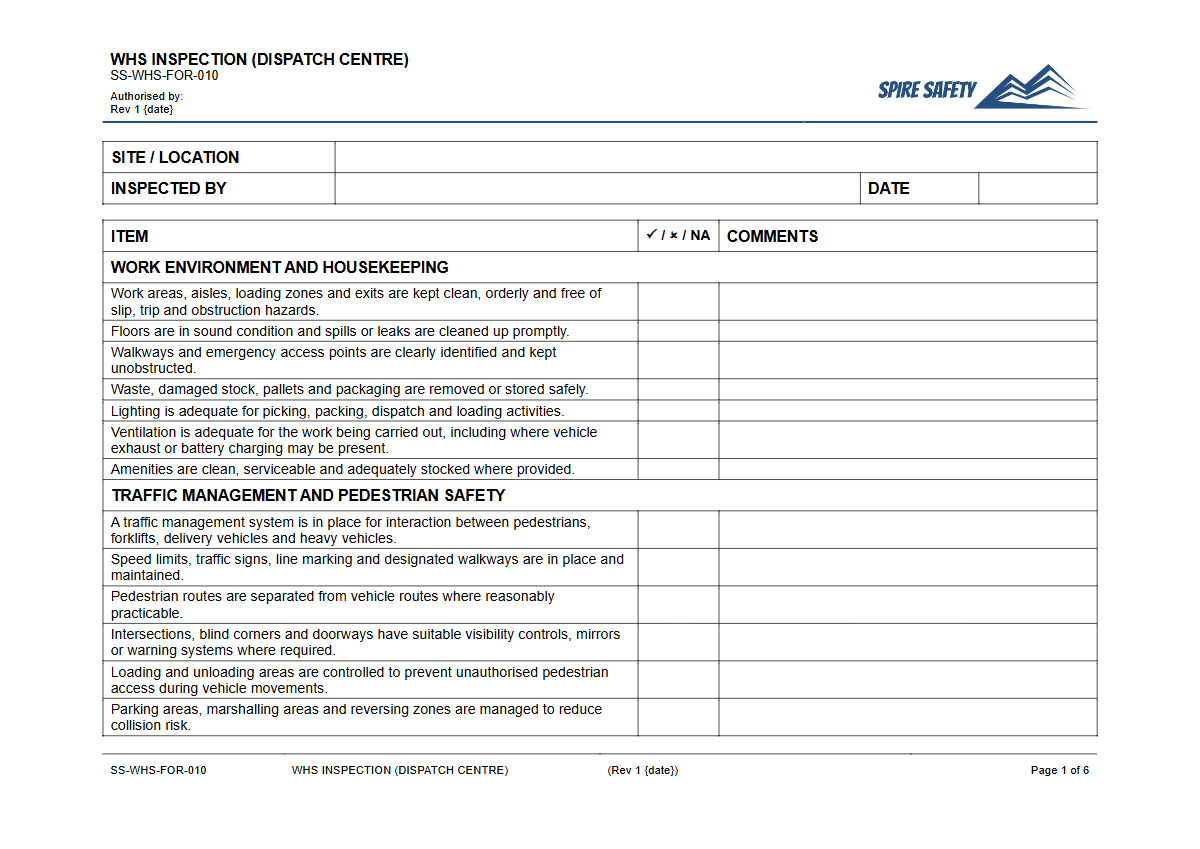
Streamline safety in your logistics hub with our Free WHS Inspection (Dispatch Centre) Template.
Free WHS Inspection (Dispatch Centre) Template
DOCX • 128 KB + PDF
Updated Oct 2026
No signup required
Purpose of the Free WHS Inspection (Dispatch Centre) Template
Dispatch centres are dynamic and hazardous environments, characterised by the constant movement of vehicles, people, and goods. Our Free WHS Inspection (Dispatch Centre) Template provides a structured starting point for systematically identifying and managing safety risks specific to these settings.
Regular inspections are a fundamental part of a proactive safety culture, helping your organisation meet its duty of care obligations by finding and fixing hazards before they can cause injury or illness. This template is designed to guide you through key areas, from traffic management and loading docks to manual handling and plant safety, ensuring a comprehensive review of your operations.
Video walkthrough
How to use the Free WHS Inspection (Dispatch Centre) Template
Using this template effectively involves more than just a simple download. Follow these steps to integrate it into your safety management processes:
- Download and Customise: Download the template in your preferred format (DOCX or PDF). It is crucial that you customise this document to reflect the specific layout, equipment, procedures, and risks of your dispatch centre. We have provided a general framework, but you must adapt it to your unique workplace.
- Involve Your Team: Consult with workers and Health and Safety Representatives (HSRs) during the customisation process. Their firsthand experience is invaluable for identifying practical hazards and effective controls.
- Schedule and Assign: Establish a regular schedule for inspections (e.g., weekly or monthly). Clearly assign responsibility for conducting the inspection to a competent person, such as a supervisor or WHS advisor.
- Conduct the Inspection: The assigned person should walk through the dispatch centre, methodically completing the checklist. Any identified hazards, non-conformances, or areas for improvement should be clearly documented.
- Action and Review: All identified issues must be assigned corrective actions with clear responsibilities and due dates. The effectiveness of these actions should be reviewed to ensure the risk has been controlled. The results of inspections should be discussed at safety committee meetings.
While this template covers the general environment, specific pieces of equipment require their own checks. For example, ensure all lifting equipment is inspected before use with a tool like our free Pre-Start Checklist for Electric Hoists.
When to use it
A comprehensive workplace inspection of your dispatch centre should be conducted at regular, planned intervals. The frequency depends on the level of risk, but a monthly or quarterly schedule is a common starting point. In addition to regular checks, this inspection should also be performed:
- After an incident, accident, or near-miss occurs.
- When significant changes are made to the workplace, such as introducing new machinery, changing the layout, or altering work processes.
- Before periods of significantly increased activity, like peak season sales events.
- When concerns are raised by workers or HSRs about a potential hazard.
Regular inspections form a core part of proactive hazard management within broader WHS management systems, helping to maintain a consistently safe environment rather than simply reacting to failures.
Who should use it
This template is designed for use by individuals with responsibility for safety and supervision within a dispatch, logistics, or warehouse environment. This includes:
- WHS Managers and Advisors: To formalise and standardise the workplace inspection process.
- Warehouse and Dispatch Managers: To oversee the safety of their operational area and supports your compliance efforts.
- Team Leaders and Supervisors: To conduct routine checks and lead their teams in safe work practices.
- Health and Safety Representatives (HSRs): As a tool to assist in their functions of monitoring workplace safety and representing their work group.
Controlling site access is another critical component of dispatch safety. For areas with restricted entry, consider implementing checks using our free Pre-Start Checklist for Boom Gates to ensure they function correctly.
Key Areas to Inspect in a Dispatch Centre
A thorough inspection should cover all aspects of the dispatch environment. Your customised checklist should include sections for:
- Traffic Management: Check that pedestrian walkways are separate from vehicle routes, clearly marked, and unobstructed. Verify that signage is visible and speed limits are observed.
- Loading Docks: Inspect dock levellers, vehicle restraints, and dock doors for correct operation and damage. Ensure procedures are in place to prevent drive-offs.
- Storage and Racking: Look for signs of damage to pallet racking (e.g., bent uprights, missing braces). Check that safe working loads are displayed and not exceeded.
- Manual Handling: Observe workers to ensure correct lifting techniques are used. Verify that mechanical aids like pallet jacks and trolleys are available and in good condition.
- Housekeeping: Ensure floors are clean, dry, and free from slip or trip hazards like loose shrink wrap, pallets, or spills. Check that waste bins are adequate and emptied regularly.
- Plant and Equipment: Confirm that all mobile plant (e.g., forklifts) is operated by licensed individuals and that pre-start checks are completed daily.
The integrity of your inspection process and the broader safety system can be verified through periodic WHS compliance auditing to identify any systemic gaps.
For smaller packaging equipment that may be present in a dispatch office, a specific checklist can ensure its safe operation. Our Free Pre-Start Checklist for Envelope Sealers is a useful example of an equipment-specific template.
If you can't find the specific document you need, explore our complete free WHS resources library for more templates and guides.
Common mistakes
Common mistakes to avoid
- Using a generic template without customising it for the specific site layout and equipment.
- "Pencil-whipping" or ticking boxes without physically verifying the condition of the area or item.
- Failing to assign clear corrective actions with deadlines for hazards identified during the inspection.
- Not involving the workers who operate in the dispatch centre every day in the inspection process.
Legal references
Legal considerations
The following legal requirements may be relevant to this type of work.
- Work Health and Safety Act (Harmonised) — Provides the primary duties for protecting workers and other people from work health and safety risks.
- Work Health and Safety Regulations (Harmonised) — Sets out requirements supporting the management of workplace hazards and risks.
The following codes may be relevant to this type of work.
- Managing WHS Risks Code of Practice — Provides practical guidance on identifying hazards, assessing risks and applying effective controls.
- Work Health and Safety Consultation, Cooperation and Coordination Code of Practice — Provides practical guidance on consulting workers and coordinating with other duty holders.
- Managing the Work Environment and Facilities Code of Practice — Provides practical guidance on safe work environments, workplace facilities and related controls.
Did you know
A High-Risk Industry
According to Safe Work Australia, the Transport, Postal & Warehousing industry consistently has one of the highest rates of serious workers' compensation claims and workplace fatalities in the country.
FAQ
Frequently asked questions
01What is the difference between a workplace inspection and a pre-start check?
02How often should I conduct a WHS inspection in a dispatch centre?
03Who is responsible for fixing hazards found during an inspection?
04Do I need to keep records of my dispatch centre inspections?
Share this resource
Free WHS Inspection (Dispatch Centre) Template
Browse Categories
How To Use It
- 1Download and open in Word or PDF.
- 2Replace the placeholders with your business details.
- 3Get it reviewed by a WHS specialist before rollout.
Need it customised?
Our WHS consultants can adapt this template to your site, run a gap analysis, or audit what you already have in place.
Book a Free Consultation WHS consulting servicesor call 1300 156 382