
Free WHS Inspection (Engine Workshop) Template
Proactively manage hazards in your engine workshop with our free WHS inspection template. A structured starting point for identifying risks. Download now.
Free WHS Inspection (Engine Workshop) Template
DOCX • 128 KB + PDF
Updated Oct 2026
No signup required
Purpose of the Free WHS Inspection (Engine Workshop) Template
Engine workshops are dynamic environments filled with hazards, from chemical exposure and moving machinery to electrical risks and ergonomic strains. A systematic inspection process is crucial for proactive risk management.
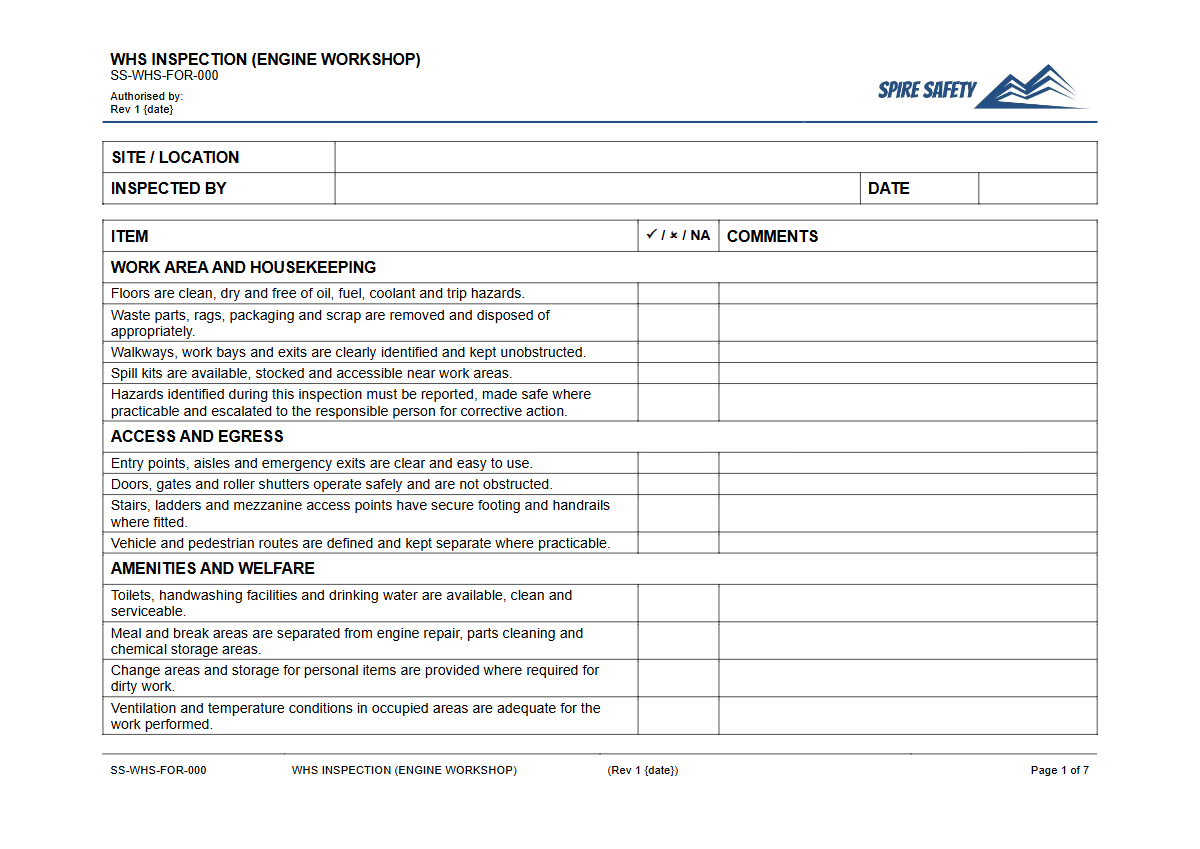
This Free WHS Inspection (Engine Workshop) Template provides a structured starting point for organisations to formalise their safety checks, identify potential hazards before they cause harm, and document their safety efforts. Regular inspections help ensure control measures are effective and demonstrate a commitment to maintaining a safe workplace for mechanics, apprentices, and visitors.
Using a standardised checklist helps ensure consistency and thoroughness in every inspection. It prompts the inspector to look at key areas often overlooked in informal walk-throughs, such as the condition of lifting equipment, the storage of flammable liquids, the adequacy of ventilation, and the state of emergency equipment.
Integrating these inspections is a fundamental part of developing robust WHS management systems, fostering a positive safety culture where hazards are actively sought out and controlled.
What this Inspection Template covers
This template is designed as a comprehensive guide for an engine workshop environment. Key sections include:
- General Housekeeping: Assessing trip hazards, spills, and general cleanliness.
- Plant and Equipment: Checking machine guarding, maintenance logs, and operational safety for tools like grinders, presses, and lathes.
- Hazardous Substances: Reviewing chemical storage, Safety Data Sheets (SDS) availability, and personal protective equipment (PPE) usage.
- Electrical Safety: Inspecting leads, power boards, and the testing and tagging of portable appliances.
- Fire and Emergency: Ensuring clear access to exits, fire extinguishers are in date, and first aid kits are stocked.
- Manual Tasks: Observing worker techniques and the availability of mechanical aids for lifting heavy components.
Video walkthrough
How to use the Free WHS Inspection (Engine Workshop) Template
This template is provided in both DOCX and PDF formats. The DOCX file is fully editable, allowing you to tailor the checklist to the unique layout, equipment, and processes of your workshop.
A generic checklist cannot cover all specific risks, so customisation is essential for effectiveness.
Please note: This document is a template and must be customised for your specific workplace. We recommend a person with appropriate knowledge of your workshop's equipment (e.g., vehicle hoists, engine cranes, diagnostic tools), chemicals, and work processes reviews and adapts it in consultation with your workers.
Many workshops rely on specialised lifting equipment. As part of your inspection process, you may need more detailed checks for specific high-risk plant.
Consider using our Free Pre-Start Checklist (Electric Hoist) Template for daily verifications of this critical equipment.
When to use it
The frequency of workplace inspections depends on the level of risk and the nature of the work. For an engine workshop, a multi-tiered approach is recommended.
This comprehensive inspection should be scheduled to occur regularly, such as weekly or monthly, to provide a thorough overview of WHS performance. It should also be used on an ad-hoc basis in response to specific triggers, including after an incident or near-miss, when new equipment is introduced, or when work processes are significantly changed.
This ensures that safety management remains relevant and responsive to the evolving workshop environment.
If your workshop facility uses automated access control, ensuring its safe function is also part of your duty of care. You can supplement your general inspection with a specific Free Pre-Start Checklist (Boom Gate) Template for daily operational checks.
Who should use it
The inspection should be carried out by a person with the knowledge and competence to identify hazards specific to an automotive or engine repair environment. This could be a Workshop Manager, a dedicated WHS Officer, or a trained Health and Safety Representative (HSR).
Involving workers in the inspection process is highly beneficial, as they have direct, hands-on experience with the equipment and tasks, offering valuable insights into potential risks that a manager might not see. The findings should be discussed with management and the relevant team members to develop and implement corrective actions.
The process of systematically checking your workplace against established criteria is a core activity in safety assurance. For a more formal, independent assessment of your overall safety framework, you might consider engaging external consultants for WHS compliance auditing services.
For any groundskeeping equipment used around the workshop property, specific pre-start checks are also a valuable tool. For example, a Free Pre-Start Checklist (Lawn Tractor) Template helps formalise safety verifications for your maintenance team's equipment. You can find many more specific templates in our complete free WHS resources library.
Common mistakes
Common mistakes to avoid
- Using a generic checklist without customising it for the workshop's specific equipment and layout.
- Failing to document and track corrective actions for hazards identified during the inspection.
- Not providing training to the person conducting the inspection on how to properly identify hazards.
- Completing the form as a 'tick and flick' exercise without genuinely assessing the risks.
Legal references
Legal considerations
The following legal requirements may be relevant to this type of work.
- Work Health and Safety Act (Harmonised) — Provides the primary duties for protecting workers and other people from work health and safety risks.
- Work Health and Safety Regulations (Harmonised) — Sets out requirements supporting the management of workplace hazards and risks.
The following codes may be relevant to this type of work.
- Managing WHS Risks Code of Practice — Provides practical guidance on identifying hazards, assessing risks and applying effective controls.
- Work Health and Safety Consultation, Cooperation and Coordination Code of Practice — Provides practical guidance on consulting workers and coordinating with other duty holders.
- Managing the Work Environment and Facilities Code of Practice — Provides practical guidance on safe work environments, workplace facilities and related controls.
Did you know
Noise-Induced Hearing Loss
Prolonged exposure to noise levels above 85 decibels, common in workshops from air tools and engines, can cause permanent hearing damage. The model WHS Regulations mandate that PCBUs manage these risks.
Vehicle Hoist Safety
According to Safe Work Australia, vehicle hoist incidents are a significant cause of death and serious injury in the automotive industry. Regular inspection and maintenance are critical preventative measures.
FAQ
Frequently asked questions
01What are the most common hazards in an engine workshop?
02How often should an engine workshop be inspected for WHS?
03Who is responsible for WHS in an engine workshop?
04Can this inspection template be used for mobile mechanics?
Share this resource
Free WHS Inspection (Engine Workshop) Template
Browse Categories
How To Use It
- 1Download and open in Word or PDF.
- 2Replace the placeholders with your business details.
- 3Get it reviewed by a WHS specialist before rollout.
Need it customised?
Our WHS consultants can adapt this template to your site, run a gap analysis, or audit what you already have in place.
Book a Free Consultation WHS consulting servicesor call 1300 156 382