
Free WHS Inspection (Equipment Yard) Template
Formalise your safety processes with our Free WHS Inspection (Equipment Yard) Template. This structured document helps identify hazards and manage risks.
Free WHS Inspection (Equipment Yard) Template
DOCX • 128 KB + PDF
Updated Oct 2026
No signup required
Purpose of the Free WHS Inspection (Equipment Yard) Template
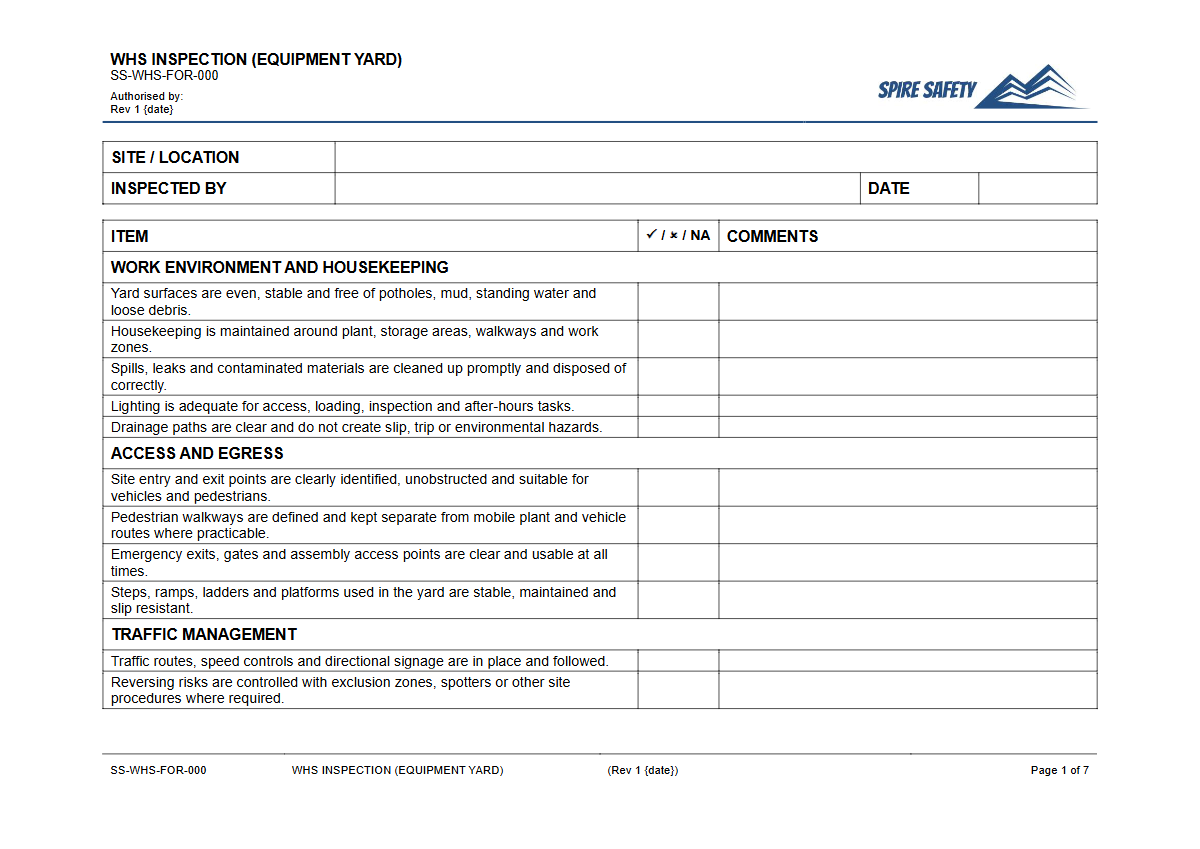
Equipment yards are dynamic environments filled with heavy machinery, vehicle movements, and stored materials, creating a unique set of safety challenges. This Free WHS Inspection (Equipment Yard) Template provides a structured starting point for systematically identifying hazards and assessing controls.
Using this template helps organisations formalise their safety procedures, demonstrate due diligence, and proactively manage risks associated with storage, maintenance, and movement of plant and equipment. It is designed to be a practical tool, guiding supervisors and safety personnel through a comprehensive check of the work area, environmental conditions, and equipment status.
Regular inspections are a cornerstone of any effective safety management system. They help ensure that control measures are working as intended and identify new hazards before they cause an incident.
This template encourages a consistent approach, making it easier to track actions, spot trends, and maintain a safe working environment for everyone on site. It covers key areas such as traffic management, storage and stacking, hazardous substances, and general housekeeping, providing a solid foundation aligned with Australian WHS principles.
Video walkthrough
How to use the Free WHS Inspection (Equipment Yard) Template
This template is provided as a DOCX file for easy customisation and a PDF for immediate use. The document is divided into logical sections, prompting the user to inspect different aspects of the equipment yard, note observations, and record any necessary corrective actions.
The goal is to create a clear, actionable record of the yard's condition at a specific point in time. It is a vital tool for maintaining safe operations and can be integrated into broader WHS management systems.
To use the template effectively:
- Download the DOCX version and adapt it to your specific site. Add or remove items to reflect the unique equipment, layout, and hazards present in your yard.
- Assign a competent person to conduct the inspection. This should be someone familiar with the yard's operations and trained in hazard identification.
- Walk through the site systematically, completing each section of the checklist. Be thorough and objective in your observations.
- For any non-conformances or hazards identified, clearly describe the issue and assign a corrective action with a responsible person and a due date.
- File the completed inspection report and track all corrective actions to completion. This documentation is crucial for demonstrating compliance and continuous improvement.
Important Note: This is a template, not a finished document. Every workplace is different.
We provide this document as a starting point. You MUST customise it to suit the specific hazards, equipment, and operational procedures of your business and worksite.
If you are unsure about your obligations, you should seek professional WHS consulting advice.
When to use it
The frequency of equipment yard inspections depends on the level of activity, the types of hazards present, and your organisation's risk assessment. As a general guide, formal, documented inspections should be conducted at regular intervals, such as weekly or monthly.
More frequent, informal checks may be necessary in high-traffic areas or during periods of significant change, like the mobilisation or demobilisation of a major project.
This template is also ideal for use before commencing high-risk activities, after an incident or near miss, or as part of a scheduled site safety audit. Using it consistently helps build a historical record of site conditions, which is invaluable for identifying recurring issues and evaluating the effectiveness of your safety controls over time.
For specific pieces of equipment, this general yard inspection can be supplemented with dedicated checklists, such as a pre-start checklist for dump trailers, to ensure machine-specific risks are also managed.
Who should use it
This template is designed for use by a range of personnel responsible for workplace safety. This includes:
- Site Supervisors and Foremen: They are on the front line and are often best placed to conduct regular inspections of their work areas.
- WHS/HSE Officers and Advisors: Safety professionals can use this template to conduct more detailed audits and to verify that site procedures are being followed.
- Project and Operations Managers: Managers can use the completed reports to gain oversight of site safety performance and ensure resources are allocated appropriately to manage risks.
- Health and Safety Representatives (HSRs): HSRs can use this tool to facilitate their role in monitoring and investigating workplace safety matters on behalf of their work group.
Ultimately, anyone with responsibility for maintaining a safe equipment yard can benefit from this structured template. The findings from these inspections are also critical inputs for higher-level safety activities, such as periodic WHS compliance auditing programs.
In addition to plant-focused resources, you can find templates for other machinery in our free WHS resources library to build out your safety toolkit.
Common mistakes
Common mistakes to avoid
- Failing to customise the template for specific site hazards and equipment.
- Treating the inspection as a 'tick-and-flick' exercise without genuine observation.
- Not properly documenting corrective actions and tracking them to completion.
- Overlooking risks from the interaction between pedestrians and mobile plant.
Legal references
Legal considerations
The following legal requirements may be relevant to this type of work.
- Work Health and Safety Act (Harmonised) — Provides the primary duties for protecting workers and other people from work health and safety risks.
- Work Health and Safety Regulations (Harmonised) — Sets out requirements supporting the management of workplace hazards and risks.
The following codes may be relevant to this type of work.
- Managing WHS Risks Code of Practice — Provides practical guidance on identifying hazards, assessing risks and applying effective controls.
- Work Health and Safety Consultation, Cooperation and Coordination Code of Practice — Provides practical guidance on consulting workers and coordinating with other duty holders.
- Managing the Work Environment and Facilities Code of Practice — Provides practical guidance on safe work environments, workplace facilities and related controls.
Did you know
Mobile Plant Risks
According to Safe Work Australia, vehicles are the cause of the most fatalities in Australian workplaces. Between 2018 and 2022, 38% of all worker fatalities involved a vehicle collision, with many of these incidents occurring in and around storage yards and worksites.
FAQ
Frequently asked questions
01What is the difference between a pre-start check and a yard inspection?
02How often should I inspect my equipment yard?
03What are the key hazards in an equipment yard?
04Does this template cover traffic management in the yard?
Share this resource
Free WHS Inspection (Equipment Yard) Template
Browse Categories
How To Use It
- 1Download and open in Word or PDF.
- 2Replace the placeholders with your business details.
- 3Get it reviewed by a WHS specialist before rollout.
Need it customised?
Our WHS consultants can adapt this template to your site, run a gap analysis, or audit what you already have in place.
Book a Free Consultation WHS consulting servicesor call 1300 156 382