
Free WHS Inspection (Farm Workshop) Template
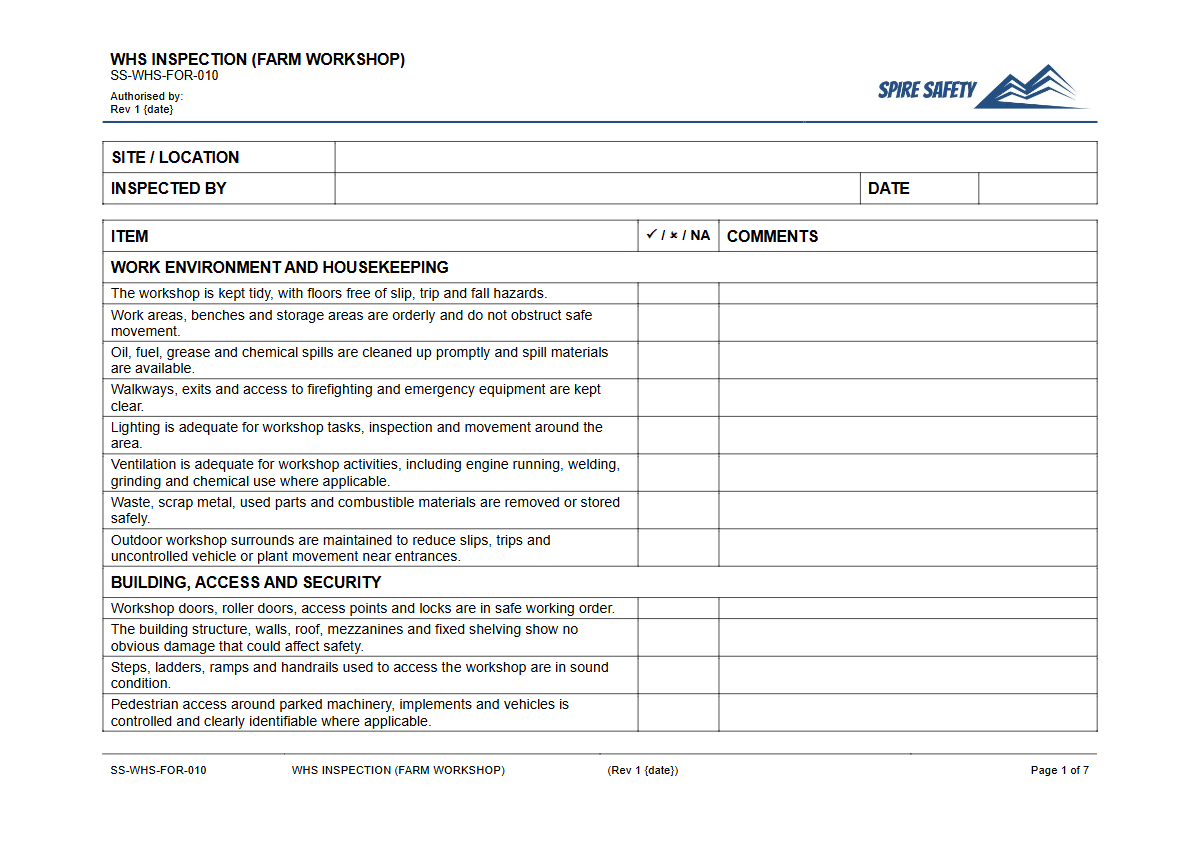
Proactively manage safety in your agricultural workshop. Our free WHS Inspection (Farm Workshop) Template is a starting point for identifying hazards.
Free WHS Inspection (Farm Workshop) Template
DOCX • 128 KB + PDF
Updated Oct 2026
No signup required
Purpose of the Free WHS Inspection (Farm Workshop) Template
Farm workshops are high-risk environments, filled with machinery, chemicals, electrical equipment, and heavy materials. A systematic inspection process is essential for identifying and controlling the hazards that can lead to serious injury or illness.
This Free WHS Inspection (Farm Workshop) Template provides a structured starting point for your organisation to formalise its safety checks, helping you maintain a safer workplace. Regularly using this checklist helps you proactively spot issues like unguarded plant, poor housekeeping, incorrect chemical storage, or faulty electrical tools before they cause an incident. Documenting these inspections is a key part of demonstrating due diligence and forms an important record within your broader WHS management system.
Video walkthrough
How to use the Free WHS Inspection (Farm Workshop) Template
This template is designed to be a comprehensive but adaptable tool for your farm. Download the DOCX file to add, remove, or modify checklist items to suit your specific site and equipment.
The PDF version is ready for immediate printing and use.
Steps for Effective Use:
- Customise the Checklist: The most critical step. Your workshop is unique. Walk through the area and list all major plant, equipment, and storage areas. Add specific checkpoints for your machinery, such as welders, grinders, compressors, and vehicle hoists.
- Schedule and Assign: Determine a regular inspection frequency (e.g., weekly or monthly) and assign the task to a competent person, such as the workshop manager or a Health and Safety Representative (HSR).
- Conduct the Inspection: The assigned person should physically walk through the workshop, methodically checking each item on the list. This is not a desk exercise; it requires careful observation.
- Document Findings: Record any non-conformances, hazards, or areas for improvement directly on the form. Note the location and details of the issue. For individual pieces of mobile plant, daily checks are often required; you can use a specific tool like our Free Pre-Start Checklist (Lawn Tractor) Template for this purpose.
- Implement Corrective Actions: For every issue identified, a corrective action must be assigned to a specific person with a clear deadline. This is crucial for closing the loop and actually improving safety. Simply finding a problem is not enough.
Please note: This template provides a solid foundation, but it is essential that you customise it to reflect the specific machinery, tasks, and layout of your farm workshop. We recommend a competent person reviews and adapts the document to your unique operational context.
When to Conduct a Workshop Inspection
Regular, scheduled inspections are the backbone of a proactive safety culture. A farm workshop should be formally inspected:
- On a routine basis, such as weekly or monthly, depending on the scale and intensity of work.
- After any significant change, such as the introduction of new machinery or a change in workshop layout.
- Following an incident, accident, or near-miss to identify contributing factors.
- When concerns are raised by workers or other personnel.
These routine inspections are different from more comprehensive, periodic WHS compliance audits, which provide a deeper, more formal assessment of your entire safety system against legal and other requirements.
Who Should Use This Inspection Template
This template is designed for use by anyone responsible for safety in an agricultural setting. This typically includes:
- Farm Owners and Managers
- Workshop Supervisors
- Persons Conducting a Business or Undertaking (PCBUs)
- Health and Safety Representatives (HSRs)
- WHS Officers and Advisors
The person conducting the inspection should be familiar with the workshop's operations and have a good understanding of relevant WHS principles. For equipment-specific checks, such as those involving complex machinery, our free Pre-Start Checklist (Feed Mixer) Template can be a useful supplementary tool.
Training workers on how to spot and report hazards is also a key part of making any inspection program successful. You can explore our entire free WHS resources library for more tools to support your safety efforts, including our Free Pre-Start Checklist (Aerator) Template for specific groundskeeping equipment.
Common mistakes
Common mistakes to avoid
- Using the template without customising it for your specific workshop and equipment.
- Failing to assign and track corrective actions for hazards identified during the inspection.
- Treating the inspection as a paperwork exercise instead of a genuine search for hazards.
- Not involving the workers who use the workshop in the inspection process or in suggesting solutions.
Legal references
Legal considerations
The following legal requirements may be relevant to this type of work.
- Work Health and Safety Act (Harmonised) — Provides the primary duties for protecting workers and other people from work health and safety risks.
- Work Health and Safety Regulations (Harmonised) — Sets out requirements supporting the management of workplace hazards and risks.
The following codes may be relevant to this type of work.
- Managing WHS Risks Code of Practice — Provides practical guidance on identifying hazards, assessing risks and applying effective controls.
- Work Health and Safety Consultation, Cooperation and Coordination Code of Practice — Provides practical guidance on consulting workers and coordinating with other duty holders.
- Managing the Work Environment and Facilities Code of Practice — Provides practical guidance on safe work environments, workplace facilities and related controls.
Did you know
A High-Risk Industry
The agriculture, forestry and fishing industry is one of the most hazardous in Australia, with a fatality rate significantly higher than the national average. Proactive inspections are a vital tool in preventing incidents on farms.
Plant and Machinery Risks
According to Safe Work Australia, machinery and vehicles are involved in a majority of farm-related fatalities. Regular inspection and maintenance of all plant, especially guarding and emergency stops, is critical.
FAQ
Frequently asked questions
01What is the difference between a WHS inspection and an audit?
02How often should I inspect my farm workshop?
03What are the most common hazards in a farm workshop?
04Can I use this template for other areas on the farm?
Share this resource
Free WHS Inspection (Farm Workshop) Template
Browse Categories
How To Use It
- 1Download and open in Word or PDF.
- 2Replace the placeholders with your business details.
- 3Get it reviewed by a WHS specialist before rollout.
Need it customised?
Our WHS consultants can adapt this template to your site, run a gap analysis, or audit what you already have in place.
Book a Free Consultation WHS consulting servicesor call 1300 156 382