
Free WHS Inspection (Food Factory) Template
Download our free WHS Inspection (Food Factory) Template to formalise safety checks for hygiene, equipment, and processes. A structured starting point.
Free WHS Inspection (Food Factory) Template
DOCX • 129 KB + PDF
Updated Oct 2026
No signup required
Purpose of the Free WHS Inspection (Food Factory) Template
Maintaining a safe and hygienic environment is critical in any food manufacturing facility. A systematic approach to safety checks helps identify hazards before they cause harm.
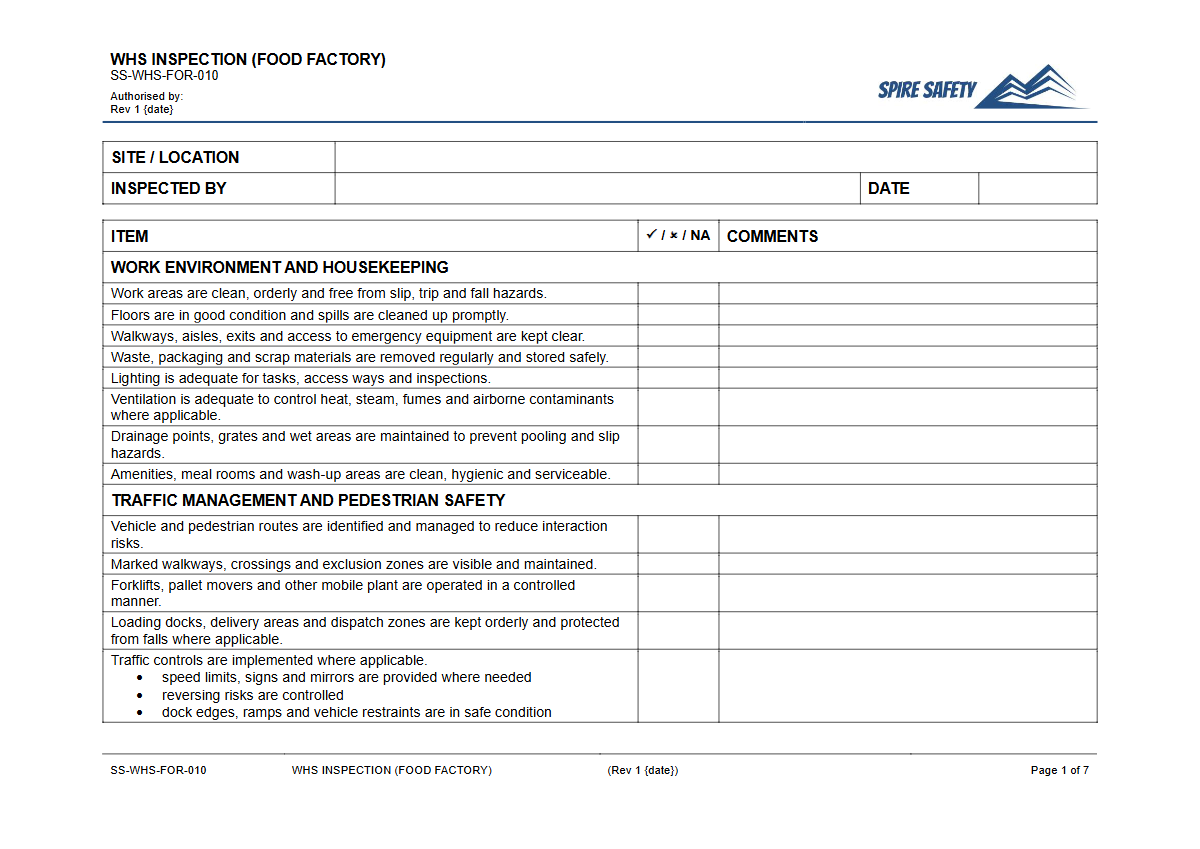
This Free WHS Inspection (Food Factory) Template provides a structured starting point for organisations to formalise their safety audits, covering key areas from machinery and equipment to hygiene and staff amenities. It's designed to be a practical tool to support your workplace health and safety management processes.
The primary goal of this Inspection is to proactively identify and control risks inherent in food production. These include machinery entanglement, slips and trips on wet floors, ergonomic strains from manual handling, and exposure to cleaning chemicals.
Regular inspections are a cornerstone of effective WHS management systems, demonstrating a commitment to continuous improvement and a safe workplace for all personnel.
Video walkthrough
How to use the Free WHS Inspection (Food Factory) Template
Using this template is straightforward. After downloading the DOCX or PDF file, you can integrate it into your safety procedures.
The document is structured logically, guiding the inspector through a comprehensive review of the workplace. It provides prompts and checklists for various aspects of the food factory environment, ensuring key safety elements are not overlooked.
Please note: This document is a template and must be customised to suit the specific hazards, equipment, and processes of your workplace. We recommend consulting with your workers and a qualified WHS professional to ensure it is fit for purpose.
Key Inspection Areas
The template encourages a thorough review of several critical operational zones. While it provides a broad framework, your customisation should add detail specific to your site.
For instance, while this template covers general machinery safety, you might supplement it with more detailed daily checks using our Free Pre-Start Checklist (Food Conveyor) Template for specific high-risk plant.
- Plant, Machinery and Equipment: Assesses machine guarding, functionality of emergency stops, lockout/tagout procedures, and maintenance records. For specialised cold storage areas, consider using a specific checklist like our Free Pre-Start Checklist (Freezer) Template.
- Hazardous Chemicals: Checks for correct labelling, secure storage, availability of Safety Data Sheets (SDS), and appropriate personal protective equipment (PPE).
- Work Environment: Evaluates housekeeping standards, the condition of floors and walkways, adequacy of lighting and ventilation, and noise levels.
- Manual Tasks and Ergonomics: Focuses on identifying risky manual handling tasks, assessing workstation design, and reviewing procedures for repetitive work to prevent musculoskeletal disorders.
- Emergency Preparedness: Verifies the accessibility and serviceability of fire extinguishers, emergency exits, and first aid kits, as well as the clarity of emergency plans.
- Hygiene and Amenities: Confirms that staff facilities, including toilets, handwashing stations, and break rooms, are clean, well-stocked, and properly maintained to meet food safety and WHS standards.
When to use it
Regular, scheduled inspections are fundamental to maintaining a safe workplace. This template should be used as part of a planned inspection schedule, such as monthly or quarterly.
Additionally, it is valuable to conduct an inspection following any significant workplace change, such as the introduction of new machinery, a change in process, or after a near miss or incident has occurred. These scheduled inspections can form part of a broader WHS compliance auditing program to ensure ongoing adherence to safety standards.
Who should use it
This Inspection template is designed for use by personnel responsible for workplace safety. This includes WHS Managers, Production and Factory Supervisors, and Health and Safety Representatives (HSRs).
To be most effective, inspections should be a collaborative process involving a team with diverse perspectives, including workers who perform the tasks being assessed. Supervisors in butchery or meat processing departments will find it useful to cross-reference this general inspection with specific tool checks, such as those detailed in our Free Pre-Start Checklist for Bone Saws.
By involving a range of personnel, an organisation can foster a stronger safety culture and gain more comprehensive insights into the day-to-day operational risks. This template is just one of many tools available in our free WHS resources library designed to support Australian businesses in managing their safety obligations effectively.
Common mistakes
Common mistakes to avoid
- Using a generic checklist without customising it for specific site hazards and machinery.
- Failing to document and follow up on corrective actions identified during the inspection.
- Conducting inspections inconsistently or skipping them due to production pressures.
- Not involving workers who perform the day-to-day tasks in the inspection process.
Legal references
Legal considerations
The following legal requirements may be relevant to this type of work.
- Work Health and Safety Act (Harmonised) — Provides the primary duties for protecting workers and other people from work health and safety risks.
- Work Health and Safety Regulations (Harmonised) — Sets out requirements supporting the management of workplace hazards and risks.
The following codes may be relevant to this type of work.
- Managing WHS Risks Code of Practice — Provides practical guidance on identifying hazards, assessing risks and applying effective controls.
- Work Health and Safety Consultation, Cooperation and Coordination Code of Practice — Provides practical guidance on consulting workers and coordinating with other duty holders.
- Managing the Work Environment and Facilities Code of Practice — Provides practical guidance on safe work environments, workplace facilities and related controls.
Did you know
A High-Risk Industry
According to Safe Work Australia, the food product manufacturing industry has one of the highest rates of serious workers' compensation claims in the country.
Common Injuries
Slips, trips, and falls are the most common cause of injury in food processing, often due to wet and contaminated floors. Musculoskeletal disorders from manual handling are also highly prevalent.
FAQ
Frequently asked questions
01What are the key areas to cover in a food factory WHS inspection?
02How often should food factory WHS inspections be conducted?
03Who is responsible for carrying out a WHS inspection in a food factory?
04Can this template be used for HACCP audits?
Share this resource
Free WHS Inspection (Food Factory) Template
Browse Categories
How To Use It
- 1Download and open in Word or PDF.
- 2Replace the placeholders with your business details.
- 3Get it reviewed by a WHS specialist before rollout.
Need it customised?
Our WHS consultants can adapt this template to your site, run a gap analysis, or audit what you already have in place.
Book a Free Consultation WHS consulting servicesor call 1300 156 382