
Free WHS Inspection (Fulfilment Centre) Template
Download our free WHS Inspection (Fulfilment Centre) Template. This structured checklist helps identify hazards and manage risks. Download your DOCX today.
Free WHS Inspection (Fulfilment Centre) Template
DOCX • 128 KB + PDF
Updated Oct 2026
No signup required
Purpose of the Free WHS Inspection (Fulfilment Centre) Template
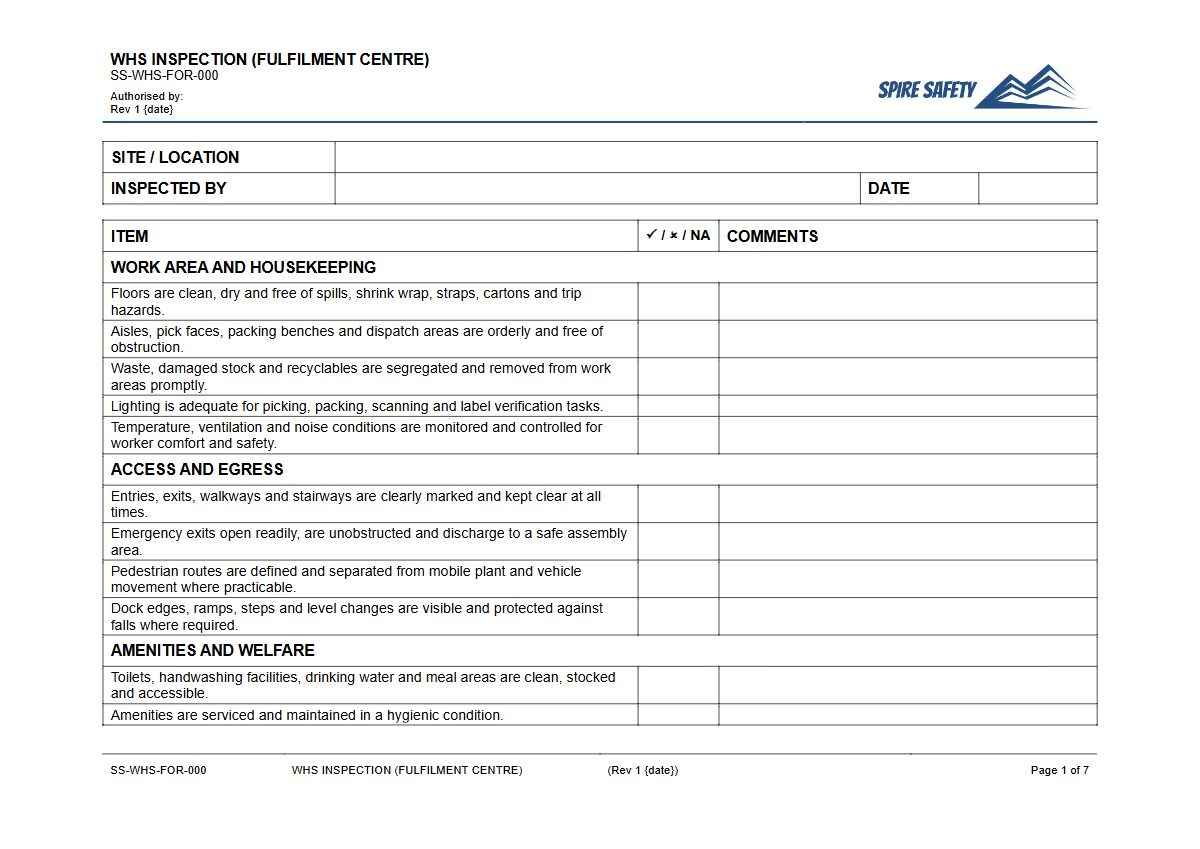
A fulfilment centre is a dynamic environment with significant WHS risks, from manual handling and forklift traffic to conveyor systems and slips, trips, and falls. This Free WHS Inspection (Fulfilment Centre) Template provides a structured starting point for systematically identifying these hazards and assessing control measures.
Regular, documented inspections are a cornerstone of proactive safety management, helping your organisation meet its duty of care obligations. Using a template ensures a consistent approach to inspections, making it easier to track actions and demonstrate due diligence.
Integrating regular inspections into your operational rhythm is a fundamental component of robust WHS management systems. It helps shift your organisation's safety culture from reactive to preventative, identifying potential issues before they cause an incident. This template is designed to align with Australian WHS principles and support your risk management process.
Video walkthrough
How to use the Free WHS Inspection (Fulfilment Centre) Template
Using this template effectively involves more than just filling in boxes. Follow these steps to integrate it into your safety processes:
- Download and Customise: Download the template in your preferred format (DOCX or PDF). The DOCX version is fully editable.
- Schedule and Assign: Determine the inspection frequency (e.g., weekly, fortnightly, monthly) and assign responsibility to a competent person, such as a supervisor or HSR.
- Conduct the Inspection: Walk through the site, systematically observing the environment, equipment, and work practices against the checklist prompts. Document any identified hazards, non-conformances, or at-risk behaviours.
- Document and Report: Record your findings clearly on the template. Note the location, describe the issue, and assign a risk rating if applicable.
- Assign Corrective Actions: For each identified issue, assign a specific corrective action, a person responsible for completing it, and a realistic due date.
- Follow-Up and Close Out: Track all corrective actions to completion. Verify that the implemented controls are effective and sign off on the inspection report.
Important: This template provides a solid foundation, but it is not a complete, out-of-the-box solution. We have designed it to be customised.
You must adapt it to reflect the specific layout, equipment, tasks, and hazards present in your unique workplace. For example, while this covers general areas, you may need a separate, more detailed Free Pre-Start Checklist (Electric Hoist) Template for specific high-risk plant.
Key Areas to Inspect
When customising your checklist, ensure it covers all critical areas of your fulfilment centre, including:
- Receiving and Despatch Docks: Check for vehicle-pedestrian separation, dock leveller condition, and safe loading/unloading procedures.
- Storage and Racking: Inspect pallet racking for damage (dents, warping), ensure load limits are displayed, and check for correct pallet placement.
- Material Handling Equipment (MHE): Observe the operation of forklifts, pallet jacks, and conveyor systems. Check for operator competency, traffic management, and pre-start checks. The use of a Free Pre-Start Checklist (Envelope Sealer) Template is a good example of equipment-specific checks that supplement a general inspection.
- Walkways and Egress: Ensure aisles and walkways are clear of obstruction, emergency exits are accessible and signed, and flooring is in good condition.
- Amenities and First Aid: Check that first aid kits are stocked, facilities are clean, and emergency contact numbers are displayed.
When to use it
Workplace inspections should be conducted on a regular, scheduled basis. The frequency will depend on the level of risk and the dynamic nature of the work area. Consider conducting inspections:
- At scheduled intervals (e.g., weekly for high-traffic zones, monthly for the entire site).
- After an incident, accident, or near miss to identify contributing factors.
- When a new process, piece of equipment, or substance is introduced.
- Following significant changes to the workplace layout.
- In response to concerns raised by workers or Health and Safety Representatives (HSRs).
For areas with specific access controls, such as delivery yards, also consider the safety of key infrastructure. A scheduled check using a Free Pre-Start Checklist (Boom Gate) Template can help formalise this process and prevent failures that impact site logistics and safety.
Who should use it
Workplace inspections should be a collaborative effort. While a WHS Manager or Supervisor typically leads the process, involving a range of personnel provides a more comprehensive view of workplace risks. Those who should use or be involved in using this template include:
- WHS Managers and Safety Officers
- Supervisors and Team Leaders
- Health and Safety Representatives (HSRs)
- Members of the WHS Committee
- Workers with experience in the specific areas being inspected
Engaging workers in the inspection process is invaluable, as they have direct, hands-on knowledge of the tasks and associated hazards. For a more comprehensive evaluation of your entire safety framework against legislative requirements, consider engaging external experts for formal WHS compliance auditing services.
This template is one of many tools available to support your safety management efforts. For more checklists, forms, and policies, explore our complete free WHS resources library.
Common mistakes
Common mistakes to avoid
- Using a generic checklist without customising it for specific site hazards and equipment.
- Failing to assign clear responsibility and deadlines for corrective actions found during the inspection.
- Only having managers conduct inspections, without involving workers who use the areas daily.
- Treating the inspection as a 'tick-and-flick' exercise instead of a genuine hazard hunt.
Legal references
Legal considerations
The following legal requirements may be relevant to this type of work.
- Work Health and Safety Act (Harmonised) — Provides the primary duties for protecting workers and other people from work health and safety risks.
- Work Health and Safety Regulations (Harmonised) — Sets out requirements supporting the management of workplace hazards and risks.
The following codes may be relevant to this type of work.
- Managing WHS Risks Code of Practice — Provides practical guidance on identifying hazards, assessing risks and applying effective controls.
- Work Health and Safety Consultation, Cooperation and Coordination Code of Practice — Provides practical guidance on consulting workers and coordinating with other duty holders.
- Managing the Work Environment and Facilities Code of Practice — Provides practical guidance on safe work environments, workplace facilities and related controls.
Did you know
Racking Collapse Risk
According to Safe Work Australia, incorrectly installed or maintained pallet racking is a leading cause of incidents in warehouses, with collapse posing a significant risk of fatality.
FAQ
Frequently asked questions
01How often should I conduct a fulfilment centre inspection?
02What is the difference between an inspection and an audit?
03Can I use this template for a small warehouse?
04Does this template cover forklift safety in detail?
Share this resource
Free WHS Inspection (Fulfilment Centre) Template
Browse Categories
How To Use It
- 1Download and open in Word or PDF.
- 2Replace the placeholders with your business details.
- 3Get it reviewed by a WHS specialist before rollout.
Need it customised?
Our WHS consultants can adapt this template to your site, run a gap analysis, or audit what you already have in place.
Book a Free Consultation WHS consulting servicesor call 1300 156 382