
Free WHS Inspection (Furniture Plant) Template
Download our Free WHS Inspection (Furniture Plant) Template (DOCX & PDF). A structured starting point to help identify hazards and manage WHS risks.
Free WHS Inspection (Furniture Plant) Template
DOCX • 128 KB + PDF
Updated Oct 2026
No signup required
Purpose of the Free WHS Inspection (Furniture Plant) Template
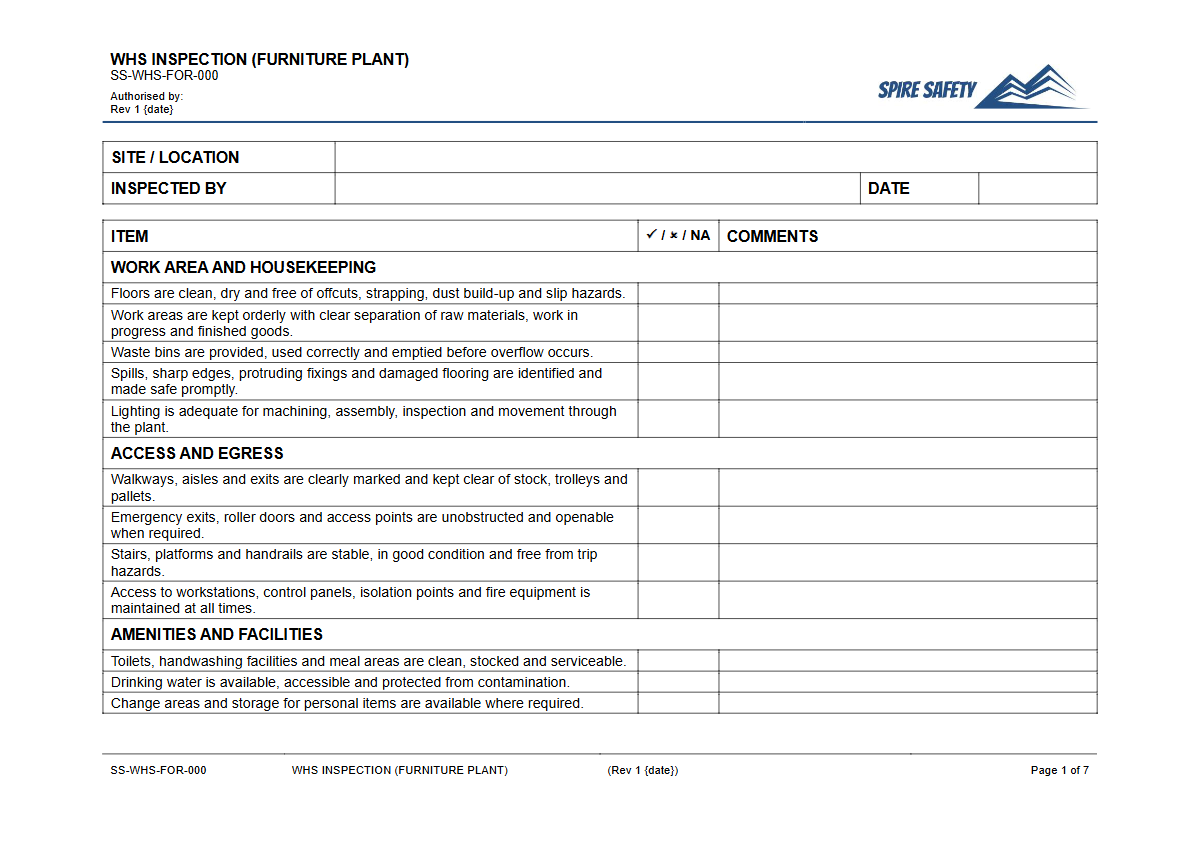
Furniture manufacturing plants present a unique combination of WHS risks, from complex woodworking machinery and hazardous manual tasks to wood dust and chemical exposures. This Free WHS Inspection (Furniture Plant) Template provides a structured starting point for systematically identifying these hazards, assessing the effectiveness of existing control measures, and documenting workplace safety conditions.
Using a formal checklist helps ensure that inspections are thorough, consistent, and cover critical areas specific to the industry.
The template is designed to prompt checks on key safety elements such as machine guarding on saws and sanders, the operational status of dust extraction systems, safe storage and handling of flammable liquids like stains and lacquers, and ergonomic risks associated with assembly and lifting. A key part of managing chemical risks is being prepared for accidents.
Documenting your procedures can be formalised with resources like our Spill Prevention and Response Toolbox Talk Template, which complements a physical inspection.
Video walkthrough
How to use the Free WHS Inspection (Furniture Plant) Template
This template is a practical tool designed for straightforward implementation. Follow these steps to integrate it into your safety processes:
- Download: Choose your preferred format, DOCX for easy editing or PDF for straightforward printing.
- Customise: Adapt the checklist to your specific site. Add, remove, or modify items to reflect the actual machinery, equipment, chemicals, and work processes used in your furniture plant.
- Inspect: Walk through the workplace and systematically complete the checklist. Physically verify each item rather than assuming it is safe. Note any non-conformances, defects, or hazards identified.
- Document: Record your findings clearly on the form. Use photos to support your observations where appropriate.
- Action: Assign corrective actions for each identified issue, including who is responsible for the action and a realistic completion date.
- Review: Follow up to ensure all corrective actions have been completed effectively. File the completed inspection for future reference and trend analysis.
Important: This document is a template and not a complete solution. We strongly recommend you customise it to ensure it is relevant to the specific hazards and operational risks in your workplace.
If you need assistance tailoring this document or developing robust safety procedures, consider engaging professional WHS consulting services.
When to use it
Regular, scheduled inspections are a cornerstone of proactive safety management. A furniture plant should be inspected on a routine basis, such as monthly or quarterly, depending on the level of risk. Beyond a regular schedule, this inspection should also be conducted:
- After any workplace incident, accident, or near miss to identify contributing factors.
- When new machinery, equipment, or substances are introduced into the workplace.
- When processes or layouts are significantly changed.
- As part of regular reviews of your safety management system.
These routine inspections are a practical way to gather ongoing safety data, which is distinct from but complementary to periodic, in-depth WHS compliance auditing.
Who should use it
This inspection template is designed for use by various personnel responsible for health and safety. This can include:
- Workplace Health and Safety (WHS) Managers or Coordinators.
- Production or Factory Floor Supervisors and Line Managers.
- Health and Safety Representatives (HSRs).
- Members of the WHS Committee.
Involving a mix of management and workers in the inspection process can provide a more comprehensive view of workplace risks and improve buy-in for any resulting safety improvements. Ultimately, the information gathered feeds into your organisation's overall WHS management systems, helping to drive continuous improvement and demonstrate due diligence.
While this template covers a broad plant-wide inspection, it is often beneficial to supplement it with more frequent, specific checks on individual pieces of equipment. This can be achieved with tools like our Free Pre-Start Checklist (Blender) Template, adapted for your specific machinery. To see more tools like this, you can browse our complete free WHS resources library.
Common mistakes
Common mistakes to avoid
- Using a generic inspection checklist without customising it for the plant's specific machinery and processes.
- Failing to assign corrective actions with clear responsibilities and due dates after identifying a hazard.
- Completing the form from a desk ('pencil-whipping') instead of physically walking the floor and verifying each item.
- Not reviewing past inspection reports to identify recurring safety issues or negative trends.
Legal references
Legal considerations
The following legal requirements may be relevant to this type of work.
- Work Health and Safety Act (Harmonised) — Provides the primary duties for protecting workers and other people from work health and safety risks.
- Work Health and Safety Regulations (Harmonised) — Sets out requirements supporting the management of workplace hazards and risks.
The following codes may be relevant to this type of work.
- Managing WHS Risks Code of Practice — Provides practical guidance on identifying hazards, assessing risks and applying effective controls.
- Work Health and Safety Consultation, Cooperation and Coordination Code of Practice — Provides practical guidance on consulting workers and coordinating with other duty holders.
- Managing the Work Environment and Facilities Code of Practice — Provides practical guidance on safe work environments, workplace facilities and related controls.
Did you know
Wood Dust Dangers
Certain hardwood dusts, such as from oak and beech, are classified as Group 1 carcinogens by the International Agency for Research on Cancer (IARC), meaning they are known to cause cancer in humans.
Manual Tasks
Injuries from hazardous manual tasks are a leading cause of serious workers' compensation claims in the Australian manufacturing industry. Proper ergonomic design and lifting aids are critical in furniture production.
FAQ
Frequently asked questions
01What are the most common WHS hazards in a furniture plant?
02How often should I conduct a full WHS inspection in my furniture factory?
03Is using this template enough to be WHS-aligned?
04Who is legally responsible for conducting workplace inspections?
Share this resource
Free WHS Inspection (Furniture Plant) Template
Browse Categories
How To Use It
- 1Download and open in Word or PDF.
- 2Replace the placeholders with your business details.
- 3Get it reviewed by a WHS specialist before rollout.
Need it customised?
Our WHS consultants can adapt this template to your site, run a gap analysis, or audit what you already have in place.
Book a Free Consultation WHS consulting servicesor call 1300 156 382