
Free WHS Inspection (Glass Workshop) Template
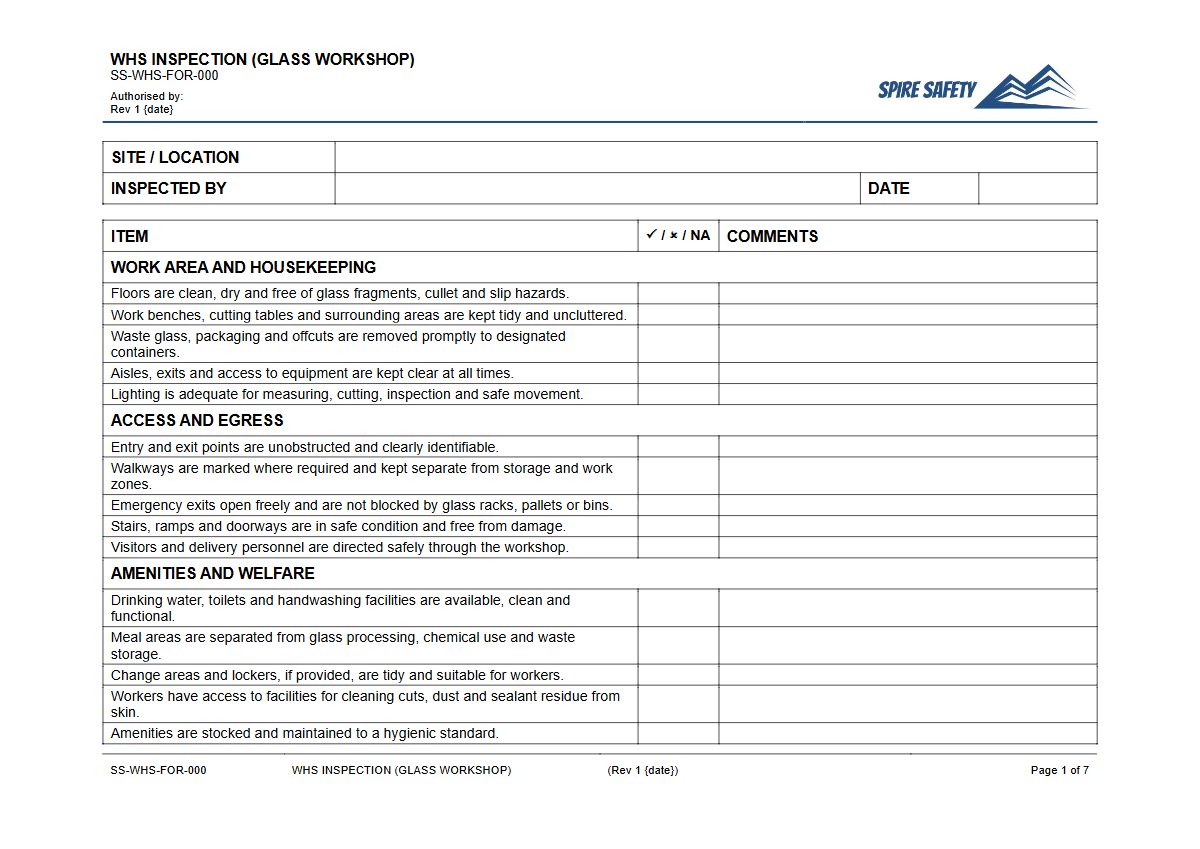
Download our Free WHS Inspection (Glass Workshop) Template (DOCX/PDF). A structured starting point for identifying hazards in glass processing areas.
Free WHS Inspection (Glass Workshop) Template
DOCX • 129 KB + PDF
Updated Oct 2026
No signup required
Purpose of the Free WHS Inspection (Glass Workshop) Template
Managing a glass workshop involves significant work health and safety risks, from severe cuts and lacerations to musculoskeletal injuries and exposure to hazardous dust. Our Free WHS Inspection (Glass Workshop) Template provides a structured starting point for systematically identifying and controlling these hazards.
Regular inspections are a fundamental part of the risk management process, helping your organisation meet its duty of care and prevent incidents before they occur. This template helps formalise the process of checking key areas, equipment, and safety procedures in a glass fabrication or processing environment.
Using a consistent checklist ensures that inspections are thorough and that nothing is overlooked. It creates a documented record of your safety efforts, which is crucial for demonstrating due diligence.
This template is designed to integrate into your existing safety framework, serving as a practical tool within comprehensive WHS management systems. It prompts a review of everything from cutting tables and grinding stations to personal protective equipment (PPE) and emergency procedures, promoting a safer workplace for everyone.
Video walkthrough
How to use the Free WHS Inspection (Glass Workshop) Template
This resource is available as a fully editable DOCX file and a ready-to-print PDF. The DOCX version allows for complete customisation to align with your specific operational needs. Follow these steps to get the most out of the template:
- Download: Select the DOCX or PDF version and download the file.
- Customise: Review the checklist items and adapt them to your workshop. Add, remove, or modify sections to reflect the specific machinery, tools, chemicals, and processes you use. Consider aspects like glass types, handling equipment, and workshop layout.
- IMPORTANT NOTE: This is a template, not a finished document. You must customise it to reflect the specific equipment, processes, and layout of your workplace. We cannot be held liable for incidents arising from the use of an unmodified or improperly customised template.
- Implement: Once customised, brief your team on the new inspection process. Ensure the designated inspectors understand each checkpoint and the procedure for reporting hazards and non-conformances.
- Schedule & Review: Integrate the inspection into your regular WHS schedule. After each inspection, review the findings, assign corrective actions with deadlines, and track them to completion.
Key Areas for Inspection
A thorough glass workshop inspection should cover multiple zones and hazard types. This template provides prompts for areas including:
- General Workshop Environment: Lighting, housekeeping, clear access/egress, trip hazards, and waste disposal (especially for sharp offcuts).
- Glass Storage: Condition of storage racks (A-frames, L-frames), proper securing of sheets, and safe access for retrieval.
- Cutting & Processing Areas: Condition of cutting tables, automated cutters, grinders, and polishers. Check for machine guarding, emergency stops, and dust extraction systems.
- Handling & Lifting: Availability and condition of manual handling aids like suction cups, trolleys, and lifting machinery. If you use overhead lifting equipment, a specific electric hoist pre-start checklist should also be used.
- Chemicals & Substances: Correct storage and labelling of cleaning agents, sealants, or polishing compounds, with Safety Data Sheets (SDS) readily available.
- Personal Protective Equipment (PPE): Availability, condition, and proper use of cut-resistant gloves, safety glasses, steel-capped boots, and respiratory protection.
- Site Traffic and Access: For larger facilities, managing the movement of vehicles and pedestrians is crucial. This can be supported by procedures like using a boom gate pre-start checklist at site entry points.
When to use it
The frequency of inspections depends on the level of risk associated with different areas and activities in your workshop. A practical approach is to establish a routine schedule, such as weekly or fortnightly general inspections, supplemented by daily pre-start checks on high-risk machinery.
This routine inspection is distinct from, but complementary to, other safety activities. It is less detailed than formal WHS compliance auditing, which provides a comprehensive, periodic assessment of your entire safety management system against legal and other requirements.
Who should use it
This template is designed for use by anyone with responsibility for workplace safety in a glass workshop. This includes:
- Business Owners and Directors (PCBUs)
- WHS Managers and Safety Officers
- Workshop Supervisors and Team Leaders
- Health and Safety Representatives (HSRs)
Involving workers who operate the machinery and perform the tasks daily is also highly recommended. Their direct experience is invaluable for identifying subtle or emerging hazards that a manager might miss.
For complex operations or high-risk environments, engaging specialist WHS consulting can provide expert guidance on customising your inspection protocols and ensuring your risk controls are effective.
Explore our complete free WHS resources library for more templates, checklists, and policies to support your safety management system.
Common mistakes
Common mistakes to avoid
- Using the template 'as is' without customising it for the specific workplace layout, machinery, and tasks.
- Failing to document and action the corrective measures identified during the inspection in a timely manner.
- Only having managers conduct inspections, without consulting the workers who use the equipment and face the risks daily.
- Not keeping clear, accessible records of completed inspections and the actions taken to resolve hazards.
Legal references
Legal considerations
The following legal requirements may be relevant to this type of work.
- Work Health and Safety Act (Harmonised) — Provides the primary duties for protecting workers and other people from work health and safety risks.
- Work Health and Safety Regulations (Harmonised) — Sets out requirements supporting the management of workplace hazards and risks.
The following codes may be relevant to this type of work.
- Managing WHS Risks Code of Practice — Provides practical guidance on identifying hazards, assessing risks and applying effective controls.
- Work Health and Safety Consultation, Cooperation and Coordination Code of Practice — Provides practical guidance on consulting workers and coordinating with other duty holders.
- Managing the Work Environment and Facilities Code of Practice — Provides practical guidance on safe work environments, workplace facilities and related controls.
Did you know
Silicosis Risk
Crystalline silica, a component of glass, can be released as respirable dust during cutting and grinding. Inhaling this dust can lead to silicosis, a serious and irreversible lung disease.
Toughened Glass
Toughened (or tempered) glass is up to five times stronger than regular glass. When it breaks, it shatters into small, blunt-edged pieces, significantly reducing the risk of severe cuts.
FAQ
Frequently asked questions
01Is this inspection template a legal requirement?
02What are the biggest hazards in a glass workshop?
03How often should I inspect my glass workshop?
04Can I use this template for other types of workshops?
Share this resource
Free WHS Inspection (Glass Workshop) Template
Browse Categories
How To Use It
- 1Download and open in Word or PDF.
- 2Replace the placeholders with your business details.
- 3Get it reviewed by a WHS specialist before rollout.
Need it customised?
Our WHS consultants can adapt this template to your site, run a gap analysis, or audit what you already have in place.
Book a Free Consultation WHS consulting servicesor call 1300 156 382