
Free WHS Inspection (Freight Depot) Template
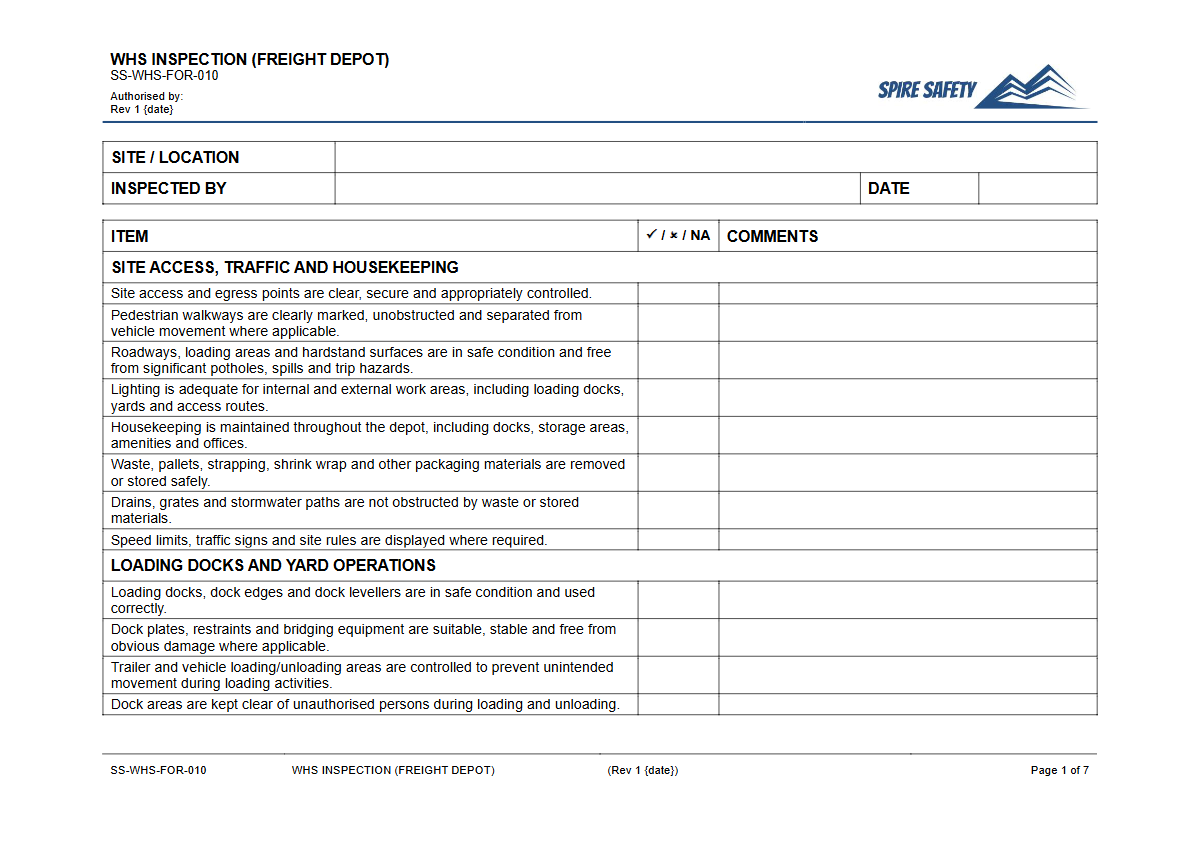
Download our Free WHS Inspection (Freight Depot) Template to systematically identify and control hazards in your transport and logistics workplace.
Free WHS Inspection (Freight Depot) Template
DOCX • 128 KB + PDF
Updated Oct 2026
No signup required
Purpose of the Free WHS Inspection (Freight Depot) Template
Freight depots are dynamic environments with a unique and complex range of work health and safety risks. Our Free WHS Inspection (Freight Depot) Template provides a structured starting point for systematically identifying and managing these hazards.
Regular inspections are a fundamental part of any safety management system, helping your organisation proactively address issues before they lead to incidents. This template is designed to guide you through a thorough check of your depot's key operational areas, focusing on high-risk activities like vehicle movement, loading and unloading, and manual handling.
Using this template helps formalise your safety procedures and create documented records of your safety efforts. It prompts a review of everything from traffic management controls and pedestrian safety to the condition of plant and equipment, emergency procedures, and general housekeeping.
By regularly inspecting these elements, you can better meet your duties under WHS legislation and cultivate a stronger safety culture. The goal is to move beyond reactive incident response to a proactive state of continuous safety improvement.
Video walkthrough
How to use the Free WHS Inspection (Freight Depot) Template
This Inspection template is provided as a fully editable DOCX file and a ready-to-use PDF. To get started, download the file and integrate it into your safety processes.
The template is a comprehensive foundation, but it is crucial that you adapt it to the specific layout, equipment, and procedures of your freight depot. No two depots are identical, so customisation is essential for an effective inspection.
Follow these steps for effective implementation:
- Customise: Add, remove, or modify checklist items to reflect your site's specific hazards. Consider your traffic management plan, types of freight handled, and specific machinery in use. We strongly recommend you add your company branding and document control information.
- Schedule: Determine a schedule for inspections. This might be weekly for high-traffic areas and monthly for a full depot-wide review.
- Assign: Assign responsibility for conducting the inspection to a competent person, such as a supervisor, manager, or Health and Safety Representative (HSR).
- Train: Ensure the person conducting the inspection understands what to look for and the standards required.
- Act: The most important step is to act on the findings. Assign corrective actions for any identified hazards, set deadlines, and track them to completion.
A well-executed inspection program is a cornerstone of effective WHS management systems, providing valuable data for risk assessments and safety performance reviews.
Key Inspection Areas in a Freight Depot
This template prompts you to assess several critical areas, including:
- Traffic Management: Are vehicle and pedestrian routes clearly marked, separated, and unobstructed? Are speed limits posted and enforced? Are entry and exit points, including boom gates, functioning correctly? Our free Pre-Start Checklist (Boom Gate) Template can be used for daily operational checks.
- Loading Docks and Bays: Are dock levellers, doors, and restraints in good working order? Are there controls in place to prevent drive-offs and falls from height?
- Plant and Equipment: Are forklifts, pallet jacks, and other machinery regularly maintained and operated safely? This template complements equipment-specific checks like our free pre-start checklist for electric hoists.
- Storage and Racking: Is racking installed correctly, rated for the loads, and free from damage? Are goods stacked securely to prevent collapse? For specialised areas like cold storage, our Pre-Start Checklist (Freezer) Template can be a useful tool.
- Hazardous Manual Tasks: Are mechanical aids available and in use? Are workers trained in safe lifting techniques?
- Emergency Preparedness: Are emergency exits clear, fire extinguishers accessible and serviced, and first aid kits fully stocked?
When to use this Inspection Template
Workplace inspections should be a regular, scheduled activity within your organisation. Use this template:
- As part of a routine safety schedule (e.g., weekly or monthly).
- After an incident, near miss, or hazard report to identify root causes.
- When a new process, piece of equipment, or work area is introduced.
- Before and after periods of significantly increased activity, such as peak season.
- As a tool for regular safety consultations with your team.
The findings from these inspections can also serve as valuable evidence during formal WHS compliance auditing, demonstrating your organisation's commitment to proactive risk management.
Who should use this Inspection Template
This template is designed for use by anyone responsible for safety in a transport and logistics environment. This typically includes:
- Site Managers and Supervisors: They are directly responsible for the safety of their work areas and teams.
- Work Health and Safety (WHS) Managers: They oversee the implementation and effectiveness of the overall safety management system.
- Health and Safety Representatives (HSRs): As representatives of the workforce, HSRs play a crucial role in monitoring workplace safety and can use this tool during their own inspections.
Involving a mix of management and workers in the inspection process often yields the best results, combining procedural knowledge with on-the-ground experience. If you require expert assistance in tailoring these processes or training your staff, our WHS consulting team can provide specialised support. For more document templates, browse our complete free WHS resources library.
Common mistakes
Common mistakes to avoid
- Using a generic checklist that doesn't address specific site hazards like unique traffic layouts or storage systems.
- Failing to close the loop by not tracking corrective actions identified during the inspection.
- Neglecting to involve workers and health and safety representatives (HSRs) in the inspection process.
- Only focusing on obvious hazards like forklifts and trucks, while ignoring pedestrian safety and housekeeping issues.
Legal references
Legal considerations
The following legal requirements may be relevant to this type of work.
- Work Health and Safety Act (Harmonised) — Provides the primary duties for protecting workers and other people from work health and safety risks.
- Work Health and Safety Regulations (Harmonised) — Sets out requirements supporting the management of workplace hazards and risks.
The following codes may be relevant to this type of work.
- Managing WHS Risks Code of Practice — Provides practical guidance on identifying hazards, assessing risks and applying effective controls.
- Work Health and Safety Consultation, Cooperation and Coordination Code of Practice — Provides practical guidance on consulting workers and coordinating with other duty holders.
- Managing the Work Environment and Facilities Code of Practice — Provides practical guidance on safe work environments, workplace facilities and related controls.
Did you know
Traffic Management is Key
The transport, postal, and warehousing industry has one of the highest rates of work-related fatalities in Australia, with vehicle collisions being a major cause. A dedicated traffic management plan is critical.
Manual Handling Risks
Musculoskeletal disorders are a leading cause of serious workers' compensation claims in the freight industry. Proper lifting techniques and mechanical aids are essential to mitigate these risks.
FAQ
Frequently asked questions
01What are the most common hazards in a freight depot?
02How often should safety inspections be conducted in a freight depot?
03What is the difference between a workplace inspection and a pre-start check?
04Who is responsible for fixing hazards found during an inspection?
Share this resource
Free WHS Inspection (Freight Depot) Template
Browse Categories
How To Use It
- 1Download and open in Word or PDF.
- 2Replace the placeholders with your business details.
- 3Get it reviewed by a WHS specialist before rollout.
Need it customised?
Our WHS consultants can adapt this template to your site, run a gap analysis, or audit what you already have in place.
Book a Free Consultation WHS consulting servicesor call 1300 156 382