
Free WHS Inspection (Event Centre) Template
Download our free WHS Inspection (Event Centre) Template to proactively manage safety at your venue. This DOCX & PDF checklist helps you formalise inspections.
Free WHS Inspection (Event Centre) Template
DOCX • 128 KB + PDF
Updated Oct 2026
No signup required
Purpose of the Free WHS Inspection (Event Centre) Template
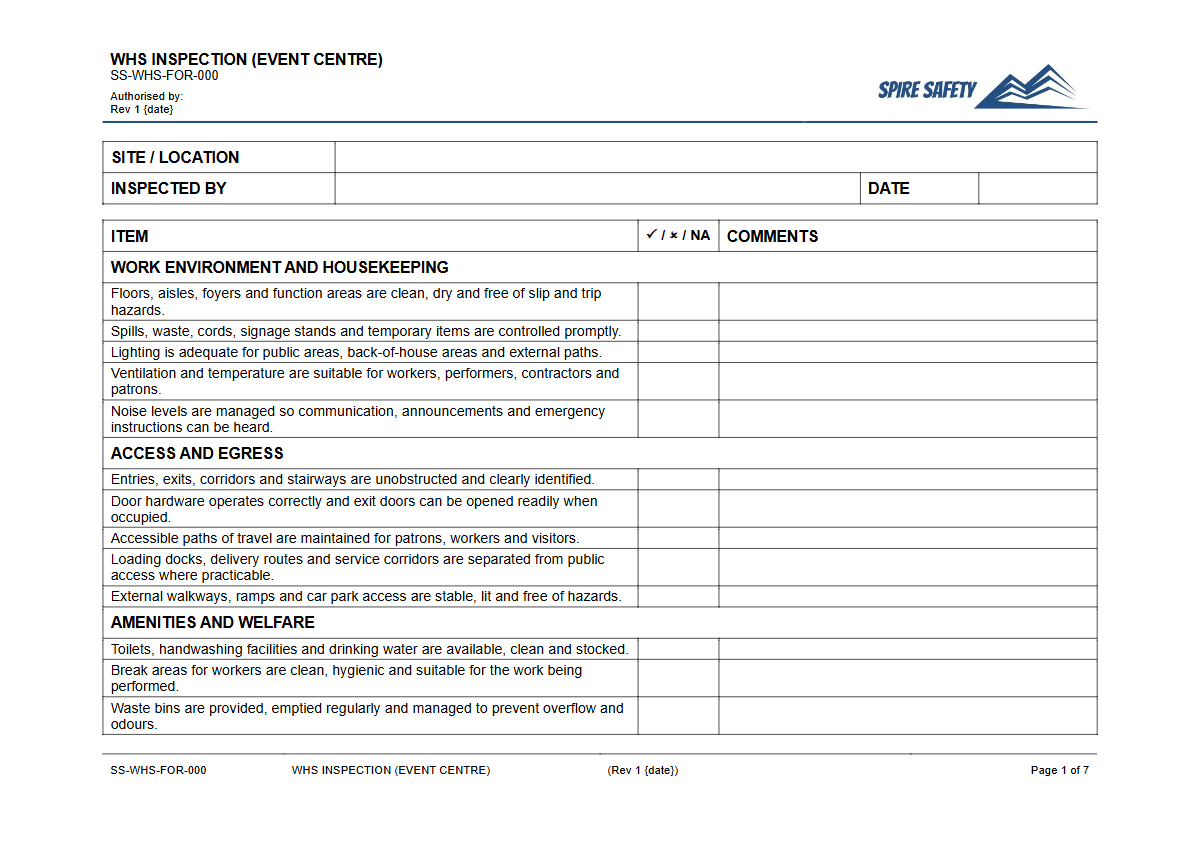
This Free WHS Inspection (Event Centre) Template provides a structured starting point for identifying and managing health and safety hazards within your venue. Event centres are dynamic environments with a unique mix of risks, from public access and crowd movement to temporary event infrastructure, electrical setups, and contractor activities.
Using a systematic checklist helps ensure that potential hazards are identified, assessed, and controlled before they can cause harm to workers, contractors, performers, or the public.
Regular inspections are a fundamental component of proactive safety management. They help an organisation demonstrate its commitment to WHS, maintain a safe environment, and prevent incidents.
Formalising this process with a dedicated template promotes consistency and ensures that key safety elements are not overlooked. This document is an essential tool for building robust WHS management systems that are effective and auditable.
What this Inspection Template covers
This template is designed as a comprehensive starting point, with sections covering common areas of risk in an event centre, including:
- General Housekeeping and Environment
- Emergency Preparedness (Egress, Fire Equipment, First Aid)
- Public Areas (Foyers, Seating, Amenities)
- Back of House Areas (Loading Docks, Storage, Plant Rooms)
- Electrical Safety
- Hazardous Substances
- Slips, Trips, and Falls
- Manual Tasks
Video walkthrough
How to use the Free WHS Inspection (Event Centre) Template
This template is provided in both DOCX and PDF formats. The DOCX version is fully editable, allowing you to tailor the content to the specific layout, equipment, and operational needs of your venue.
The PDF version is ideal for quick printing and immediate use. When conducting the inspection, the inspector should physically walk through each area, observe work practices, and check the condition of the environment and equipment against the checklist items.
Please note: This template is a guide. We cannot guarantee it covers every specific hazard at your site.
You must customise this document by adding, removing, or modifying sections to suit your event centre’s unique layout, equipment, and operations. For checks on specific kitchen equipment, you might use a dedicated form like our freezer pre-start checklist.
Document all findings, noting any hazards or non-conformances. For each identified issue, assign a corrective action, a responsible person, and a due date for completion.
This creates a clear action plan and an audit trail to ensure hazards are effectively managed. You can discover more helpful documents like this in our free WHS resources library.
When to use this Inspection
The frequency of inspections depends on your venue's risk profile, the type and scale of events, and regulatory requirements. A good practice approach includes several types of inspections:
- Routine Inspections: Conducted on a regular schedule (e.g., weekly or monthly) to monitor the general state of the venue's facilities and environment.
- Pre-Event Inspections: Carried out before the start of a major event or bump-in, focusing on event-specific setups, contractor work areas, and public access routes.
- Post-Event Inspections: Performed after an event and bump-out to identify any damage, leftover hazards, or cleaning requirements.
- Triggered Inspections: Undertaken in response to an incident, a reported hazard, or a significant change in the workplace, such as the introduction of new equipment or structures.
Integrating these regular checks with periodic, in-depth reviews is key to maintaining high safety standards. While this template is for operational checks, a formal WHS compliance audit provides a more comprehensive assessment of your entire safety system against legal benchmarks.
Who should use this template
This WHS inspection template is suitable for various personnel within an event centre organisation. The primary users would typically be:
- Venue or Operations Managers
- Work Health and Safety (WHS) Officers or Advisors
- Event Coordinators and Managers
- Supervisors of specific departments (e.g., Technical, Catering, Facilities)
- Members of the Health and Safety Committee
The person conducting the inspection should be competent to do so, meaning they have the knowledge and experience to identify hazards relevant to an event centre. This includes understanding the risks associated with temporary structures and event equipment, such as those covered in a specific pre-start checklist for an electric hoist used in rigging.
Involving a range of personnel in the inspection process can also be beneficial. Workers and supervisors from different departments bring valuable, hands-on knowledge of their specific work areas, leading to a more thorough and effective inspection.
This also applies to external areas like car parks, where a boom gate pre-start checklist may complement the broader venue inspection.
Common mistakes
Common mistakes to avoid
- Using a generic checklist without customising it for the specific venue and event type.
- Failing to document findings and track corrective actions through to completion.
- Only inspecting 'front of house' areas and neglecting back-of-house, storage, and plant rooms.
- Not involving workers or event staff, who have first-hand knowledge of hazards in their areas.
Legal references
Legal considerations
The following legal requirements may be relevant to this type of work.
- Work Health and Safety Act (Harmonised) — Provides the primary duties for protecting workers and other people from work health and safety risks.
- Work Health and Safety Regulations (Harmonised) — Sets out requirements supporting the management of workplace hazards and risks.
The following codes may be relevant to this type of work.
- Managing WHS Risks Code of Practice — Provides practical guidance on identifying hazards, assessing risks and applying effective controls.
- Work Health and Safety Consultation, Cooperation and Coordination Code of Practice — Provides practical guidance on consulting workers and coordinating with other duty holders.
- Managing the Work Environment and Facilities Code of Practice — Provides practical guidance on safe work environments, workplace facilities and related controls.
Did you know
A Workforce in Motion
The events industry often relies on a high number of temporary and contract workers. This can increase WHS complexity due to varied levels of training, induction, and familiarity with a venue's specific safety procedures.
The Most Common Hazard
According to Safe Work Australia data, slips, trips, and falls are consistently among the most common causes of injury in workplaces with public access, making floor surfaces, housekeeping, and cable management critical inspection points in event centres.
FAQ
Frequently asked questions
01What areas should a WHS inspection for an event centre cover?
02How often should I inspect my event centre?
03Is this template suitable for all types of events?
04What is the difference between an inspection and a risk assessment?
Share this resource
Free WHS Inspection (Event Centre) Template
Browse Categories
How To Use It
- 1Download and open in Word or PDF.
- 2Replace the placeholders with your business details.
- 3Get it reviewed by a WHS specialist before rollout.
Need it customised?
Our WHS consultants can adapt this template to your site, run a gap analysis, or audit what you already have in place.
Book a Free Consultation WHS consulting servicesor call 1300 156 382