
Free WHS Inspection (Distribution Hub) Template
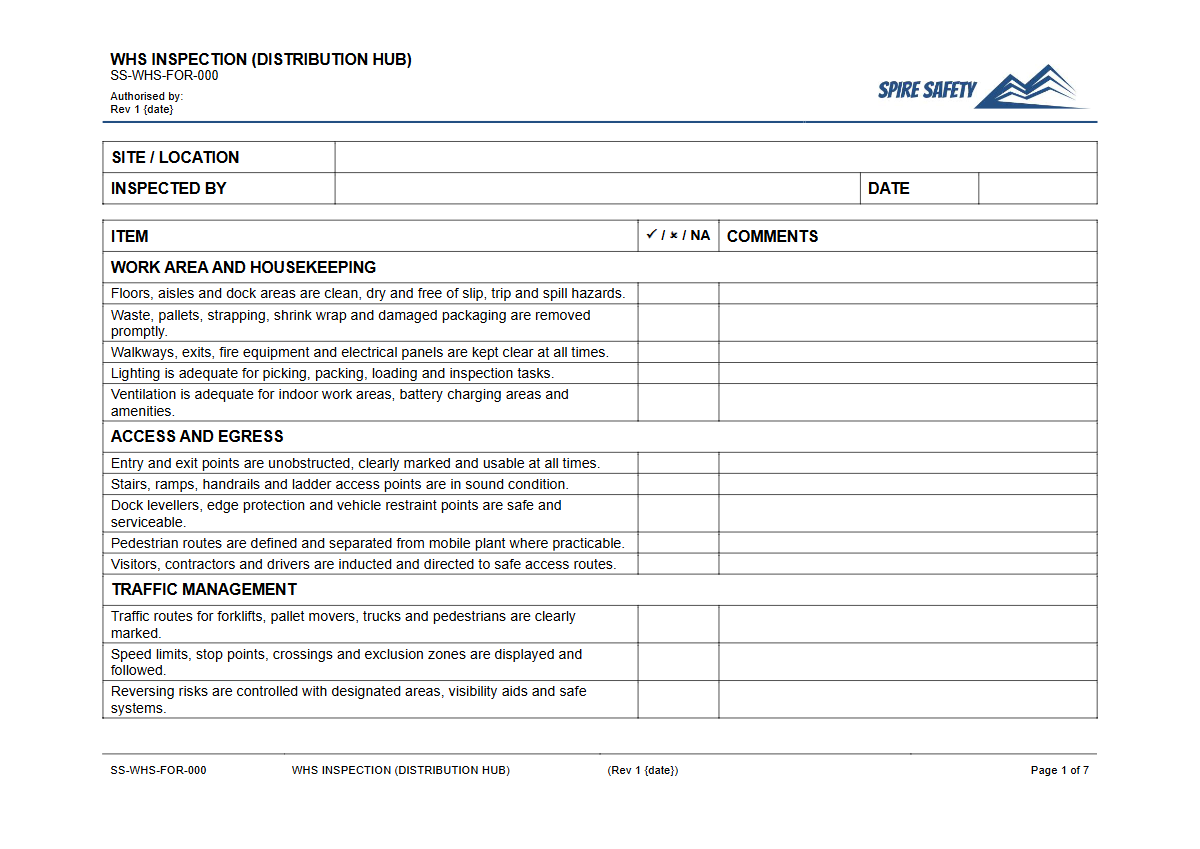
Download our Free WHS Inspection (Distribution Hub) Template to formalise safety checks in your logistics or warehouse facility. A structured starting point.
Free WHS Inspection (Distribution Hub) Template
DOCX • 128 KB + PDF
Updated Oct 2026
No signup required
Purpose of the Free WHS Inspection (Distribution Hub) Template
Distribution hubs are dynamic and complex environments with a unique combination of hazards, including moving vehicles, manual handling, and automated machinery. This Free WHS Inspection (Distribution Hub) Template provides a structured starting point for systematically identifying and managing these risks.
Regularly conducting and documenting inspections demonstrates a commitment to safety and helps your organisation meet its duty of care obligations under Australian WHS legislation.
Using a standardised template ensures that inspections are consistent, thorough, and recorded effectively. The findings from these inspections are a critical input for your broader safety framework, informing risk assessments, safe work procedures, and continuous improvement initiatives.
A robust inspection program is a cornerstone of effective WHS management systems, helping to create a safer workplace for everyone.
This template is designed to be adaptable to various areas within your facility, from loading docks and pallet racking aisles to specialised zones. For instance, if your hub includes cold storage, inspections should cover risks specific to that environment, such as slippery surfaces and emergency releases, which can be supplemented by resources like our Free Pre-Start Checklist (Freezer) Template.
Video walkthrough
How to use the Free WHS Inspection (Distribution Hub) Template
This template is a starting point designed to be adapted to the specific needs of your workplace. To implement it effectively:
- Download and Customise: Add, remove, or modify checklist items to reflect the specific layout, equipment, traffic flow, and hazards present in your distribution hub.
- Consult with Workers: Involve your team, including warehouse staff, forklift operators, and Health and Safety Representatives (HSRs), in tailoring the checklist. They have firsthand knowledge of daily tasks and potential risks.
- Train Inspectors: Ensure that anyone conducting the inspection is competent to do so. They must understand what to look for, recognise non-compliance, and know the procedure for reporting hazards.
- Conduct the Inspection: Walk through the designated areas, systematically checking each item on the list. Document any hazards, non-conformances, or areas for improvement immediately.
- Implement Corrective Actions: For every issue identified, assign a corrective action, a responsible person, and a deadline. Track these actions to ensure they are completed and effective.
For specific pieces of equipment within the hub, it is best practice to use dedicated pre-start checklists. For example, if your inspection identifies issues with lifting equipment, you may need to implement daily checks using a tool like our Free Pre-Start Checklist (Electric Hoist) Template to manage those specific risks more closely.
A Note on Customisation
This document is a template, not a finished product. Every workplace is unique.
You must customise this inspection to suit your specific site, machinery, and operational procedures. We cannot guarantee it covers every potential hazard at your location; that responsibility lies with the Person Conducting a Business or Undertaking (PCBU).
When to use it
Formal inspections of your distribution hub should be conducted at regular, scheduled intervals. The frequency—whether weekly, monthly, or quarterly—will depend on the size of your facility, the nature of the work, and your risk assessment findings.
A higher-risk environment may require more frequent inspections.
In addition to routine checks, this inspection should be performed:
- After an incident, accident, or near miss.
- When significant changes are made to the workplace, such as the introduction of new machinery, changes to layout, or new work processes.
- When concerns or hazards are reported by workers.
- As part of preparation for external safety evaluations or WHS compliance auditing.
Who should use it
This template is designed for use by individuals with responsibility for workplace health and safety in a logistics or distribution setting. This typically includes:
- WHS Managers and Safety Officers
- Warehouse Managers and Supervisors
- Team Leaders
- Health and Safety Representatives (HSRs)
While a designated person may lead the inspection, the process should involve consultation with workers on the floor. Their direct input is invaluable for identifying practical, day-to-day hazards that might otherwise be missed.
For controlled entry and exit points, a specific checklist like our Free Pre-Start Checklist (Boom Gate) Template can also supplement the general site inspection.
Explore our free WHS resources library for more templates and checklists to support your safety management system and help you manage specific workplace hazards effectively.
Common mistakes
Common mistakes to avoid
- Failing to customise the template to the specific site layout, equipment, and workflows.
- Performing inspections as a 'tick and flick' exercise without genuine observation or engagement.
- Not documenting corrective actions or failing to follow up to ensure they have been implemented effectively.
- Neglecting to consult with workers or HSRs who have direct experience with the daily hazards.
Legal references
Legal considerations
The following legal requirements may be relevant to this type of work.
- Work Health and Safety Act (Harmonised) — Provides the primary duties for protecting workers and other people from work health and safety risks.
- Work Health and Safety Regulations (Harmonised) — Sets out requirements supporting the management of workplace hazards and risks.
The following codes may be relevant to this type of work.
- Managing WHS Risks Code of Practice — Provides practical guidance on identifying hazards, assessing risks and applying effective controls.
- Work Health and Safety Consultation, Cooperation and Coordination Code of Practice — Provides practical guidance on consulting workers and coordinating with other duty holders.
- Managing the Work Environment and Facilities Code of Practice — Provides practical guidance on safe work environments, workplace facilities and related controls.
Did you know
Forklift Incidents
According to Safe Work Australia, the transport, postal, and warehousing industry has one of the highest rates of serious injury claims, with forklift-related incidents being a significant contributor.
Manual Handling Risks
Body stressing, or musculoskeletal disorders, consistently accounts for the majority of serious workers' compensation claims in Australia. In a distribution hub, these injuries often result from hazardous manual tasks like lifting, carrying, and pushing loads.
FAQ
Frequently asked questions
01What are the most common hazards in a distribution hub?
02How often should a distribution hub be inspected?
03Who is legally responsible for WHS in a logistics warehouse?
04Is a digital inspection system better than a paper template?
Share this resource
Free WHS Inspection (Distribution Hub) Template
Browse Categories
How To Use It
- 1Download and open in Word or PDF.
- 2Replace the placeholders with your business details.
- 3Get it reviewed by a WHS specialist before rollout.
Need it customised?
Our WHS consultants can adapt this template to your site, run a gap analysis, or audit what you already have in place.
Book a Free Consultation WHS consulting servicesor call 1300 156 382