
Free WHS Inspection (Dockyard) Template
Download our Free WHS Inspection (Dockyard) Template to formalise safety checks in maritime environments.
Free WHS Inspection (Dockyard) Template
DOCX • 129 KB + PDF
Updated Oct 2026
No signup required
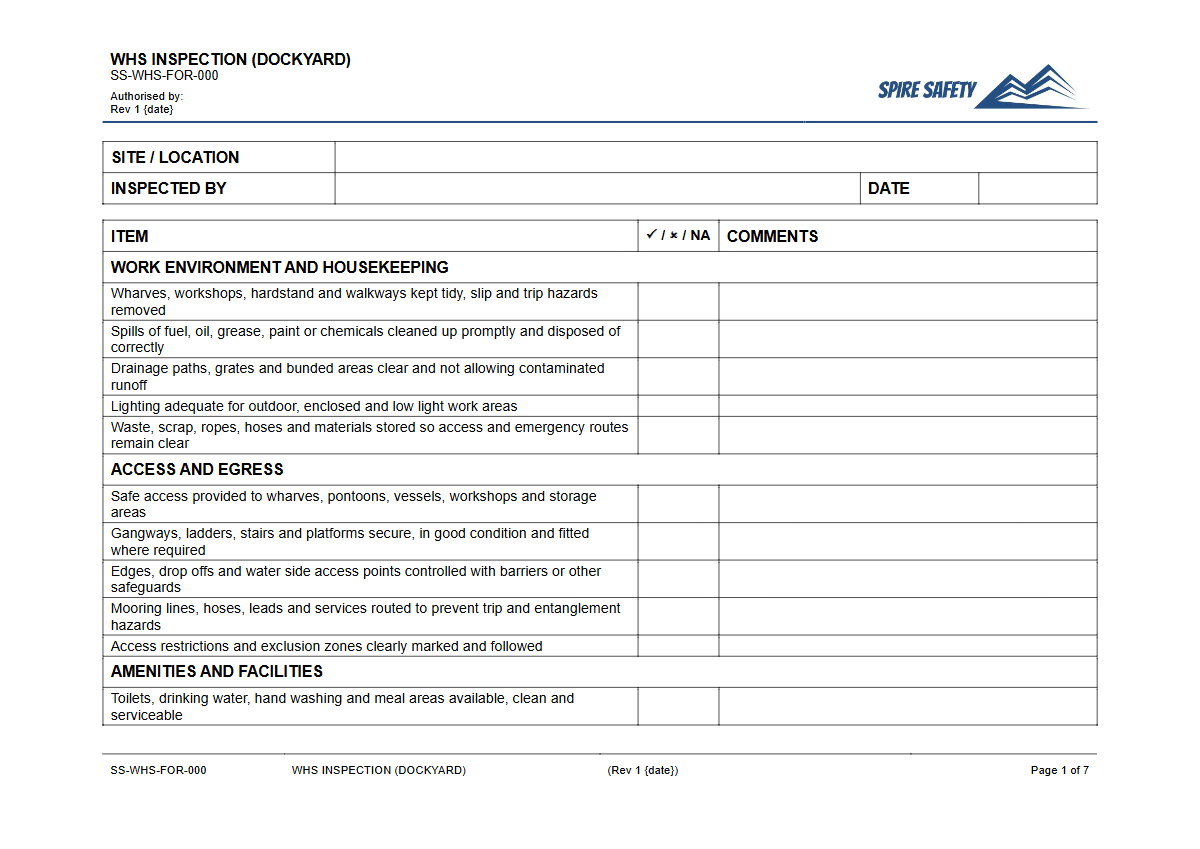
Purpose of the Free WHS Inspection (Dockyard) Template
Dockyards are dynamic and high-risk work environments, featuring a unique combination of heavy machinery, vehicle traffic, vessel movements, and environmental hazards. A systematic approach to safety is essential.
This Free WHS Inspection (Dockyard) Template provides a structured starting point for organisations to formalise their safety inspection processes, helping to proactively identify and control risks before they lead to incidents. Regular use of this inspection checklist supports a PCBU's primary duty of care by demonstrating active hazard management.
This template is designed to guide personnel through a thorough check of key areas in a typical dockyard, including traffic management, storage and stacking, plant and equipment safety, fall prevention, and emergency preparedness. Integrating such inspections is a fundamental part of developing robust WHS management systems that protect workers and meet regulatory expectations.
Video walkthrough
How to use the Free WHS Inspection (Dockyard) Template
Upon downloading, you will receive the template in both DOCX and PDF formats. The DOCX file is fully editable, allowing you to tailor the checklist to the unique hazards and operational procedures of your specific site.
This customisation is a critical step in ensuring the inspection is relevant and effective.
Important: It’s crucial to adapt this template to the specific layout, equipment, and operations of your worksite. We've provided a solid foundation aligned with Australian WHS principles, but you must add, remove, or modify items to reflect your site-specific risks and control measures.
A generic checklist is never a substitute for a site-specific risk assessment.
Once customised, the template should be used to schedule and record regular inspections. Ensure all personnel tasked with conducting inspections are trained on its use and are competent to identify the hazards listed.
Completed inspection forms should be filed and reviewed to track corrective actions and identify recurring safety issues. You can explore our free WHS resources library for other templates that can support your safety processes.
When to conduct a Dockyard Inspection
The frequency of dockyard inspections should be determined by a risk assessment, but a typical schedule may include:
- Routine Inspections: Conducted daily, weekly, or monthly to monitor general site conditions and compliance with standard safety procedures.
- Pre-Task Checks: Before commencing specific high-risk activities, such as heavy lifts or confined space entry, to ensure all controls are in place.
- Post-Incident Reviews: After an incident or near miss to identify contributing factors and prevent recurrence.
- Following Changes: After any significant change to the workplace, such as the introduction of new equipment, changes in layout, or new work procedures. Consistent inspection helps maintain control over the work environment, especially for fixed assets like vehicle barriers, where our Free Pre-Start Checklist (Boom Gate) Template can also be beneficial.
Who should use this Inspection template
This template is designed for use by personnel with responsibilities for workplace safety. This typically includes:
- Work Health and Safety (WHS) Managers and Officers
- Site Supervisors and Foremen
- Port and Terminal Managers
- Health and Safety Representatives (HSRs)
- Members of the WHS Committee
- Competent workers assigned to conduct inspections in their work areas
The individuals performing the inspection must have the necessary knowledge and experience to recognise the specific hazards associated with dockyard operations. For complex sites or those needing a third-party perspective, engaging external support for WHS compliance auditing can validate the effectiveness of your internal inspection program.
Specific machinery, like cranes and hoists, require detailed attention; our Free Pre-Start Checklist (Electric Hoist) Template provides a more focused tool for this critical equipment.
For organisations requiring more hands-on assistance in customising documents or implementing safety frameworks in complex environments like dockyards, our specialised WHS consulting services can provide expert guidance and support tailored to your needs.
Common mistakes
Common mistakes to avoid
- Using a generic checklist without customising it for the specific dockyard layout and equipment.
- Failing to assign and track corrective actions for identified hazards, leaving risks uncontrolled.
- Inspectors 'pencil-whipping' the form without physically verifying the items, rendering the inspection useless.
- Not training inspectors on how to identify specific hazards or understand the control measures they are checking.
Legal references
Legal considerations
The following legal requirements may be relevant to this type of work.
- Work Health and Safety Act (Harmonised) — Provides the primary duties for protecting workers and other people from work health and safety risks.
- Work Health and Safety Regulations (Harmonised) — Sets out requirements supporting the management of workplace hazards and risks.
The following codes may be relevant to this type of work.
- Managing WHS Risks Code of Practice — Provides practical guidance on identifying hazards, assessing risks and applying effective controls.
- Work Health and Safety Consultation, Cooperation and Coordination Code of Practice — Provides practical guidance on consulting workers and coordinating with other duty holders.
- Managing the Work Environment and Facilities Code of Practice — Provides practical guidance on safe work environments, workplace facilities and related controls.
Did you know
A High-Risk Industry
The Transport, Postal & Warehousing industry, which includes port and dockyard operations, consistently ranks among the industries with the highest rates of serious workplace injury claims in Australia.
Australia's Busiest Port
The Port of Melbourne is Australia's busiest container and general cargo port, handling more than one-third of the nation's container trade. Managing safety across such a large and complex site requires thousands of daily checks and inspections.
FAQ
Frequently asked questions
01What are the most common hazards in a dockyard?
02How often should dockyard safety inspections be conducted?
03Is this template suitable for all types of ports and dockyards?
04What is the process after a hazard is found during an inspection?
Share this resource
Free WHS Inspection (Dockyard) Template
Browse Categories
How To Use It
- 1Download and open in Word or PDF.
- 2Replace the placeholders with your business details.
- 3Get it reviewed by a WHS specialist before rollout.
Need it customised?
Our WHS consultants can adapt this template to your site, run a gap analysis, or audit what you already have in place.
Book a Free Consultation WHS consulting servicesor call 1300 156 382