
Free WHS Inspection (Electrical Shop) Template
Download our Free WHS Inspection (Electrical Shop) Template to identify and control hazards in your workshop.
Free WHS Inspection (Electrical Shop) Template
DOCX • 128 KB + PDF
Updated Oct 2026
No signup required
Purpose of the Free WHS Inspection (Electrical Shop) Template
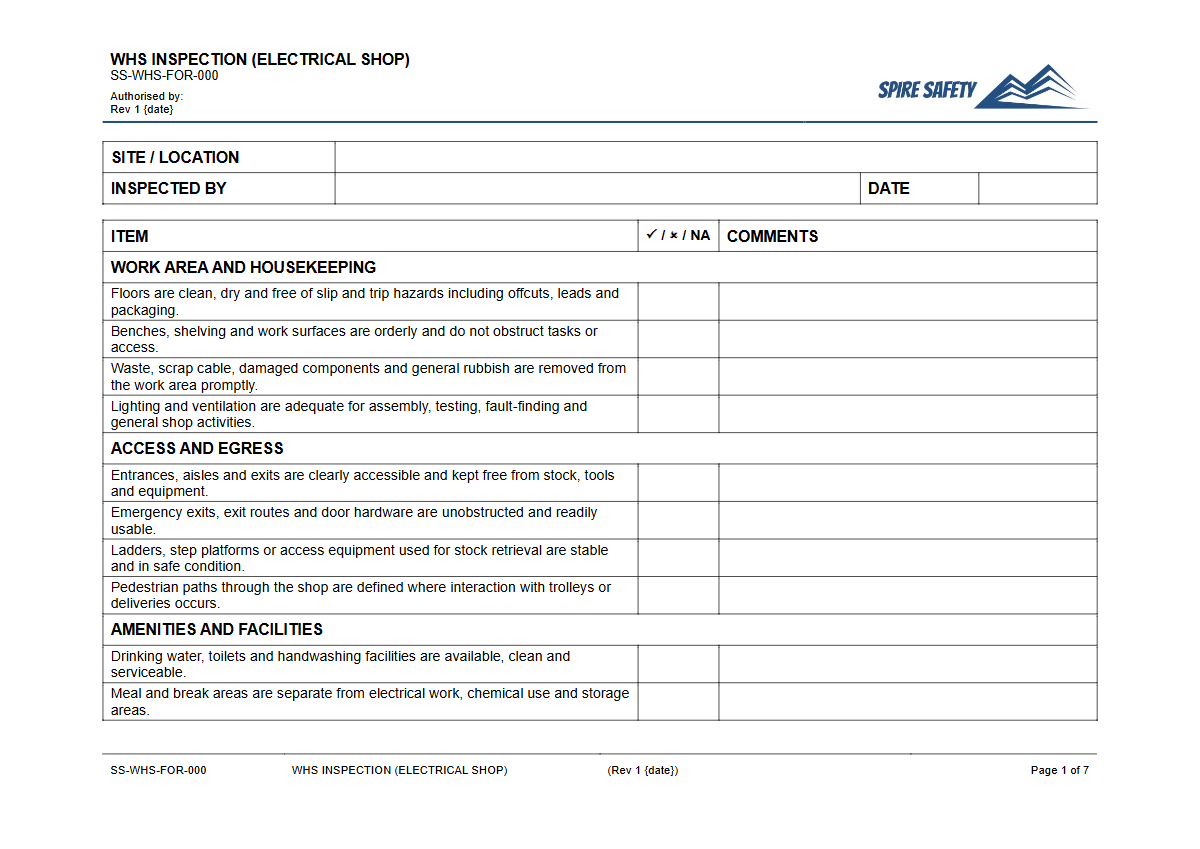
This Free WHS Inspection (Electrical Shop) Template provides a structured starting point for systematically identifying hazards within a retail or workshop environment. Regular inspections are a fundamental part of proactive safety management, helping to prevent incidents before they occur.
This template is designed to guide you through key areas, from trip hazards and fire safety to electrical equipment testing and chemical storage, ensuring a comprehensive review of your workplace.
Using this template helps an organisation demonstrate due diligence by proactively managing workplace risks. It encourages a methodical approach to safety, moving beyond reactive measures to a system of planned checks.
By regularly identifying and addressing unsafe conditions and behaviours—such as damaged electrical cords, blocked emergency exits, poor housekeeping, or incorrect storage of hazardous substances—you create a safer environment for both workers and customers. These routine checks are a critical component of effective WHS management systems.
Video walkthrough
How to use the Free WHS Inspection (Electrical Shop) Template
To get started, download the template in your preferred format (DOCX or PDF). The key to an effective inspection is preparation and customisation.
Before your first walk-through, take the time to adapt the checklist to the specific layout, equipment, and processes of your business. This may involve adding checks for specialised machinery or removing sections that are not relevant to your operations.
Once customised, the inspection can be conducted by walking through the premises and methodically checking each item.
Important: It is essential to customise this template for the specific layout, equipment, and processes of your electrical shop. We've provided a comprehensive starting point, but you must add, remove, or modify sections to reflect your unique operational risks and legal obligations. For more tools to support your safety processes, browse our complete free WHS resources library.
When to use it
The frequency of inspections should be determined by a risk assessment. As a general guide, a comprehensive workplace inspection of an electrical shop should be conducted at least monthly.
High-traffic or higher-risk areas, such as the repair workshop or goods receival dock, may require more frequent checks, perhaps on a weekly basis. In addition to these scheduled inspections, this template should be used whenever there is a significant change in the workplace, such as the introduction of new equipment, a change in layout, or after an incident or near miss has occurred.
This general inspection checklist can be supplemented with more specific equipment checks. For instance, if your workshop uses lifting equipment to move heavy stock, you should also implement daily checks using a dedicated tool like our Free Pre-Start Checklist (Electric Hoist) Template before each use.
Who should use it
Workplace inspections should be carried out by a person or persons with the knowledge and competence to identify hazards specific to an electrical retail and repair environment. This could be a Store Manager, Workshop Supervisor, Health and Safety Representative (HSR), or another worker deputised with the task.
Involving different people in inspections over time can help bring a fresh perspective and increase overall safety awareness across the team.
While this template is ideal for routine internal checks, it does not replace the need for more rigorous, independent reviews. Periodically, your business may benefit from formal WHS compliance auditing to verify that your safety systems meet all legislative requirements.
These audits provide a deeper level of assurance and are typically conducted by external safety professionals.
Remember to check all areas of the business, not just the main sales floor. Back-of-house areas like loading docks are critical.
If your site has controlled access, implementing checks using our Free Pre-Start Checklist (Boom Gate) Template can help manage vehicle and pedestrian safety. Staff amenities like lunchrooms also require inspection; using a simple freezer pre-start checklist for shared appliances helps maintain electrical safety and hygiene.
Documenting and Actioning Findings
The final step of any inspection is the most important: taking action. Simply identifying a hazard is not enough.
Your completed inspection report must clearly document any issues found, assign responsibility for correcting them, and set a realistic deadline for completion. All completed inspection forms should be filed as part of your WHS records.
These records are vital for tracking safety performance and demonstrating compliance. If you need assistance developing these follow-up processes, our expert WHS consulting team can help build a system that works for you.
Common mistakes
Common mistakes to avoid
- Conducting the inspection from a desk instead of physically walking the entire shop floor.
- Failing to document corrective actions and assign responsibility for fixing identified issues.
- Forgetting to inspect less-frequented areas like storage rooms, back docks, or staff lunchrooms.
- Using the template as-is without customising it for the specific equipment and layout of the business.
Legal references
Legal considerations
The following legal requirements may be relevant to this type of work.
- Work Health and Safety Act (Harmonised) — Provides the primary duties for protecting workers and other people from work health and safety risks.
- Work Health and Safety Regulations (Harmonised) — Sets out requirements supporting the management of workplace hazards and risks.
The following codes may be relevant to this type of work.
- Managing WHS Risks Code of Practice — Provides practical guidance on identifying hazards, assessing risks and applying effective controls.
- Work Health and Safety Consultation, Cooperation and Coordination Code of Practice — Provides practical guidance on consulting workers and coordinating with other duty holders.
- Managing the Work Environment and Facilities Code of Practice — Provides practical guidance on safe work environments, workplace facilities and related controls.
Did you know
Hierarchy of Control
The most effective way to manage electrical risks isn't just using safety switches. The hierarchy of control prioritises eliminating the hazard first, which is far more effective than relying on Personal Protective Equipment (PPE).
Test and Tag
In Australia, the required frequency for testing and tagging electrical equipment varies by environment. A workshop is considered a more hostile environment than an office, requiring more frequent checks for many portable items.
FAQ
Frequently asked questions
01What's the difference between a WHS inspection and an audit?
02How often should I inspect my electrical shop?
03Do I need a licensed electrician to do this general inspection?
04Is this template suitable for a mobile electrical repair service?
Share this resource
Free WHS Inspection (Electrical Shop) Template
Browse Categories
How To Use It
- 1Download and open in Word or PDF.
- 2Replace the placeholders with your business details.
- 3Get it reviewed by a WHS specialist before rollout.
Need it customised?
Our WHS consultants can adapt this template to your site, run a gap analysis, or audit what you already have in place.
Book a Free Consultation WHS consulting servicesor call 1300 156 382