
Free WHS Inspection (Electrical Room) Template
Download our Free WHS Inspection (Electrical Room) Template to formalise safety checks of your switchrooms. A structured starting point for managing risks.
Free WHS Inspection (Electrical Room) Template
DOCX • 126 KB + PDF
Updated Oct 2026
No signup required
Purpose of the Free WHS Inspection (Electrical Room) Template
Electrical rooms, switchrooms, and switchboards are high-risk areas present in most Australian workplaces. This Free WHS Inspection (Electrical Room) Template provides a structured starting point for systematically identifying and controlling hazards such as electric shock, arc flash, fire, and unauthorised access.
Regular, documented inspections are a fundamental part of managing electrical safety and demonstrating due diligence. Using a formal checklist helps ensure that no critical safety elements are overlooked, from signage and access control to the condition of switchgear and emergency equipment.
This template is designed to be integrated into your broader safety framework, providing a practical tool for proactive risk management. It helps an organisation fulfill its duty of care by maintaining a safe work environment.
Formalising this process is a key component of robust WHS management systems, creating a clear record of safety activities and corrective actions taken.
Video walkthrough
How to use the Free WHS Inspection (Electrical Room) Template
Begin by downloading the template in your preferred format. The DOCX file is fully editable, allowing for extensive customisation, while the PDF is suitable for immediate printing and use.
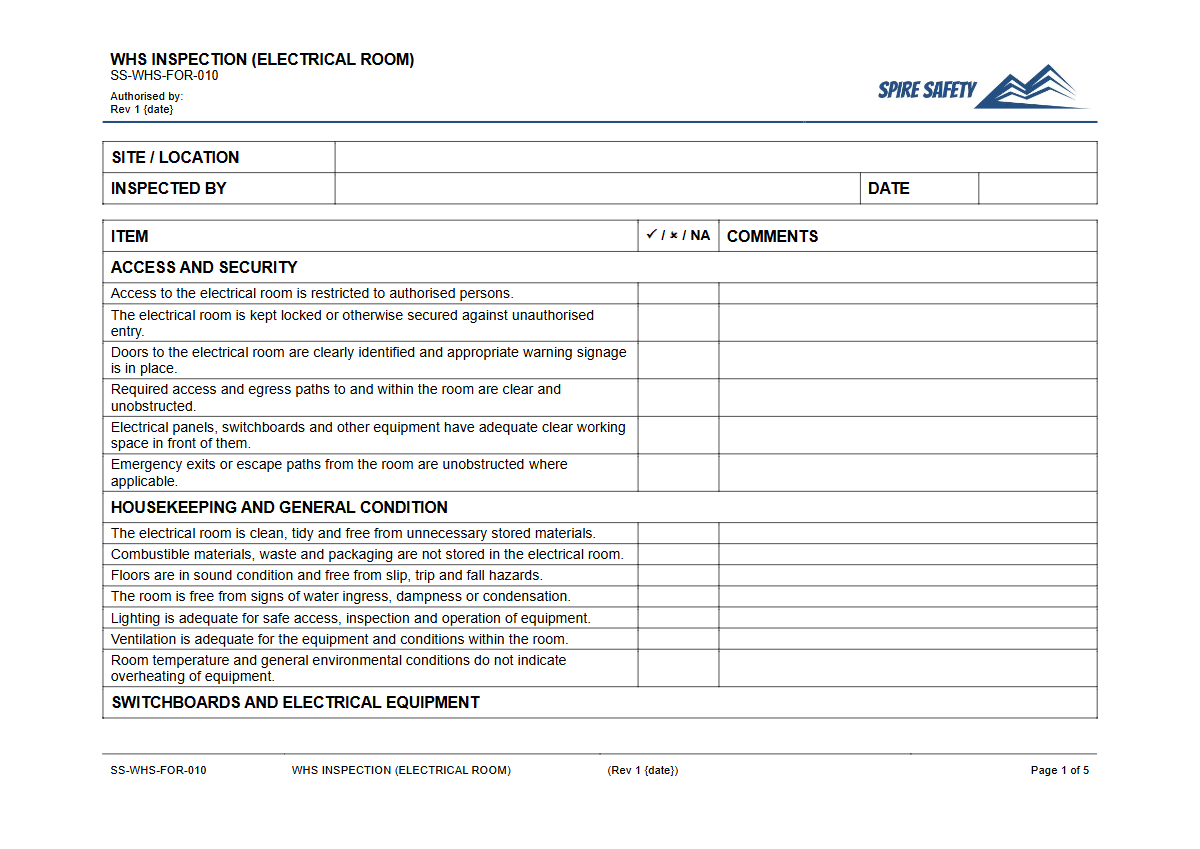
The document is structured to guide a competent person through a logical inspection sequence, covering key areas of concern within an electrical room environment.
Important: It is crucial to customise this document for your specific workplace. We've provided a solid foundation based on common Australian WHS practices, but you must add, remove, or modify sections to reflect the unique equipment, layout, and risks present in your electrical rooms.
This may include referencing specific Australian Standards or local safe operating procedures.
The checklist covers categories such as:
- Access and Security: Ensuring the area is secure and only authorised personnel can enter.
- Signage and Labelling: Verifying that all necessary danger, warning, and instructional signs are in place and legible.
- Housekeeping: Checking for clear access, egress, and that the room is not used for general storage.
- Equipment Condition: A general visual inspection of switchboards, panels, and wiring for signs of damage, overheating, or defects.
- Fire Safety: Confirming that appropriate fire extinguishers are present, serviced, and accessible.
- Emergency Preparedness: Verifying the availability of rescue equipment and emergency lighting.
Similar to using our Free Pre-Start Checklist (Electric Hoist) Template for specific equipment, this inspection focuses on the overall safety of the environment where critical electrical infrastructure is housed.
When to conduct an Electrical Room Inspection
The frequency of electrical room inspections should be determined by a risk assessment, but regular checks are essential. A common practice is to conduct these inspections at planned intervals, such as monthly or quarterly, as part of your scheduled maintenance program.
This routine helps in the early detection of deteriorating conditions or emerging hazards before they can lead to an incident.
Additional inspections should be carried out after any significant event, such as major electrical work, equipment modification, a power outage, or a near miss. These event-triggered inspections verify that the area has been returned to a safe state and that no new hazards have been introduced. The process aligns with the principles of continuous improvement often verified through periodic WHS compliance auditing.
Who should use this Inspection template
This template is intended for use by competent and authorised personnel. This typically includes site electricians, maintenance managers, facilities supervisors, and WHS officers who have the necessary training and experience to recognise electrical hazards.
It is not designed for use by untrained staff. The person conducting the inspection must be authorised by the Person Conducting a Business or Undertaking (PCBU) to enter and inspect the electrical room.
The responsibility for ensuring these inspections are completed rests with management. The findings from the completed checklist should be reviewed by a supervisor or manager who can authorise and track any required corrective actions.
Just as a checklist for site infrastructure like our Free Pre-Start Checklist (Boom Gate) Template is vital for access control, this document is critical for controlling electrical hazards at their source.
Maintaining safe, dedicated plant areas is a universal WHS requirement, whether you are checking high-voltage switchgear or using a Free Pre-Start Checklist (Freezer) Template in a commercial kitchen's plant room. You can explore more structured safety documents in our free WHS resources library to support your safety management system.
Common mistakes
Common mistakes to avoid
- Using the electrical room for general storage, which creates trip hazards and obstructs access.
- Failing to maintain clear, unobstructed exit paths from the switchroom.
- Ignoring warning signs like buzzing sounds, flickering lights, or the smell of burning plastic.
- Allowing unauthorised or untrained personnel to access the room.
Legal references
Legal considerations
The following legal requirements may be relevant to this type of work.
- Work Health and Safety Act (Harmonised) — Provides the primary duties for protecting workers and other people from work health and safety risks.
- Work Health and Safety Regulations (Harmonised) — Sets out requirements supporting the management of workplace hazards and risks.
The following codes may be relevant to this type of work.
- Managing WHS Risks Code of Practice — Provides practical guidance on identifying hazards, assessing risks and applying effective controls.
- Work Health and Safety Consultation, Cooperation and Coordination Code of Practice — Provides practical guidance on consulting workers and coordinating with other duty holders.
- Managing the Work Environment and Facilities Code of Practice — Provides practical guidance on safe work environments, workplace facilities and related controls.
Did you know
Arc Flash Temperatures
An electrical arc flash can produce temperatures exceeding 20,000°C, which is hotter than the surface of the sun. This extreme heat can instantly vaporise metal and cause fatal burns from a distance.
Clearance is Critical
Australian Standard AS/NZS 3000 (The Wiring Rules) specifies minimum clearance distances in front of switchboards to ensure a worker has space to move away safely in an emergency and to allow for rescue.
FAQ
Frequently asked questions
01What are the biggest risks in an electrical switchroom?
02How often should an electrical room be inspected?
03Who is qualified to enter an electrical room?
04What PPE is required for an electrical room inspection?
Share this resource
Free WHS Inspection (Electrical Room) Template
Browse Categories
How To Use It
- 1Download and open in Word or PDF.
- 2Replace the placeholders with your business details.
- 3Get it reviewed by a WHS specialist before rollout.
Need it customised?
Our WHS consultants can adapt this template to your site, run a gap analysis, or audit what you already have in place.
Book a Free Consultation WHS consulting servicesor call 1300 156 382