
Free WHS Inspection (Joinery Workshop) Template
Download our free WHS Inspection (Joinery Workshop) Template. A structured starting point for identifying hazards and improving safety in your workshop.
Free WHS Inspection (Joinery Workshop) Template
DOCX • 129 KB + PDF
Updated Oct 2026
No signup required
Purpose of the Free WHS Inspection (Joinery Workshop) Template
Joinery and cabinet making workshops present a unique combination of health and safety risks. From the high-speed rotating blades of machinery and the ergonomic strains of manual handling to exposure to wood dust and chemical substances, managing WHS is critical.
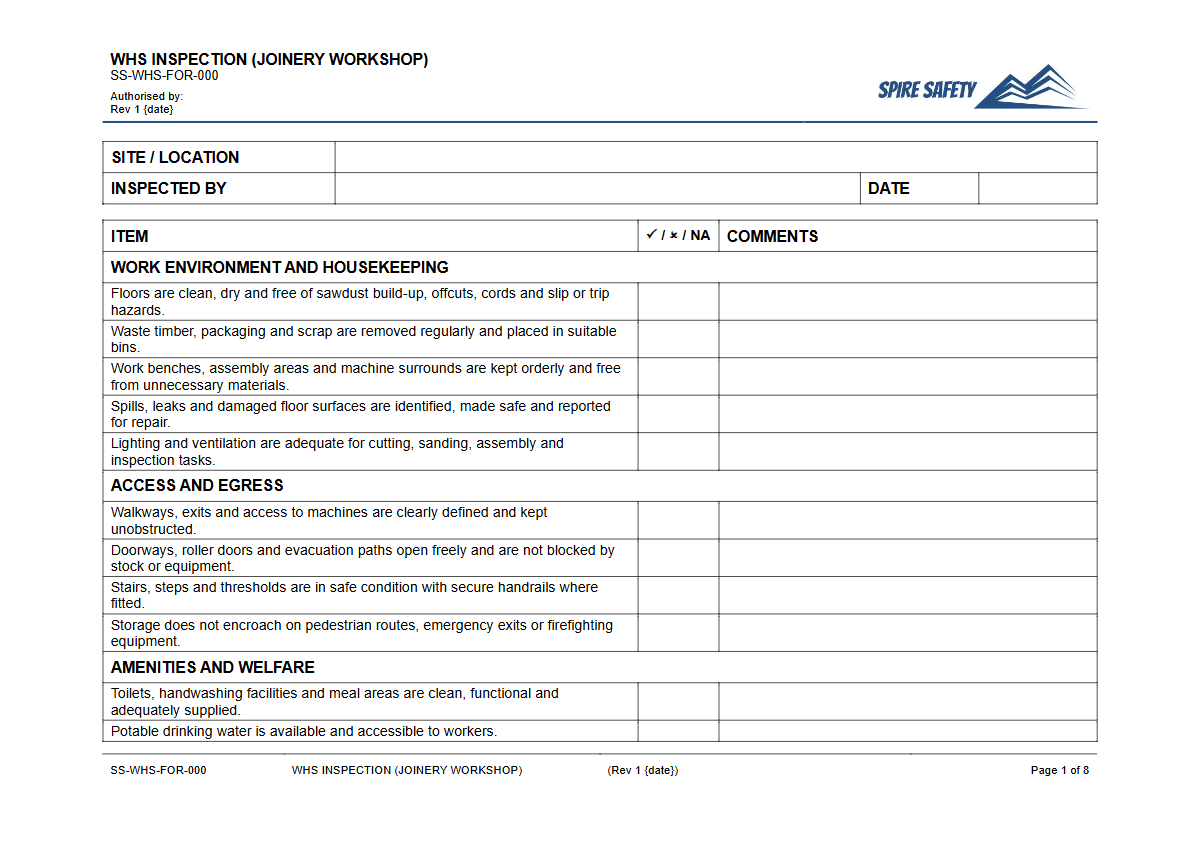
Our free WHS Inspection (Joinery Workshop) Template provides a structured starting point for systematically identifying and assessing these hazards. It is designed to help you formalise your inspection process, ensuring key areas are not overlooked.
This template is aligned with Australian WHS good practice and encourages a proactive approach to safety. By regularly and thoroughly inspecting your workplace, you can identify unsafe conditions or at-risk behaviours before they lead to an incident.
A documented inspection process is a fundamental component of effective WHS management systems, demonstrating your organisation's commitment to providing a safe working environment.
What's included in this Inspection Template?
The template is organised into logical sections to guide your inspection, covering common risk areas found in a joinery environment. Key areas for inspection include:
- General Work Environment: Assesses housekeeping, lighting, ventilation, and emergency preparedness.
- Plant and Machinery: Focuses on machine guarding, operational controls, lockout/tagout procedures, and maintenance records.
- Hazardous Substances: Covers the storage, handling, labelling, and documentation (SDS) for chemicals like adhesives, solvents, and finishes.
- Dust Control: Checks the effectiveness of dust extraction systems and the use of appropriate respiratory protective equipment (RPE).
- Manual Tasks: Evaluates risks associated with lifting, carrying, and moving timber, sheet goods, and finished products.
- Personal Protective Equipment (PPE): Verifies the availability, suitability, and correct use of PPE for tasks.
Video walkthrough
How to use the Free WHS Inspection (Joinery Workshop) Template
Using this template effectively involves more than just filling in checkboxes. First, download the template in your preferred format (DOCX for easy editing or PDF).
Before you begin, gather any relevant documentation, such as previous inspection reports, incident records, and Safe Work Method Statements (SWMS).
Important: This document is a template and must be adapted to your specific site. We have not been to your workplace.
You MUST customise this document to reflect the specific machinery, processes, layout, and materials used in your joinery workshop. Add or remove items as necessary to make it relevant to your operations.
Conduct the inspection by physically walking through the workshop, observing work practices, and talking to workers. For each item on the checklist, assess the situation and record your findings.
Note any hazards, non-conformances, or areas for improvement. Crucially, assign responsibility and a deadline for any corrective actions required.
The goal is not just to find problems, but to fix them. Regular follow-up ensures that actions are completed and the improvements are sustained.
You might consider engaging an external party for periodic WHS compliance auditing to validate the effectiveness of your internal processes.
When to use it
Formal workplace inspections should be conducted at regular intervals as part of your overall safety program. We recommend a schedule of at least quarterly for a comprehensive inspection of a joinery workshop, though the frequency may need to be adjusted based on your risk profile.
In addition to scheduled inspections, this template should be used:
- After a workplace incident or near miss.
- When new machinery or equipment is introduced.
- When work processes or layouts are changed.
- When concerns are raised by workers or Health and Safety Representatives (HSRs).
This comprehensive site inspection is different from, but complementary to, daily checks. For example, while this template covers the general state of lifting equipment, operators should still perform daily checks using a specific tool like our free electric hoist pre-start checklist before each shift.
Who should use it
This Inspection template is designed for use by those responsible for health and safety in a joinery or woodworking business. This includes:
- Business Owners and Directors (PCBUs)
- WHS Managers or Safety Officers
- Workshop Managers and Supervisors
- Health and Safety Representatives (HSRs)
The most effective inspections involve a team approach. The inspection should be led by a competent person with a good understanding of both WHS principles and joinery operations.
It is essential to consult with the workers who use the machinery and perform the tasks daily, as they have firsthand knowledge of the risks involved. For guidance on implementing robust safety processes, consider reaching out for professional WHS consulting services.
You can also explore our free WHS resources library for more templates and guides to support your safety management efforts.
Common mistakes
Common mistakes to avoid
- Focusing only on machinery and ignoring 'softer' risks like ergonomics, dust exposure, and noise.
- Failing to check that dust extraction systems are properly maintained, balanced, and functioning effectively.
- Overlooking poor housekeeping, which can lead to slip, trip, and fire hazards.
- Completing the checklist but failing to assign and follow up on corrective actions, rendering the inspection useless.
Legal references
Legal considerations
The following legal requirements may be relevant to this type of work.
- Work Health and Safety Act (Harmonised) — Provides the primary duties for protecting workers and other people from work health and safety risks.
- Work Health and Safety Regulations (Harmonised) — Sets out requirements supporting the management of workplace hazards and risks.
The following codes may be relevant to this type of work.
- Managing WHS Risks Code of Practice — Provides practical guidance on identifying hazards, assessing risks and applying effective controls.
- Work Health and Safety Consultation, Cooperation and Coordination Code of Practice — Provides practical guidance on consulting workers and coordinating with other duty holders.
- Managing the Work Environment and Facilities Code of Practice — Provides practical guidance on safe work environments, workplace facilities and related controls.
Did you know
Wood Dust Dangers
Hardwood dust is classified as a 'carcinogen (Group 1)' by the International Agency for Research on Cancer (IARC), meaning it is known to cause cancer in humans, specifically cancers of the nasal cavity and paranasal sinuses.
Machine Guarding
According to Safe Work Australia, contact with moving machine parts is a leading cause of serious injury in manufacturing, making effective machine guarding one of the most critical safety controls in a joinery workshop.
FAQ
Frequently asked questions
01What are the most common hazards in a joinery workshop?
02How often should I conduct a joinery workshop inspection?
03Who is responsible for acting on the findings of an inspection?
04Can this template be used for WHS compliance?
Share this resource
Free WHS Inspection (Joinery Workshop) Template
Browse Categories
How To Use It
- 1Download and open in Word or PDF.
- 2Replace the placeholders with your business details.
- 3Get it reviewed by a WHS specialist before rollout.
Need it customised?
Our WHS consultants can adapt this template to your site, run a gap analysis, or audit what you already have in place.
Book a Free Consultation WHS consulting servicesor call 1300 156 382