
Free WHS Inspection (Landscape Yard) Template
Download our free WHS Inspection Template for Landscape Yards. This structured document helps you formalise safety checks for your site.
Free WHS Inspection (Landscape Yard) Template
DOCX • 128 KB + PDF
Updated Oct 2026
No signup required
Purpose of the Free WHS Inspection (Landscape Yard) Template
Landscape supply yards are dynamic environments with a unique mix of hazards, including moving plant, bulk material storage, manual handling, and interaction with the public. Systematically managing these risks is a fundamental duty for any Person Conducting a Business or Undertaking (PCBU).
This Free WHS Inspection (Landscape Yard) Template provides a structured starting point for formalising your workplace safety checks. It helps you proactively identify, assess, and control hazards before they can cause injury or illness.
Using a standardised inspection checklist helps ensure no area is overlooked, from vehicle traffic management and chemical storage to housekeeping and emergency procedures. It creates a documented record of your safety efforts, which is a key component of demonstrating due diligence.
These regular inspections form a vital part of more comprehensive WHS management systems, enabling continuous improvement in your safety performance.
What's included in the template?
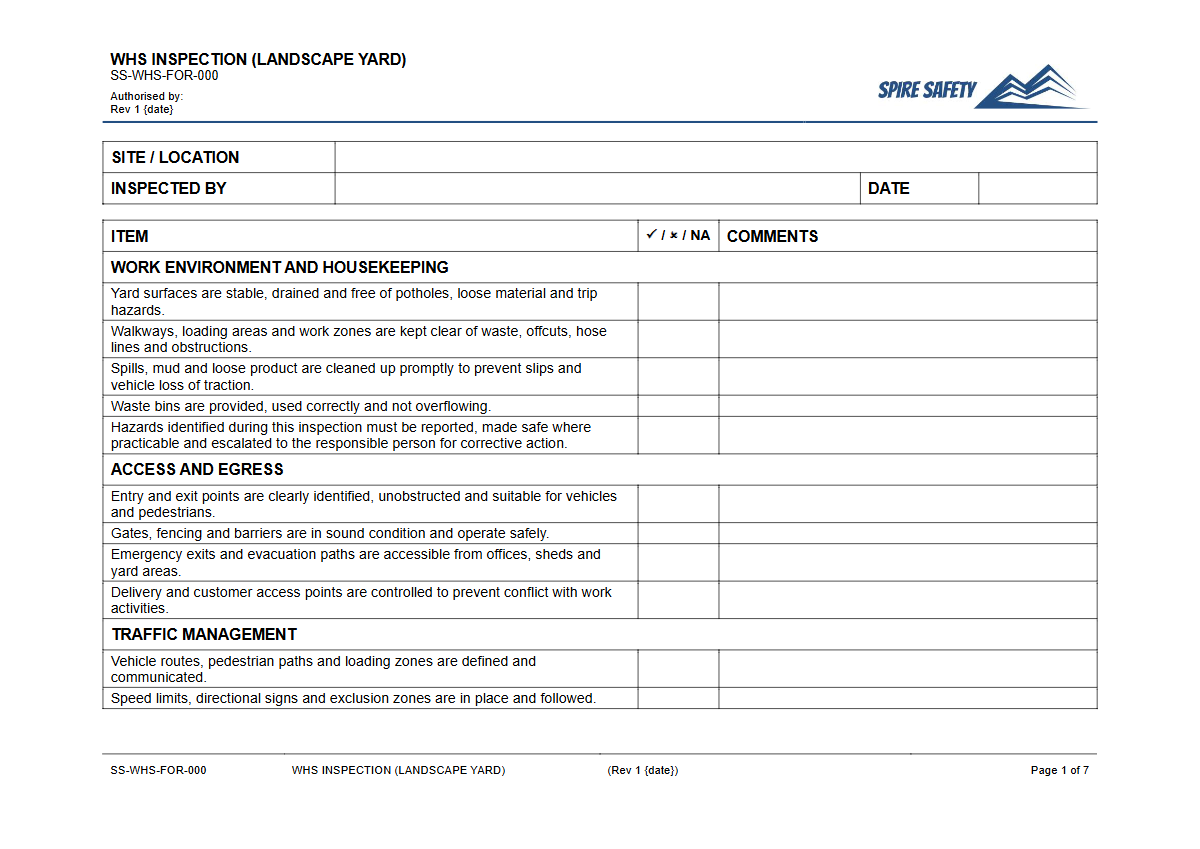
This template is designed as a comprehensive checklist covering common areas and hazards found in a typical landscape yard environment. Key sections prompt you to assess:
- General Site Conditions (e.g., housekeeping, lighting, signage)
- Traffic Management (e.g., separation of vehicles and pedestrians, loading zones)
- Plant and Equipment (e.g., guards, maintenance, operator competency)
- Hazardous Chemicals & Dangerous Goods (e.g., storage, labelling, Safety Data Sheets)
- Manual Tasks (e.g., bag lifting, awkward postures)
- Emergency Preparedness (e.g., fire extinguishers, first aid kits, emergency contacts)
- Worker Amenities (e.g., cleanliness, access to drinking water)
Video walkthrough
How to use the Free WHS Inspection (Landscape Yard) Template
This document is provided in both DOCX and PDF formats for your convenience. The DOCX version is fully editable, allowing you to tailor it to the specific needs of your operation.
To get started:
- Download the template file.
- Open the DOCX document in Microsoft Word or a compatible program.
- Review the checklist items and add, remove, or modify them to match the specific equipment, materials, and work processes at your site. For example, you might add specific checks for your front-end loader or expand the section on dust control.
- Save your customised version as your business's official inspection document.
Important: This is a template, not a finished document. We've provided a solid starting point based on Australian WHS principles, but you must customise it to reflect the specific hazards, equipment, and procedures at your landscape yard. For specific pieces of equipment, you may also benefit from using a dedicated checklist, such as our Free Pre-Start Checklist (Lawn Tractor) Template.
When to use it
Regularity is key to an effective inspection program. The frequency should be determined by a risk assessment, considering the level of activity and the nature of the hazards in your yard. As a general guide, you should conduct a full site inspection:
- On a scheduled basis (e.g., weekly or monthly).
- After any significant incident, accident, or near-miss.
- When new plant, equipment, or chemicals are introduced.
- When work procedures or the layout of the yard changes.
- Before and during periods of unusually high activity.
These routine internal checks are an excellent way to prepare for and maintain readiness for any potential WHS compliance auditing by external parties or regulators.
Who should use it
Workplace inspections should be a collaborative effort. This template is designed for use by:
- Yard Managers and Supervisors
- Work Health and Safety (WHS) Representatives or Committee Members
- Business Owners (PCBUs)
Crucially, the people conducting the inspection should involve the workers who perform the day-to-day tasks. These individuals have firsthand knowledge of the risks and can provide valuable insights that might otherwise be missed.
This consultative approach not only leads to better hazard identification but also improves worker buy-in for safety initiatives. You can encourage this participation by also implementing equipment-specific checks like our Free Pre-Start Checklist (Aerator) Template for your teams to use daily.
The findings of the inspection should be formally documented, with corrective actions assigned to specific people and given clear deadlines. Follow-up is essential to ensure that identified risks have been effectively controlled. This includes reviewing physical controls for hazards like uncontrolled site entry, which can be managed with tools like our Free Pre-Start Checklist (Boom Gate) Template.
By integrating this inspection process into your operational rhythm, you build a stronger safety culture and a safer workplace for everyone. Explore our comprehensive free WHS resources library for more tools to support your safety management system.
Common mistakes
Common mistakes to avoid
- Using the template 'as-is' without customising it for the specific site, plant, and materials.
- Failing to consult with workers who perform the day-to-day tasks during the inspection process.
- Not scheduling inspections regularly, only performing them reactively after an incident occurs.
- Forgetting to follow up on identified hazards and document the corrective actions taken.
Legal references
Legal considerations
The following legal requirements may be relevant to this type of work.
- Work Health and Safety Act (Harmonised) — Provides the primary duties for protecting workers and other people from work health and safety risks.
- Work Health and Safety Regulations (Harmonised) — Sets out requirements supporting the management of workplace hazards and risks.
The following codes may be relevant to this type of work.
- Managing WHS Risks Code of Practice — Provides practical guidance on identifying hazards, assessing risks and applying effective controls.
- Work Health and Safety Consultation, Cooperation and Coordination Code of Practice — Provides practical guidance on consulting workers and coordinating with other duty holders.
- Managing the Work Environment and Facilities Code of Practice — Provides practical guidance on safe work environments, workplace facilities and related controls.
Did you know
Manual Tasks Risk
The landscape and garden supply industry has a high rate of serious workers' compensation claims for injuries caused by manual tasks, highlighting the importance of regular workplace inspections to identify and control these risks.
Mobile Plant Dangers
A significant number of workplace fatalities involve mobile plant like forklifts and loaders. Formal inspections are a key administrative control for managing risks from vehicles and machinery in busy yards.
FAQ
Frequently asked questions
01What are the most common hazards in a landscape supply yard?
02How often should I inspect my landscape yard?
03Is this WHS inspection template compliant with Australian law?
04Who should be involved in a workplace inspection?
Share this resource
Free WHS Inspection (Landscape Yard) Template
Browse Categories
How To Use It
- 1Download and open in Word or PDF.
- 2Replace the placeholders with your business details.
- 3Get it reviewed by a WHS specialist before rollout.
Need it customised?
Our WHS consultants can adapt this template to your site, run a gap analysis, or audit what you already have in place.
Book a Free Consultation WHS consulting servicesor call 1300 156 382