
Free WHS Inspection (Library) Template
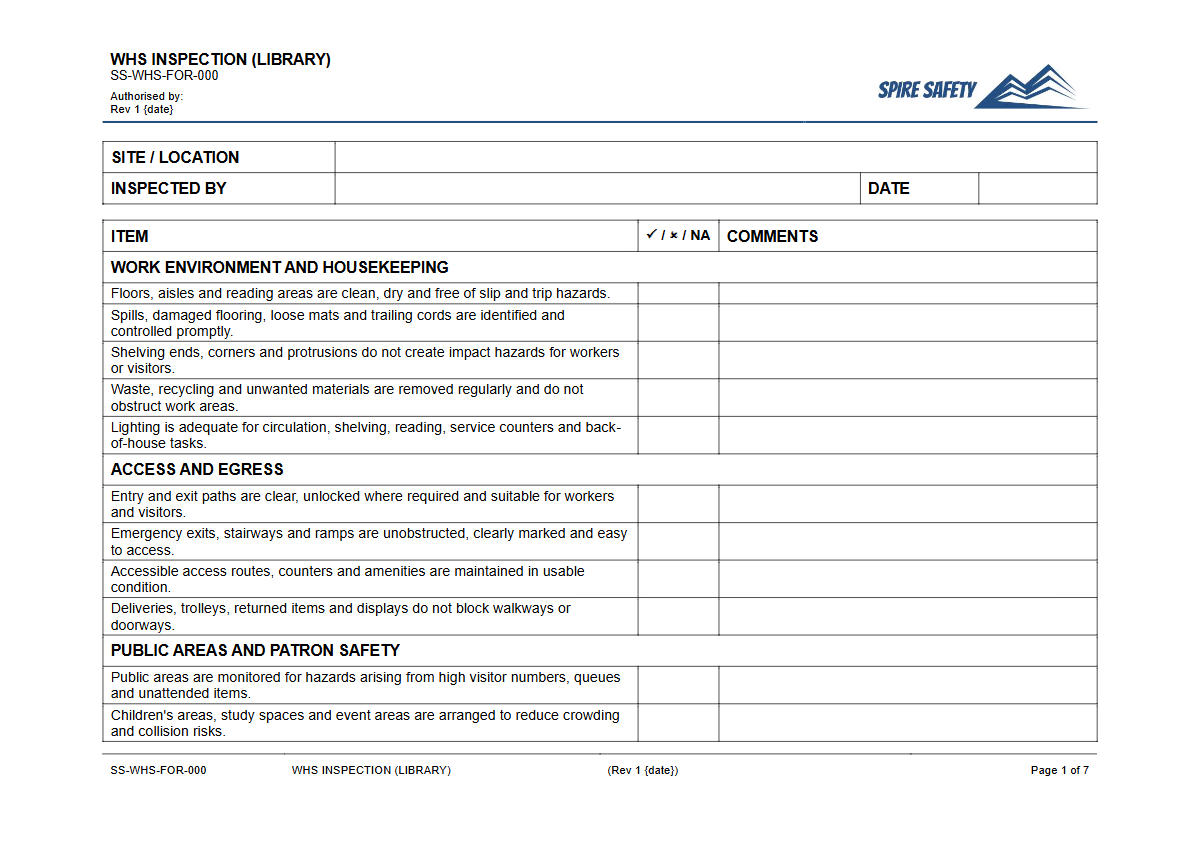
Download our Free WHS Inspection (Library) Template (DOCX & PDF). A structured starting point for identifying and controlling hazards in a library environment.
Free WHS Inspection (Library) Template
DOCX • 128 KB + PDF
Updated Oct 2026
No signup required
Purpose of the Free WHS Inspection (Library) Template
Regular workplace inspections are a cornerstone of effective safety management. This Free WHS Inspection (Library) Template provides a structured starting point for identifying and controlling risks specific to library environments.
Public, academic, and special libraries present unique WHS challenges, from unstable shelving and manual handling of books to electrical equipment safety and managing public access. Using this template helps formalise your inspection process, ensuring a consistent and thorough approach to maintaining a safe space for both workers and visitors.
The document is designed to guide you through a methodical check of key areas. It covers common library hazards such as ergonomic risks for staff at service desks, trip hazards from bags or power cords, the condition of furniture, and the adequacy of lighting.
It serves as a practical tool to help you meet your duty of care obligations under Australian WHS laws by proactively managing the work environment.
Video walkthrough
How to use the Free WHS Inspection (Library) Template
This template is provided in both DOCX and PDF formats for your convenience. The DOCX file is fully editable, allowing you to tailor the content to the specific layout, equipment, and operations of your facility.
It is crucial to adapt the template to reflect the real-world hazards present in your library.
Follow these steps to get the most from this resource:
- Download the DOCX version.
- Review each section and item, adding, removing, or modifying checklist points to align with your library’s specific environment. Consider areas like collection storage, staff offices, public computer terminals, children's areas, and external grounds.
- Consult with your workers and any Health and Safety Representatives (HSRs) during customisation. Their direct experience is invaluable for identifying hazards.
- Once finalised, use the document to conduct your inspections, documenting findings and assigning corrective actions with clear deadlines and responsibilities.
Please note: This document is a template only and is not a substitute for professional WHS advice. It is intended as a starting point.
We strongly recommend you customise this template to address the specific risks and operational needs of your workplace before use. Integrating this process is a key part of your wider WHS management systems.
When to use this Inspection Template
The frequency of inspections depends on the level of risk and the nature of the activities in your library. A common approach is to schedule comprehensive inspections on a monthly or quarterly basis.
More frequent checks may be needed for high-traffic areas or specific equipment.
In addition to scheduled checks, this inspection should be conducted:
- After an incident, accident, or near miss occurs.
- When there are changes to the library layout, such as the installation of new shelving or furniture.
- When new equipment or work processes are introduced.
- In response to concerns raised by workers or visitors.
The consistent execution of these inspections, and the follow-up on corrective actions, can be verified through a formal WHS compliance auditing process to ensure ongoing effectiveness.
Who should use this Inspection Template
This template is designed for use by individuals with responsibility for health and safety within a library. This may include:
- Library Managers or Directors
- Facility and Operations Managers
- Team Leaders or Department Heads
- Health and Safety Representatives (HSRs)
- Members of the WHS Committee
While a designated person will lead the inspection, it's good practice to involve a range of workers in the process. This promotes a positive safety culture and helps ensure that hazards are not overlooked.
For specific machinery located on the premises, such as in a car park, it's vital to have separate, dedicated checks. You can formalise these checks with our free Pre-Start Checklist (Boom Gate) Template.
Administrative and back-office tasks also carry risks. For specific machinery used in mail rooms or offices, consider implementing equipment-specific checks.
You can use our Free Pre-Start Checklist (Envelope Sealer) Template for back-office machinery.
Libraries are increasingly focused on accessibility. Where specialised lifting equipment is provided for users with mobility needs, its safety must be regularly confirmed. This process can be supported by our Free Pre-Start Checklist (Patient Hoist) Template.
This inspection template is one of many tools available to help you manage your safety obligations. For more checklists, forms, and guides, you can browse our complete free WHS resources library.
Common mistakes
Common mistakes to avoid
- Failing to customise the generic template to the specific library environment.
- Neglecting ergonomic risks for librarians and other staff at workstations.
- Not documenting corrective actions or failing to follow up to ensure they are completed.
- Overlooking risks in non-public areas like storerooms, workshops, or staff rooms.
Legal references
Legal considerations
The following legal requirements may be relevant to this type of work.
- Work Health and Safety Act (Harmonised) — Provides the primary duties for protecting workers and other people from work health and safety risks.
- Work Health and Safety Regulations (Harmonised) — Sets out requirements supporting the management of workplace hazards and risks.
The following codes may be relevant to this type of work.
- Managing WHS Risks Code of Practice — Provides practical guidance on identifying hazards, assessing risks and applying effective controls.
- Work Health and Safety Consultation, Cooperation and Coordination Code of Practice — Provides practical guidance on consulting workers and coordinating with other duty holders.
- Managing the Work Environment and Facilities Code of Practice — Provides practical guidance on safe work environments, workplace facilities and related controls.
Did you know
Slips, Trips and Falls
Slips, trips, and falls are one of the most common causes of workplace injury in Australia, particularly in office and public-facing environments. They account for a significant portion of workers' compensation claims each year.
FAQ
Frequently asked questions
01What are the most common hazards in a library?
02How often should a library be formally inspected for WHS?
03Can I use this template for a school library as well as a public one?
04What is the difference between a workplace inspection and a risk assessment?
Share this resource
Free WHS Inspection (Library) Template
Browse Categories
How To Use It
- 1Download and open in Word or PDF.
- 2Replace the placeholders with your business details.
- 3Get it reviewed by a WHS specialist before rollout.
Need it customised?
Our WHS consultants can adapt this template to your site, run a gap analysis, or audit what you already have in place.
Book a Free Consultation WHS consulting servicesor call 1300 156 382