
Free WHS Inspection (Machinery Shed) Template
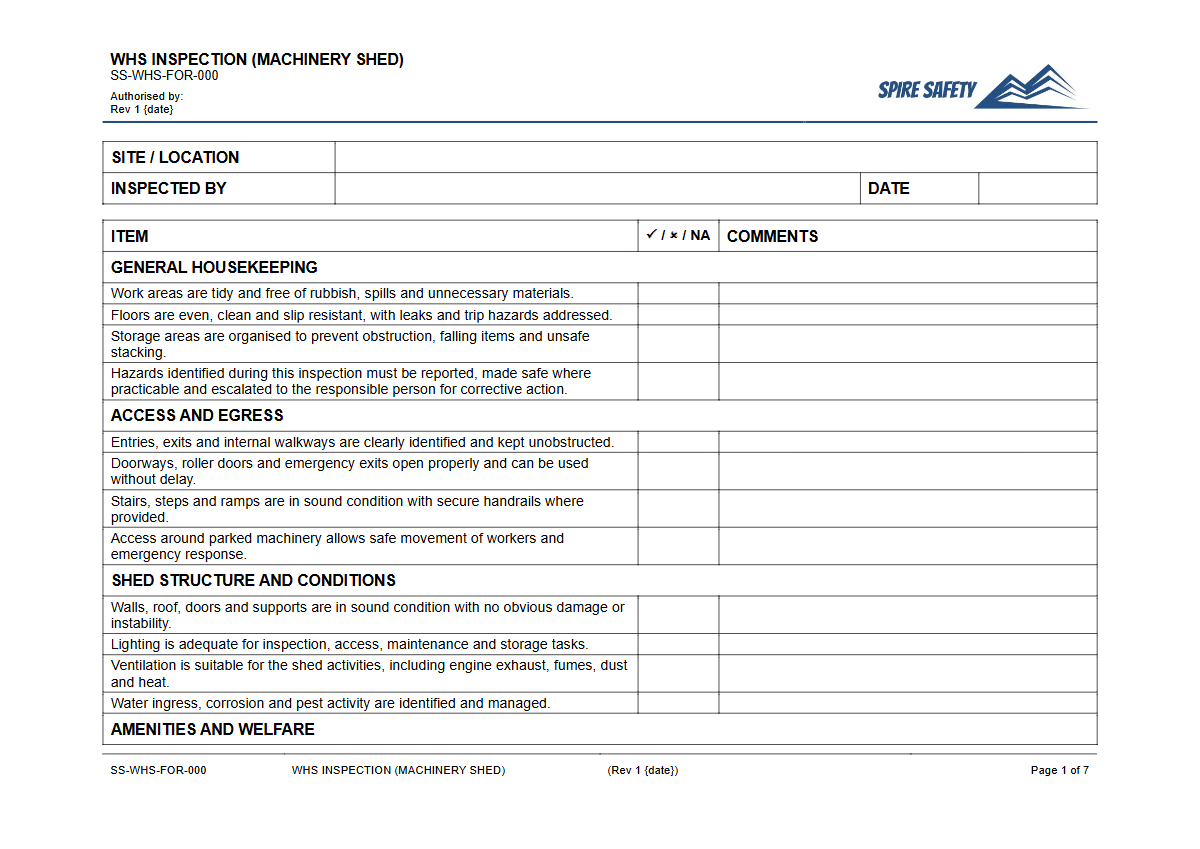
Download our Free WHS Inspection (Machinery Shed) Template to systematically identify and control hazards.
Free WHS Inspection (Machinery Shed) Template
DOCX • 128 KB + PDF
Updated Oct 2026
No signup required
Purpose of the Free WHS Inspection (Machinery Shed) Template
A machinery shed is a high-risk environment, housing heavy equipment, stored energy, chemicals, and various structural hazards. A systematic inspection process is essential for proactively identifying and managing these risks before they lead to an incident.
This Free WHS Inspection (Machinery Shed) Template provides a structured starting point for organisations to formalise their safety checks, moving beyond ad-hoc observations to a documented, repeatable process.
Using this template helps a Person Conducting a Business or Undertaking (PCBU) meet their primary duty of care. It prompts a thorough review of critical areas such as plant safety, equipment guarding, chemical storage, fire prevention, electrical safety, housekeeping, and structural integrity.
Regular inspections form a crucial component of effective WHS management systems, providing valuable data for risk assessments and continuous improvement initiatives.
Video walkthrough
How to use the Free WHS Inspection (Machinery Shed) Template
This resource is provided as a fully editable DOCX file and a ready-to-print PDF. The checklist is designed to be straightforward, covering a wide range of common hazards found in agricultural, industrial, or maintenance machinery sheds.
Simply download the file, add your company branding, and review the checklist items to ensure they are relevant to your specific workplace.
Important: You must customise this template to suit your specific site, machinery, and operational risks. We have included common items, but every workplace is unique.
You should walk through your machinery shed and add or remove checklist items to reflect the actual hazards present. Where an inspection identifies a need for new or updated controls, you may need to develop new procedures using a resource like our Safe Operating Procedure (SOP) Template.
When to use it
A comprehensive machinery shed inspection should be conducted at regular, planned intervals. The exact frequency depends on factors like the age and condition of the equipment, the intensity of use, and your organisation's risk assessment.
A common schedule is quarterly or biannually, with findings reviewed by management or the safety committee.
This type of inspection is different from daily operational checks. For example, while this template covers general plant condition, a worker should still complete a specific lawn tractor pre-start checklist before each use.
This shed inspection is a broader review of the entire working environment. It should also be used following an incident, after the introduction of new large-scale plant, or after significant changes to the shed's layout or use.
Who should use it
This Inspection template is designed for use by individuals with responsibilities for workplace safety. This typically includes:
- Farm Owners and Managers
- Workshop Supervisors
- Maintenance Managers
- Health and Safety Representatives (HSRs)
- WHS Advisors and Officers
The inspection should be conducted by a competent person who is familiar with the machinery and the work processes carried out in the shed. Involving workers who use the space daily can provide valuable insights into unrecognised hazards or unsafe work practices. The findings can also serve as a practical training tool for new workers, helping them recognise and understand the key risks associated with specific plant, such as those covered in a feed mixer pre-start checklist.
The completed inspection records serve as important evidence of your organisation's commitment to safety management and due diligence. For businesses seeking a more in-depth, third-party evaluation of their safety practices, engaging professional WHS compliance auditing services can provide an independent and comprehensive assessment of your systems.
Common mistakes
Common mistakes to avoid
- "Pencilling in" checks without physically verifying the item or area.
- Failing to follow up and close out corrective actions identified during the inspection.
- Overlooking hazards from stored energy (e.g., hydraulic, pneumatic, or gravitational).
- Not involving workers who use the shed daily, as they often have the best insight into emerging issues.
Legal references
Legal considerations
The following legal requirements may be relevant to this type of work.
- Work Health and Safety Act (Harmonised) — Provides the primary duties for protecting workers and other people from work health and safety risks.
- Work Health and Safety Regulations (Harmonised) — Sets out requirements supporting the management of workplace hazards and risks.
The following codes may be relevant to this type of work.
- Managing WHS Risks Code of Practice — Provides practical guidance on identifying hazards, assessing risks and applying effective controls.
- Work Health and Safety Consultation, Cooperation and Coordination Code of Practice — Provides practical guidance on consulting workers and coordinating with other duty holders.
- Managing the Work Environment and Facilities Code of Practice — Provides practical guidance on safe work environments, workplace facilities and related controls.
Did you know
Agriculture's High Risk
The agriculture, forestry, and fishing industry consistently has one of the highest rates of work-related fatalities in Australia, with machinery and vehicle incidents being major contributors.
The Hierarchy of Control
Inspections are a key administrative control for managing risk. They help identify hazards so that higher-level controls, like elimination or engineering solutions, can be implemented effectively.
FAQ
Frequently asked questions
01What's the difference between a machinery shed inspection and a pre-start check?
02How often should a machinery shed be formally inspected?
03What are some of the most critical hazards in a machinery shed?
04Does this template include electrical safety for machinery?
Share this resource
Free WHS Inspection (Machinery Shed) Template
Browse Categories
How To Use It
- 1Download and open in Word or PDF.
- 2Replace the placeholders with your business details.
- 3Get it reviewed by a WHS specialist before rollout.
Need it customised?
Our WHS consultants can adapt this template to your site, run a gap analysis, or audit what you already have in place.
Book a Free Consultation WHS consulting servicesor call 1300 156 382