
Free WHS Inspection (Marina) Template
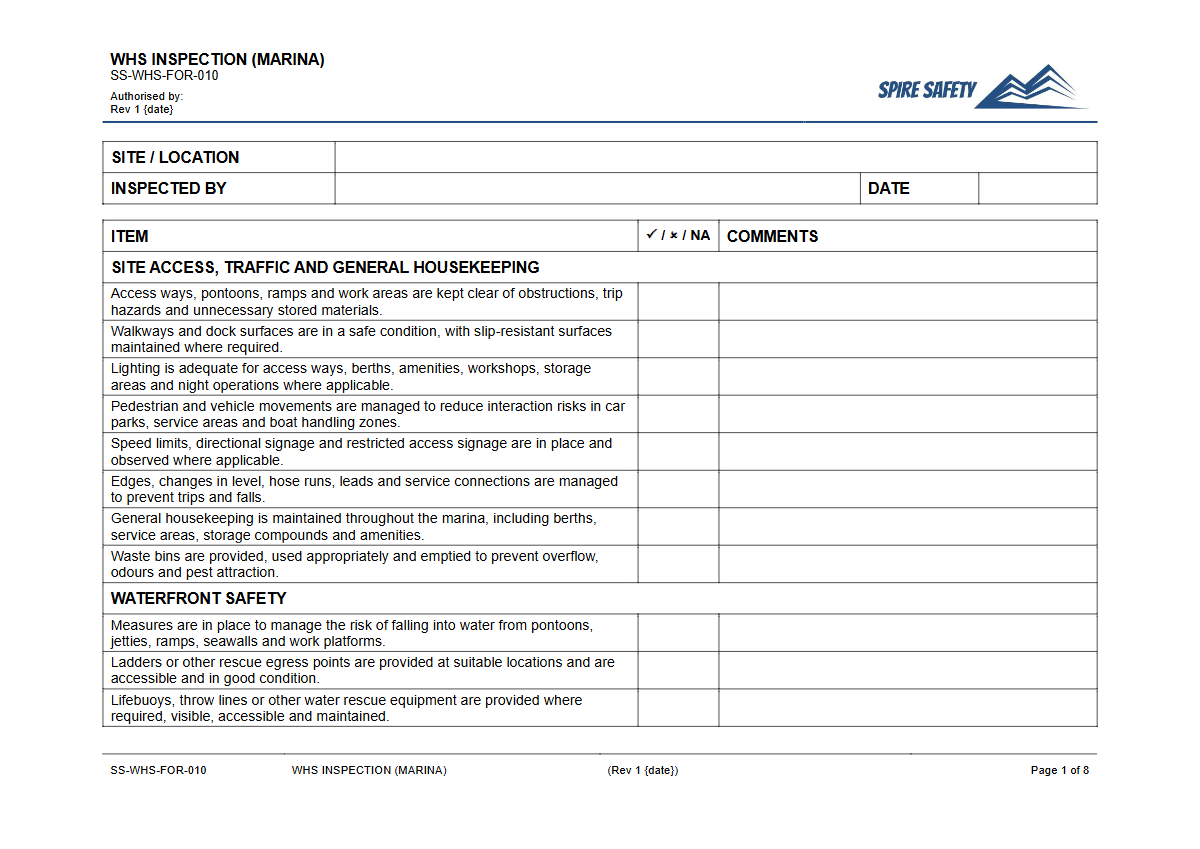
Download our free WHS Inspection (Marina) Template to formalise your safety processes. This structured DOCX & PDF helps you identify and manage hazards.
Free WHS Inspection (Marina) Template
DOCX • 129 KB + PDF
Updated Oct 2026
No signup required
Purpose of the Free WHS Inspection (Marina) Template
Marinas present a unique and dynamic risk profile, combining public access, heavy machinery, hazardous substances, and constant exposure to the elements. Our Free WHS Inspection (Marina) Template provides a structured starting point for systematically identifying and managing hazards specific to these environments.
Regular inspections are a fundamental part of a proactive safety culture and a key way for a Person Conducting a Business or Undertaking (PCBU) to meet their primary duty of care under WHS legislation. Using this template helps to formalise your safety checks, document findings, and track corrective actions before incidents occur.
A consistent inspection schedule helps ensure that slip, trip, and fall hazards, electrical risks from shore power, fire safety equipment, and the structural integrity of walkways and pontoons are all regularly assessed. Integrating these checks into your routine is a practical step towards building robust WHS management systems that protect workers, contractors, and the public.
Video walkthrough
How to use the Free WHS Inspection (Marina) Template
This Free WHS Inspection (Marina) Template is available for immediate download in both DOCX and PDF formats. The DOCX version is fully editable, allowing you to tailor it to the specific conditions of your site.
This checklist is a comprehensive starting point aligned with Australian WHS practice, but it is not a substitute for a site-specific risk assessment.
Important: You must customise this document to reflect the unique layout, equipment, and operating procedures of your workplace. We don't know your site.
Add, remove, and modify checklist items to cover your specific assets, such as fuel docks, sewage pump-out stations, public amenities, car parks, and specific types of plant. For specialised equipment, consider using a dedicated checklist, such as our Free Pre-Start Checklist (Boat Lift) Template, in conjunction with this broader site inspection.
When to conduct a Marina Inspection
The frequency of inspections should be determined by a risk assessment, but a regular schedule is essential for maintaining a safe environment. We recommend conducting comprehensive marina inspections at least monthly. More frequent or targeted checks should be performed:
- After a period of severe weather (e.g., storms, high winds, flooding).
- Following any reported incident, accident, or near miss.
- When there are changes to the layout, equipment, or work procedures.
- During peak seasons when vessel and pedestrian traffic is higher.
Daily visual checks of high-traffic areas are also a good practice. For assets like access control points, a separate daily check using a tool like the Free Pre-Start Checklist (Boom Gate) Template can supplement your main inspection.
Who should use it
This template is designed for use by anyone with responsibility for safety and operational management within a marina or yacht club. Key personnel who will find this resource valuable include:
- Marina Managers and Harbour Masters
- Work Health and Safety (WHS) Officers or Coordinators
- Supervisors and Team Leaders
- Health and Safety Representatives (HSRs)
- Maintenance Managers
Engaging a variety of personnel in the inspection process can provide different perspectives and improve hazard identification. The documented findings also serve as a crucial record for management review and can be a valuable input for more formal WHS compliance auditing activities.
What to Do After the Inspection
An inspection is only effective if its findings are acted upon. Once you have completed the checklist, the next steps are critical.
You should review all identified issues, prioritise them based on risk level, and assign clear corrective actions to responsible individuals with specific due dates. Use a risk matrix to help determine whether the risk is high, medium, or low, which will guide the urgency of your response.
Track all corrective actions through to completion and verify their effectiveness. Communicate the findings and the resulting action plan to relevant workers, management, and the Health and Safety Committee.
For issues related to specific machinery, such as lifting equipment, ensure that any required maintenance or safety checks are logged appropriately. Many marinas utilise hoists, and for these, it's beneficial to also use a specific Free Pre-Start Checklist (Electric Hoist) Template as part of your daily safety routine.
This document is just one of many tools available to help you build a safer workplace. Be sure to explore our complete free WHS resources library for more templates, checklists, and policies to support your safety management system.
Common mistakes
Common mistakes to avoid
- Failing to customise the template for the specific marina layout and equipment.
- Conducting the inspection but not following up on corrective actions in a timely manner.
- Not involving workers, contractors, or boat owners in the inspection process.
- Overlooking less obvious hazards like UV exposure, hazardous substances at fuel docks, or biosecurity risks.
Legal references
Legal considerations
The following legal requirements may be relevant to this type of work.
- Work Health and Safety Act (Harmonised) — Provides the primary duties for protecting workers and other people from work health and safety risks.
- Work Health and Safety Regulations (Harmonised) — Sets out requirements supporting the management of workplace hazards and risks.
The following codes may be relevant to this type of work.
- Managing WHS Risks Code of Practice — Provides practical guidance on identifying hazards, assessing risks and applying effective controls.
- Work Health and Safety Consultation, Cooperation and Coordination Code of Practice — Provides practical guidance on consulting workers and coordinating with other duty holders.
- Managing the Work Environment and Facilities Code of Practice — Provides practical guidance on safe work environments, workplace facilities and related controls.
Did you know
Drowning Risk
Slips, trips, and falls into water are a leading cause of fatalities in marina environments. The majority of these incidents are preventable with proper guardrails, non-slip surfaces, and accessible life-saving equipment.
Electrical Hazards
Marinas have a unique combination of water and high-voltage electricity (shore power), creating significant electrocution risks if electrical installations are not properly designed, maintained, and regularly inspected.
FAQ
Frequently asked questions
01What are the most common WHS risks in a marina environment?
02How often should I conduct a full WHS inspection of my marina?
03Is this WHS Inspection (Marina) Template compliant with Australian safety laws?
04Can this inspection checklist be used for a small jetty or boat ramp?
Share this resource
Free WHS Inspection (Marina) Template
Browse Categories
How To Use It
- 1Download and open in Word or PDF.
- 2Replace the placeholders with your business details.
- 3Get it reviewed by a WHS specialist before rollout.
Need it customised?
Our WHS consultants can adapt this template to your site, run a gap analysis, or audit what you already have in place.
Book a Free Consultation WHS consulting servicesor call 1300 156 382