
Free WHS Inspection (Medical Clinic) Template
Download our free WHS Inspection Template for Medical Clinics. This structured DOCX & PDF helps you identify hazards and manage workplace health and safety.
Free WHS Inspection (Medical Clinic) Template
DOCX • 127 KB + PDF
Updated Oct 2026
No signup required
Purpose of the Free WHS Inspection (Medical Clinic) Template
Maintaining a safe environment is critical in any medical clinic, for both staff and patients. Regular workplace inspections are a cornerstone of proactive risk management.
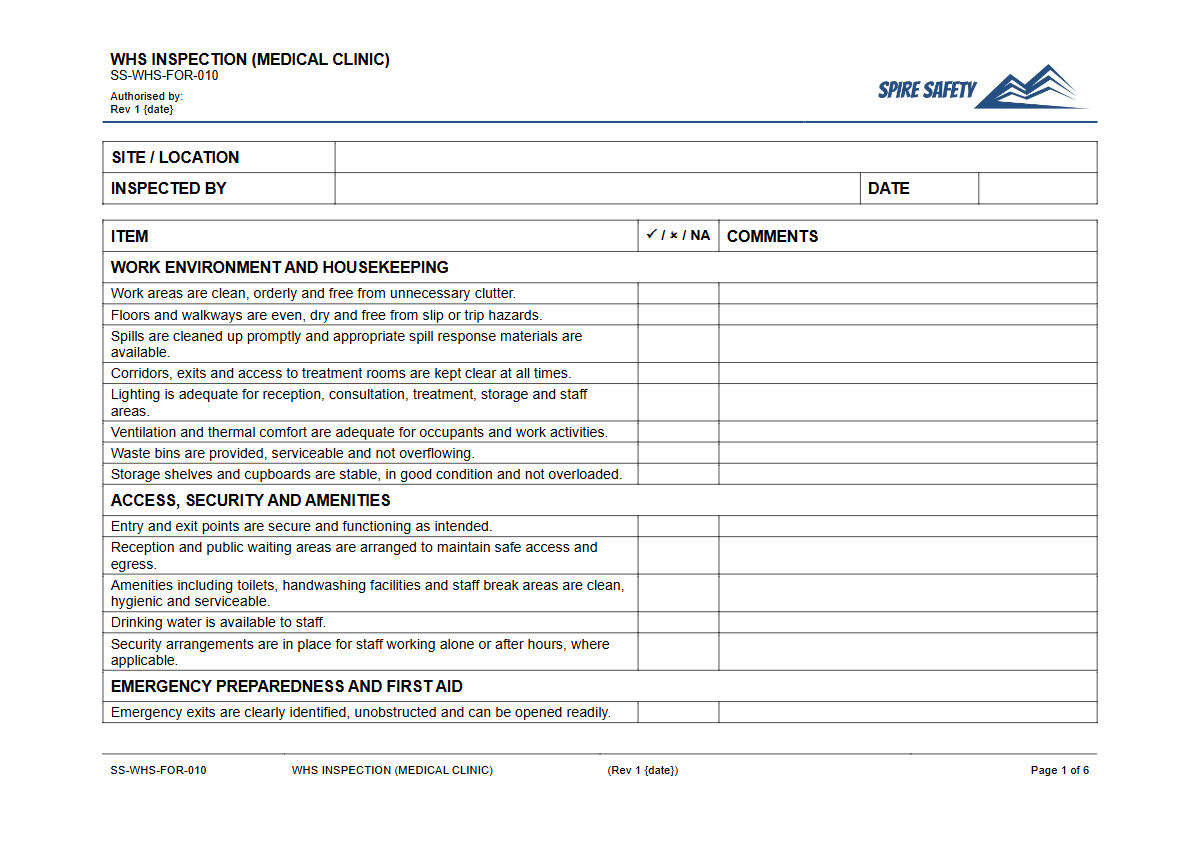
This Free WHS Inspection (Medical Clinic) Template provides a structured starting point for systematically identifying, assessing, and controlling hazards specific to a clinical setting. By formalising your inspection process, you create a reliable record of your safety efforts and demonstrate due diligence in managing your WHS obligations.
This template is designed to guide you through a comprehensive review of your premises, from waiting rooms and consultation areas to staff amenities and storage facilities. It prompts you to consider a wide range of potential risks, including slip and trip hazards, infection control, electrical safety, ergonomic issues, and manual handling risks.
Using a standardised checklist helps ensure that nothing is overlooked and that your safety checks are consistent over time. These regular checks form an essential part of an organisation's broader WHS management systems.
Video walkthrough
How to use the Free WHS Inspection (Medical Clinic) Template
Using this inspection template is straightforward. First, download the document in your preferred format (DOCX or PDF).
The DOCX version is fully editable, allowing you to adapt it to the unique layout and operations of your clinic.
Before your first inspection, walk through your workplace with the template in hand and add or remove items to make it relevant. For example, you may need to add specific checks for specialised diagnostic equipment or unique procedures performed at your clinic.
You might also want to reference more detailed equipment checks, such as our Free Pre-Start Checklist (Patient Hoist) Template, for high-risk items.
Customisation is Key
Please note: This template provides a general framework aligned with Australian WHS practice. We recommend you customise it thoroughly to address the specific equipment, processes, and risks unique to your workplace.
The goal is to create a document that accurately reflects your operational environment and helps you effectively manage its hazards.
During the inspection, the designated inspector should walk through each area listed, methodically checking off items and making notes of any non-conformances or potential hazards. For each issue identified, document the required corrective action, assign responsibility to a specific person, and set a realistic due date for completion.
This creates a clear action plan for risk mitigation.
The template covers areas common to most medical practices, including:
- Entrances, Exits, and Waiting Rooms: Assessing accessibility, trip hazards, and general tidiness.
- Consultation and Treatment Rooms: Checking electrical equipment safety, ergonomic setup of workstations, and sharps disposal.
- Storage and Utility Areas: Reviewing chemical storage, shelving stability, and the condition of equipment like fridges or freezers. A dedicated checklist, such as the Free Pre-Start Checklist (Freezer) Template, can be useful for this equipment.
- Staff Amenities: Ensuring kitchens and break rooms are clean and free from hazards.
- Emergency Preparedness: Verifying that fire extinguishers, first aid kits, and emergency exits are accessible and maintained.
When to use it
Workplace inspections should be conducted on a regular schedule to be effective. The frequency will depend on the level of risk and the nature of the work being done.
For a medical clinic, a comprehensive inspection is recommended at least quarterly. In addition, inspections should also be performed whenever there are significant changes in the workplace, such as the introduction of new equipment or procedures, or following an incident or near-miss.
These scheduled checks can supplement more formal WHS compliance auditing activities.
Who should use it
The inspection can be carried out by a Practice Manager, a dedicated WHS Officer, or a Health and Safety Representative (HSR). Involving different staff members in inspections can bring fresh perspectives and increase overall safety awareness across the team.
While one person may lead the formal inspection, all employees have a responsibility to report hazards as they see them. This includes those responsible for daily equipment checks, who might use resources like our Free Pre-Start Checklist (Electric Hoist) Template for specific machinery.
Once completed, the inspection report should be reviewed by management and made available to all staff.
Common mistakes
Common mistakes to avoid
- Using the template as-is without customising it for the specific clinic environment.
- Failing to assign clear responsibility and deadlines for corrective actions identified during the inspection.
- Focusing only on physical hazards and overlooking psychosocial risks like staff burnout and stress.
- Conducting inspections only in reaction to an incident, rather than as a proactive, scheduled activity.
Legal references
Legal considerations
The following legal requirements may be relevant to this type of work.
- Work Health and Safety Act (Harmonised) — Provides the primary duties for protecting workers and other people from work health and safety risks.
- Work Health and Safety Regulations (Harmonised) — Sets out requirements supporting the management of workplace hazards and risks.
The following codes may be relevant to this type of work.
- Managing WHS Risks Code of Practice — Provides practical guidance on identifying hazards, assessing risks and applying effective controls.
- Work Health and Safety Consultation, Cooperation and Coordination Code of Practice — Provides practical guidance on consulting workers and coordinating with other duty holders.
- Managing the Work Environment and Facilities Code of Practice — Provides practical guidance on safe work environments, workplace facilities and related controls.
Did you know
Healthcare Industry Risks
According to Safe Work Australia, the 'Health care and social assistance' industry has one of the highest rates of serious workers' compensation claims, with body stressing and slips, trips, and falls being major causes of injury.
Psychosocial Safety
A key but often overlooked aspect of clinic safety is managing psychosocial hazards. These include high workloads, emotional demands, and workplace stress, which can significantly impact staff wellbeing and patient care.
FAQ
Frequently asked questions
01What should a WHS inspection for a medical clinic include?
02How often should a medical clinic conduct a WHS inspection?
03Who is responsible for WHS inspections in a healthcare setting?
04Can this template be used for other healthcare facilities?
Share this resource
Free WHS Inspection (Medical Clinic) Template
Browse Categories
How To Use It
- 1Download and open in Word or PDF.
- 2Replace the placeholders with your business details.
- 3Get it reviewed by a WHS specialist before rollout.
Need it customised?
Our WHS consultants can adapt this template to your site, run a gap analysis, or audit what you already have in place.
Book a Free Consultation WHS consulting servicesor call 1300 156 382