
Free WHS Inspection (Museum) Template
Download our free WHS Inspection (Museum) Template.
Free WHS Inspection (Museum) Template
DOCX • 128 KB + PDF
Updated Oct 2026
No signup required
Purpose of the Free WHS Inspection (Museum) Template
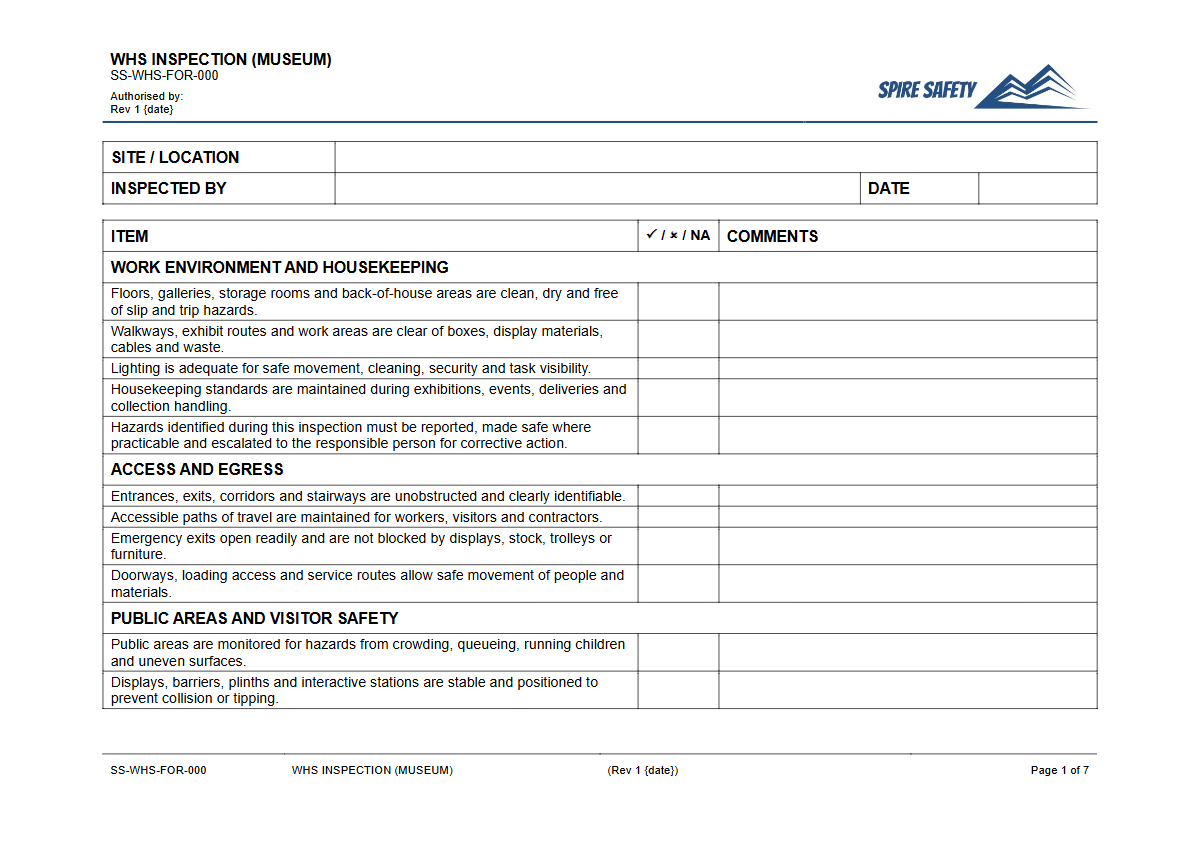
Museums, galleries, and cultural institutions manage a unique combination of workplace hazards. This free WHS Inspection (Museum) Template provides a structured starting point for systematically identifying and controlling risks across your facility.
A regular inspection process is fundamental to protecting staff, volunteers, contractors, and the public. It helps an organisation demonstrate its commitment to proactive safety management and meet its duties under Australian WHS laws.
This template encourages a thorough review of diverse operational areas, from public-facing exhibition halls to restricted back-of-house zones. It covers common risks such as slips and trips in high-traffic areas, manual handling of collections, security of exhibits, and safety in workshops or conservation labs.
A consistent inspection schedule is a critical component of effective WHS management systems, providing tangible evidence of ongoing hazard identification and risk control.
The checklist prompts you to consider specific hazards that might otherwise be overlooked, such as lighting levels around displays, emergency egress routes during peak visitor times, and the safe storage of materials. For specialised areas, such as an on-site café or archival storage, you may need to supplement this with other specific checklists, like a freezer pre-start checklist for cold storage units.
Video walkthrough
How to use the Free WHS Inspection (Museum) Template
Begin by downloading the template in your preferred format, either DOCX for easy editing or PDF for straightforward printing. The document is designed as a comprehensive foundation, not a finished product.
It is crucial to adapt it to the specific layout, exhibits, and activities of your institution.
Important: This is a template that provides a basic structure. We strongly advise that you customise it to reflect the specific hazards, equipment, collections, and operational procedures of your own museum.
Add sections for unique exhibits, remove items that are not relevant, and ensure the language aligns with your internal policies. This customisation is a key step in ensuring its effectiveness for your workplace.
To use the template effectively, schedule a walkthrough of the areas to be inspected. The designated inspector should fill out the header information, including their name, date, and the specific area under review.
Proceed through the checklist, marking each item as satisfactory, unsatisfactory, or not applicable. For any item marked 'unsatisfactory', provide detailed comments and recommend a corrective action.
The completed form should be signed and submitted to the appropriate manager for review and to ensure actions are assigned and tracked to completion. Engaging an external party for WHS compliance auditing can provide an expert, independent review of your customised checklists and overall safety processes.
When to use it
The frequency of inspections should be determined by a risk assessment. High-traffic public areas may require daily or weekly checks, especially regarding housekeeping and trip hazards.
Back-of-house areas like workshops or collection storage might be inspected weekly or monthly. It is also best practice to conduct a thorough inspection before the opening of a new major exhibition, after any significant facility modifications, or following an incident or near miss.
Regular, scheduled inspections move your organisation's safety focus from reactive to proactive, helping to identify and control hazards before they can cause harm. For specific high-risk machinery used in setting up exhibits or in maintenance, such as lifting equipment, you should also use dedicated pre-operational checks like an electric hoist pre-start checklist.
Who should use it
This inspection template is designed for use by a range of personnel within a museum or gallery setting. This includes Facility Managers, Operations Managers, Curators, WHS Representatives, and members of the Health and Safety Committee.
Department heads can use it to conduct inspections within their specific areas, such as the conservation lab or education department.
In smaller institutions without dedicated safety personnel, the Director or Manager may conduct the inspections. The key is that the person performing the check is familiar with the area being inspected and has been given the authority to identify and report hazards.
For organisations needing support to define these roles and responsibilities, our WHS consulting services can provide tailored guidance.
Ultimately, a culture of safety is built when everyone feels responsible for identifying and reporting risks. This tool can be used to empower staff and formalise that process. For additional templates and safety documents, browse our complete free WHS resources library.
Common mistakes
Common mistakes to avoid
- Forgetting to inspect 'back-of-house' areas like workshops, collection storage, and staff rooms.
- Failing to update the checklist to include hazards specific to new or temporary exhibitions.
- Not training staff on how to properly conduct the inspection and the process for reporting hazards.
- Completing the form as a 'tick-and-flick' exercise without physically verifying the safety of each item.
Legal references
Legal considerations
The following legal requirements may be relevant to this type of work.
- Work Health and Safety Act (Harmonised) — Provides the primary duties for protecting workers and other people from work health and safety risks.
- Work Health and Safety Regulations (Harmonised) — Sets out requirements supporting the management of workplace hazards and risks.
The following codes may be relevant to this type of work.
- Managing WHS Risks Code of Practice — Provides practical guidance on identifying hazards, assessing risks and applying effective controls.
- Work Health and Safety Consultation, Cooperation and Coordination Code of Practice — Provides practical guidance on consulting workers and coordinating with other duty holders.
- Managing the Work Environment and Facilities Code of Practice — Provides practical guidance on safe work environments, workplace facilities and related controls.
Did you know
Artefact Handling
Manual handling isn't just about heavy lifting. Handling delicate or valuable artefacts requires specific procedures to protect both the item and the handler from injury, awkward postures, or exposure to preservation chemicals.
Slips and Trips
Slips, trips, and falls are one of the most common causes of public liability claims in venues like museums. Polished floors, subtle changes in lighting between exhibits, and unmarked steps are frequent culprits.
FAQ
Frequently asked questions
01What are the most common WHS hazards in a museum?
02How often should our museum conduct a WHS inspection?
03Is this template suitable for small galleries or historical societies?
04Does this inspection cover special events and functions?
Share this resource
Free WHS Inspection (Museum) Template
Browse Categories
How To Use It
- 1Download and open in Word or PDF.
- 2Replace the placeholders with your business details.
- 3Get it reviewed by a WHS specialist before rollout.
Need it customised?
Our WHS consultants can adapt this template to your site, run a gap analysis, or audit what you already have in place.
Book a Free Consultation WHS consulting servicesor call 1300 156 382