
Free WHS Inspection (Packaging Plant) Template
Download our Free WHS Inspection (Packaging Plant) Template (DOCX & PDF). A structured starting point to identify hazards and manage risks.
Free WHS Inspection (Packaging Plant) Template
DOCX • 128 KB + PDF
Updated Oct 2026
No signup required
Purpose of this Free WHS Inspection (Packaging Plant) Template
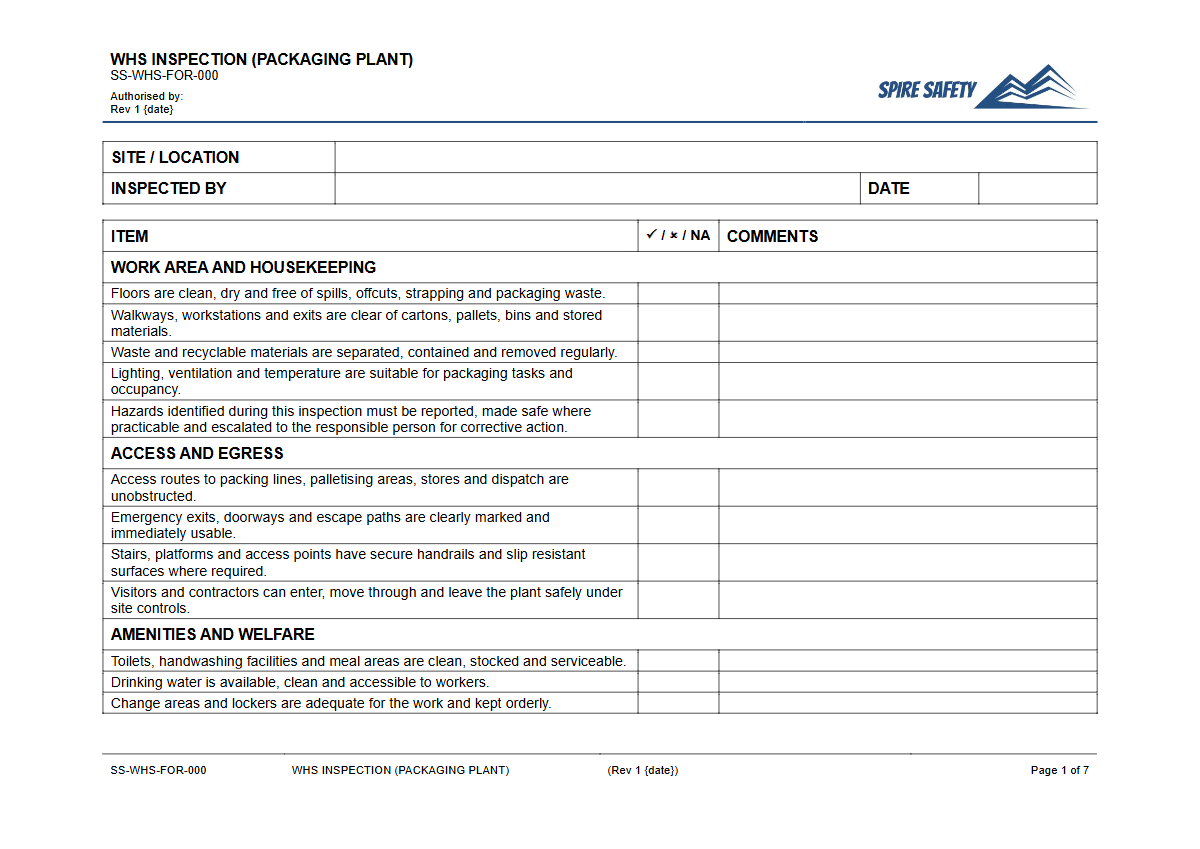
Proactively managing safety in a busy packaging environment is critical. This Free WHS Inspection (Packaging Plant) Template provides a structured starting point for systematically identifying hazards and assessing risks associated with your operations.
Regular inspections help prevent incidents, protect workers from harm, and support your organisation's overall safety management commitments. By formalising your inspection process, you can track actions, demonstrate due diligence, and foster a stronger safety culture.
A packaging plant contains a unique combination of risks, from the moving parts of conveyors and sealing machines to the repetitive nature of manual handling tasks. This template guides you to look for common hazards such as inadequate machine guarding, poor ergonomics, slip and trip risks from spills or debris, and noise exposure.
For specific liquid-related risks, using a dedicated Spill Prevention and Response Toolbox Talk can further strengthen your team's preparedness.
Video walkthrough
How to Use Your Free WHS Inspection (Packaging Plant) Template
Download the template in your preferred format (DOCX for easy editing or PDF) and adapt it to the specific context of your workplace. It is crucial to customise this document.
Walk through your facility and add or remove checklist items to reflect the actual machinery, substances, and work processes you use. For example, you might add specific checks for pallet wrappers, box erectors, or automated labellers.
If your site uses specific equipment like automated mail processing, you could adapt principles from our free checklist for envelope sealers to inform your customisation.
Important: This template is a guide only. We have designed it to be a helpful starting point, but your organisation is responsible for ensuring the final document is comprehensive and suitable for the specific risks at your site.
When customising, consider the entire lifecycle of your packaging process. This includes goods inwards, storage, decanting, the packing line itself, and dispatch.
In areas where staff may need to work at height to access stored goods or maintain equipment, your inspection should include checks for fall prevention. If you use mobile plant for these tasks, a specific risk assessment is essential, and you can use our Elevated Work Platform Risk Assessment Template as a reference.
When to Use This Inspection Checklist
The frequency of your inspections should be determined by your risk assessment. High-risk areas with fast-moving machinery or heavy pedestrian traffic may warrant weekly or even daily checks.
A comprehensive, wall-to-wall site inspection is typically conducted on a monthly or quarterly basis. You should also use this checklist:
- Before introducing new plant, equipment, or substances.
- When work processes or the layout of the plant changes.
- Following an incident, near miss, or the identification of a new hazard.
- As part of your regular safety audit schedule.
Who Should Use This Template
Workplace inspections should be carried out by a person or team with the right mix of knowledge and experience. This often includes site managers, supervisors, and Health and Safety Representatives (HSRs).
Involving workers who operate the machinery provides valuable on-the-ground insight into potential issues. The findings from this inspection are a critical input for your broader safety framework, helping to ensure you have robust WHS management systems that reflect your operational reality.
The completed inspection forms a valuable record of your risk management activities. It documents identified hazards and tracks the implementation of corrective actions.
These records are often reviewed during formal WHS compliance auditing to verify that the organisation is proactively managing its safety obligations. Maintaining clear, detailed records demonstrates a commitment to continuous improvement.
By integrating this inspection template into your regular safety rhythm, you take a significant step towards a safer packaging plant. This document is one of many tools designed to help you build a comprehensive safety system. For more checklists, risk assessments, and toolbox talks, explore our complete free WHS resources library.
Common mistakes
Common mistakes to avoid
- Failing to customise the template for specific on-site machinery and processes.
- Conducting a 'tick-and-flick' exercise without genuinely looking for new or developing hazards.
- Not assigning clear responsibilities and deadlines for corrective actions found during the inspection.
- Forgetting to review and update the inspection checklist after incidents or significant changes to the workplace.
Legal references
Legal considerations
The following legal requirements may be relevant to this type of work.
- Work Health and Safety Act (Harmonised) — Provides the primary duties for protecting workers and other people from work health and safety risks.
- Work Health and Safety Regulations (Harmonised) — Sets out requirements supporting the management of workplace hazards and risks.
The following codes may be relevant to this type of work.
- Managing WHS Risks Code of Practice — Provides practical guidance on identifying hazards, assessing risks and applying effective controls.
- Work Health and Safety Consultation, Cooperation and Coordination Code of Practice — Provides practical guidance on consulting workers and coordinating with other duty holders.
- Managing the Work Environment and Facilities Code of Practice — Provides practical guidance on safe work environments, workplace facilities and related controls.
Did you know
Manual Task Injuries
The manufacturing industry, which includes packaging, has one of the highest rates of serious workers' compensation claims for injuries caused by manual tasks. Regular inspections help identify and control these risks early.
Machine Guarding
Inadequate machine guarding is a leading cause of serious injury in manufacturing. An effective inspection must always verify that guards are in place, secure, and functioning correctly before use.
FAQ
Frequently asked questions
01What should a packaging plant inspection cover?
02How often should we inspect our packaging plant?
03Is this template enough for WHS compliance?
04Who is qualified to conduct a packaging plant inspection?
Share this resource
Free WHS Inspection (Packaging Plant) Template
Browse Categories
How To Use It
- 1Download and open in Word or PDF.
- 2Replace the placeholders with your business details.
- 3Get it reviewed by a WHS specialist before rollout.
Need it customised?
Our WHS consultants can adapt this template to your site, run a gap analysis, or audit what you already have in place.
Book a Free Consultation WHS consulting servicesor call 1300 156 382