
Free WHS Inspection (Parks Depot) Template
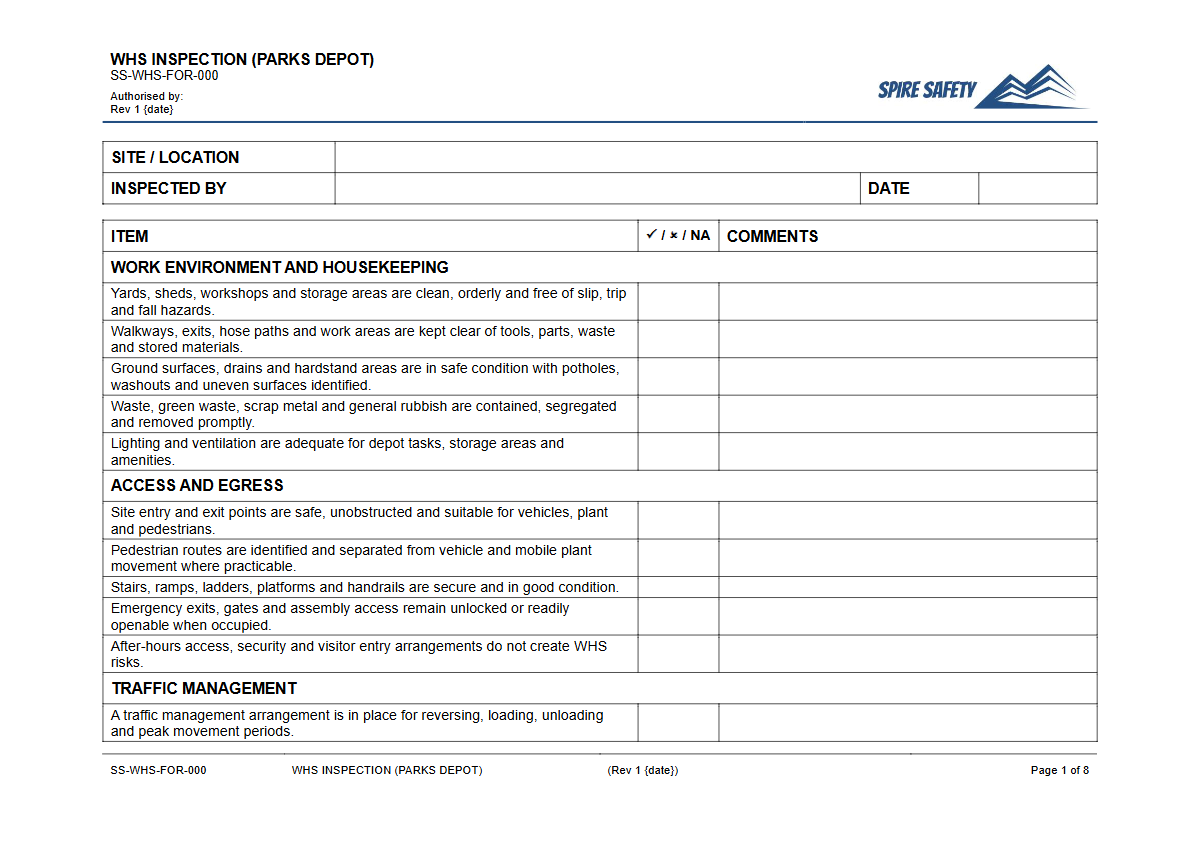
Formalise your safety processes with our Free WHS Inspection (Parks Depot) Template. This structured document helps identify hazards in your workplace.
Free WHS Inspection (Parks Depot) Template
DOCX • 129 KB + PDF
Updated Oct 2026
No signup required
Purpose of the Free WHS Inspection (Parks Depot) Template
A well-managed parks depot is essential for maintaining public green spaces, but it also presents a unique set of work health and safety risks. Our Free WHS Inspection (Parks Depot) Template provides a structured starting point for systematically identifying and managing hazards specific to your depot environment, from chemical storage and workshop activities to vehicle movements and staff amenities.
This inspection template prompts a thorough review of common risk areas in a depot setting, including manual tasks, plant and equipment safety, traffic management, and emergency preparedness. Using it helps an organisation demonstrate its commitment to proactive risk management and provides a documented record of safety checks.
The checklist format is designed to be straightforward, allowing for consistent application across different teams and locations.
While this template provides a comprehensive overview of the depot, individual pieces of equipment require their own specific checks before use. For regular checks of horticultural machinery, you can use our pre-start checklist for lawn tractors to ensure they are safe to operate.
The inspection also covers general site conditions, such as the security of the perimeter and access points. Ensuring entry and exit ways are clear and functional is a key part of site safety.
For automated gates, a specific check like a pre-start checklist for boom gates can supplement your overall depot inspection process.
Video walkthrough
How to use the Free WHS Inspection (Parks Depot) Template
Begin by downloading the template in your preferred format. The DOCX file is fully editable, allowing you to add, remove, or modify checklist items to suit your specific site.
The PDF version is ready for immediate printing and use. The goal is to create a document that accurately reflects the real-world conditions and hazards your workers face daily.
Walk through the depot, methodically completing each section of the checklist. For each item, assess the condition and note any hazards, non-compliances, or areas for improvement.
Be sure to record specific details and locations. Assign a corrective action, a person responsible for completing it, and a due date for every issue identified.
This creates a clear action plan for risk mitigation.
It is crucial to remember that this template is a general guide. You must customise it to reflect the specific equipment, processes, and risks present in your own workplace.
An effective inspection process should be integrated into your broader WHS management system to ensure findings are tracked and systematically addressed.
When to use it
Regular, scheduled inspections are a cornerstone of proactive safety management. We recommend conducting a full depot inspection on a recurring basis, such as monthly or quarterly, depending on the size and complexity of your operations.
This consistency helps identify developing issues, such as wear and tear on equipment or the gradual degradation of safety controls, before they can cause an incident.
In addition to scheduled checks, this inspection should be performed following any significant change at the depot. This includes the introduction of new plant or machinery, alterations to the site layout, or changes in work procedures.
It's also wise to conduct an ad-hoc inspection after a reported incident or near miss to identify any contributing environmental or procedural factors. For new equipment, like a powered aerator, integrating a tool-specific checklist such as our aerator pre-start checklist is also best practice.
Who should use it
This inspection template is designed for use by a range of personnel responsible for workplace safety. This includes Depot Managers, Site Supervisors, Team Leaders, and Health and Safety Representatives (HSRs).
To gain the most benefit, inspections should be a consultative process involving the workers who perform the tasks and operate the equipment every day. Their direct experience is invaluable for identifying practical hazards that might otherwise be overlooked.
The completed inspection reports provide essential information for management and WHS committees, helping to guide safety investments and resource allocation. The documented findings also serve as important records during a formal WHS compliance audit, demonstrating due diligence in hazard identification and risk control. For a wider selection of safety documentation, browse our complete free WHS resources library.
Common mistakes
Common mistakes to avoid
- Failing to customise the template to the specific depot layout, equipment, and tasks.
- Completing the checklist from a desk without physically walking through the area ('pencil-whipping').
- Not assigning clear corrective actions and due dates for identified hazards.
- Neglecting to follow up to ensure corrective actions have been effectively implemented.
Legal references
Legal considerations
The following legal requirements may be relevant to this type of work.
- Work Health and Safety Act (Harmonised) — Provides the primary duties for protecting workers and other people from work health and safety risks.
- Work Health and Safety Regulations (Harmonised) — Sets out requirements supporting the management of workplace hazards and risks.
The following codes may be relevant to this type of work.
- Managing WHS Risks Code of Practice — Provides practical guidance on identifying hazards, assessing risks and applying effective controls.
- Work Health and Safety Consultation, Cooperation and Coordination Code of Practice — Provides practical guidance on consulting workers and coordinating with other duty holders.
- Managing the Work Environment and Facilities Code of Practice — Provides practical guidance on safe work environments, workplace facilities and related controls.
Did you know
UV Exposure Risk
Outdoor workers can receive 5 to 10 times more ultraviolet (UV) radiation exposure than indoor workers, significantly increasing their risk of skin cancer. Sun safety should be a critical part of any parks and gardens safety plan.
Ride-On Mower Incidents
Incidents involving ride-on mowers, particularly rollovers on slopes or embankments, are a leading cause of serious injury in the parks and gardens industry. Thorough operator training and site risk assessment are essential controls.
FAQ
Frequently asked questions
01What are the most common hazards in a parks and gardens depot?
02How often should a parks depot WHS inspection be conducted?
03Who is responsible for acting on the findings of a depot inspection?
04Can this template be used for mobile work crews?
Share this resource
Free WHS Inspection (Parks Depot) Template
Browse Categories
How To Use It
- 1Download and open in Word or PDF.
- 2Replace the placeholders with your business details.
- 3Get it reviewed by a WHS specialist before rollout.
Need it customised?
Our WHS consultants can adapt this template to your site, run a gap analysis, or audit what you already have in place.
Book a Free Consultation WHS consulting servicesor call 1300 156 382