
Free WHS Inspection (Plant Depot) Template
Formalise safety checks at your plant depot with our Free WHS Inspection Template. This structured starting point helps you identify and manage hazards.
Free WHS Inspection (Plant Depot) Template
DOCX • 129 KB + PDF
Updated Oct 2026
No signup required
Purpose of the Free WHS Inspection (Plant Depot) Template
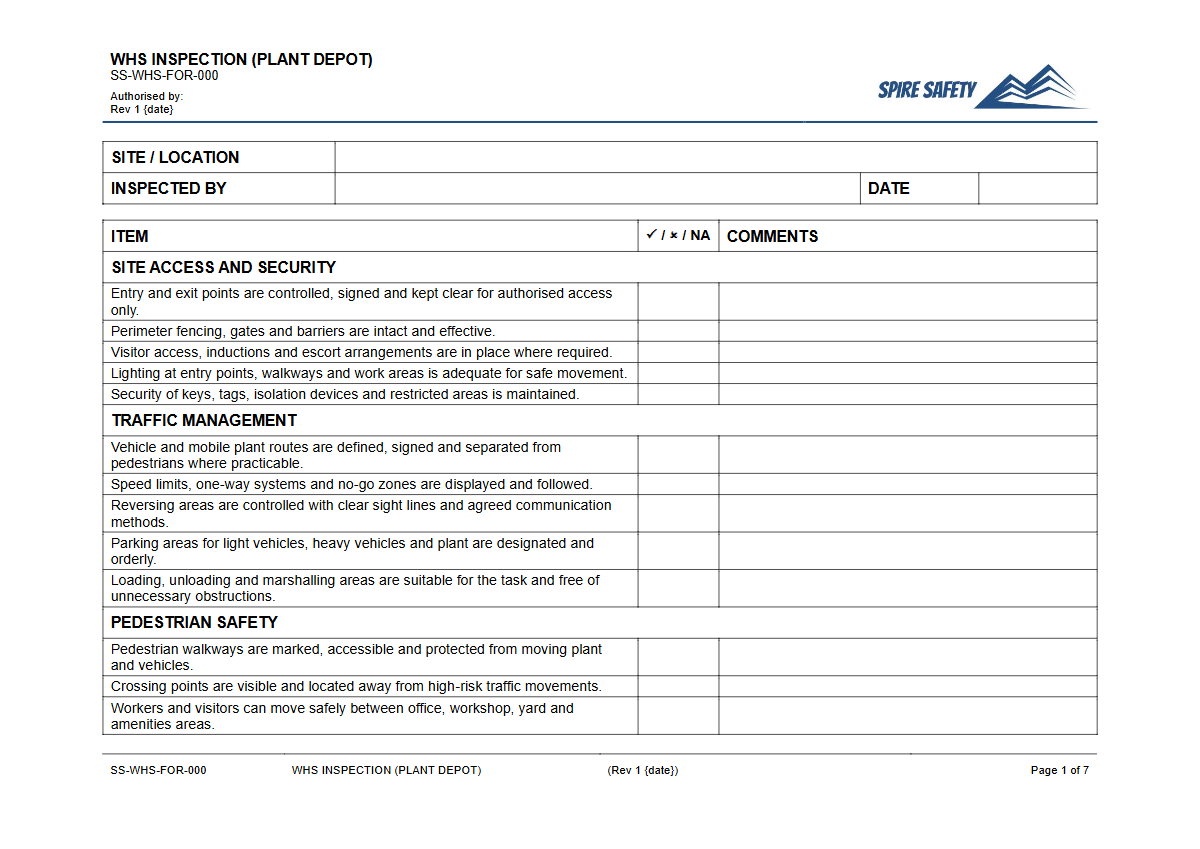
Maintaining a safe and organised plant depot is fundamental to any operation involving heavy machinery and equipment. This Free WHS Inspection (Plant Depot) Template provides a structured starting point for systematically checking your depot environment, from traffic management and storage areas to emergency equipment and general housekeeping.
It is designed to help you identify potential hazards, assess risks, and document safety measures in line with Australian WHS principles. A thorough inspection process is a key part of a robust WHS management system, helping to prevent incidents before they occur.
The primary purpose of this Inspection template is to provide a comprehensive framework for regular safety assessments of your depot facilities. It prompts users to examine critical areas such as vehicle movement, pedestrian safety, storage of materials and chemicals, workshop conditions, and the state of amenities.
Using this template helps formalise your safety processes, demonstrate due diligence, and create a documented record of your safety efforts. This systematic approach is crucial for managing hazards associated with specific equipment, which can be further detailed using tools like our free Skidsteer Bobcat Risk Assessment Template.
Video walkthrough
How to use the Free WHS Inspection (Plant Depot) Template
Download the template in your preferred format (DOCX or PDF). The DOCX version is fully editable, allowing for extensive customisation to suit your specific operational needs.
- Step 1: Customise the Checklist. It is essential that you adapt this template to your specific site. Add, remove, or modify checklist items to reflect the unique layout, equipment, and activities at your plant depot. We cannot know the specific hazards of your workplace, so this customisation is your responsibility.
- Step 2: Conduct the Inspection. Walk through the depot and systematically complete the checklist. For each item, record your observations, noting any non-conformances or potential hazards. Take photos where necessary to provide clear evidence.
- Step 3: Document Findings and Actions. For every issue identified, document a corresponding corrective action. Assign responsibility for the action and set a clear deadline for completion. This ensures accountability and timely hazard mitigation.
- Step 4: Review and Sign Off. Once the inspection is complete and corrective actions are noted, the responsible person should sign and date the document. Store the completed inspection report as part of your WHS records.
Effective hazard management also includes preparing for specific incidents like chemical releases. Incorporating regular training, such as by using a Spill Prevention and Response Toolbox Talk Template, can complement your inspection regime and improve worker preparedness.
When to use it
The frequency of depot inspections depends on the size, complexity, and risk profile of your operations. It is best practice to establish a regular schedule, such as weekly or monthly, for these comprehensive inspections.
They should also be conducted after any significant changes to the depot layout, introduction of new plant, or following an incident or near miss. Regular assessments can be a key input for broader safety assurance activities, such as periodic WHS compliance auditing.
Who should use it
This template is designed for use by WHS advisors, site supervisors, depot managers, and members of the health and safety committee. It can also be used by workers who have been trained and deemed competent to conduct workplace inspections.
The person conducting the inspection should have a good understanding of the depot’s operations, familiarity with relevant WHS legislation, and the authority to recommend corrective actions. For machinery-specific checks, organisations can use other targeted resources, such as our free Grader Risk Assessment Template, to supplement this depot-wide inspection.
By integrating this inspection into your regular safety schedule, you build a stronger culture of safety and proactive risk management. For more tools to support your safety programs, explore our complete free WHS resources library.
Common mistakes
Common mistakes to avoid
- Using the generic template without customising it for the specific depot layout and hazards.
- Failing to document and track corrective actions, leaving identified hazards unresolved.
- Conducting the inspection from a desk instead of physically walking through the entire site.
- Not involving workers who operate in the depot, as they often have the best insight into daily risks.
Legal references
Legal considerations
The following legal requirements may be relevant to this type of work.
- Work Health and Safety Act (Harmonised) — Provides the primary duties for protecting workers and other people from work health and safety risks.
- Work Health and Safety Regulations (Harmonised) — Sets out requirements supporting the management of workplace hazards and risks.
The following codes may be relevant to this type of work.
- Managing WHS Risks Code of Practice — Provides practical guidance on identifying hazards, assessing risks and applying effective controls.
- Work Health and Safety Consultation, Cooperation and Coordination Code of Practice — Provides practical guidance on consulting workers and coordinating with other duty holders.
- Managing the Work Environment and Facilities Code of Practice — Provides practical guidance on safe work environments, workplace facilities and related controls.
Did you know
Duty to Manage Plant Risks
The model WHS Regulations place specific duties on PCBUs to manage the risks of plant in the workplace. This includes ensuring it is safely stored, inspected, and maintained at all times, including within a depot.
FAQ
Frequently asked questions
01What should be included in a plant depot WHS inspection?
02How often should plant depots be formally inspected?
03Who is responsible for conducting a WHS inspection at a plant depot?
04Can this template be used for mobile plant pre-start checks?
Share this resource
Free WHS Inspection (Plant Depot) Template
Browse Categories
How To Use It
- 1Download and open in Word or PDF.
- 2Replace the placeholders with your business details.
- 3Get it reviewed by a WHS specialist before rollout.
Need it customised?
Our WHS consultants can adapt this template to your site, run a gap analysis, or audit what you already have in place.
Book a Free Consultation WHS consulting servicesor call 1300 156 382