
Free WHS Inspection (Poultry Farm) Template
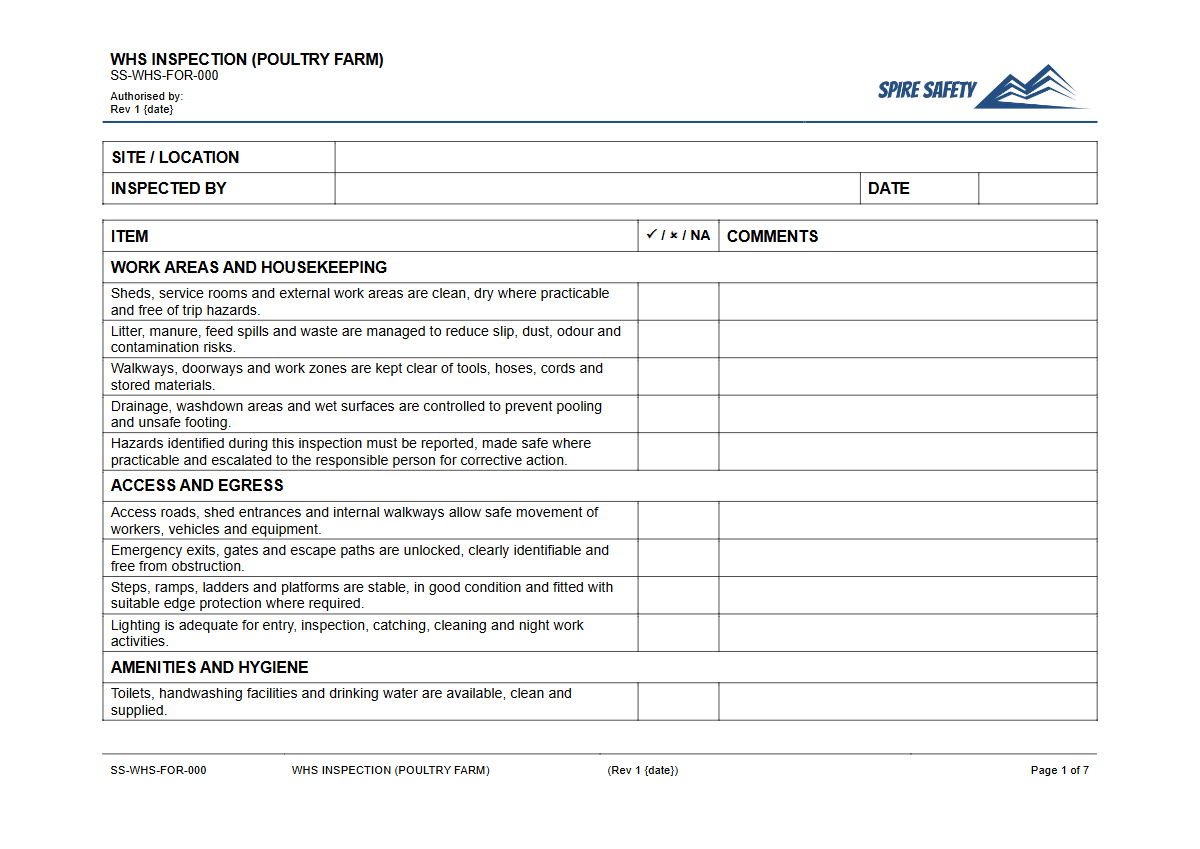
Download our Free WHS Inspection (Poultry Farm) Template. This structured DOCX & PDF helps you identify and control hazards unique to poultry farming.
Free WHS Inspection (Poultry Farm) Template
DOCX • 129 KB + PDF
Updated Oct 2026
No signup required
Purpose of the Free WHS Inspection (Poultry Farm) Template
Regular safety inspections are a cornerstone of effective work health and safety management in any agricultural setting. This is especially true for poultry farms, which present a unique combination of hazards.
Our Free WHS Inspection (Poultry Farm) Template provides a structured starting point for systematically identifying and assessing risks in your specific environment. Using this template helps you move beyond reactive measures, allowing you to proactively manage hazards such as musculoskeletal injuries from manual tasks, respiratory illnesses from dust and ammonia, incidents involving machinery, and exposure to biological agents.
A documented inspection process demonstrates a commitment to WHS and creates a formal record of your risk management activities. This is a vital component of a comprehensive safety framework.
For businesses looking to formalise their entire safety approach, integrating regular inspections into a broader framework is key. Spire Safety offers expert guidance on developing complete WHS management systems that align with Australian standards and operational needs.
Video walkthrough
How to use the Free WHS Inspection (Poultry Farm) Template
This template is designed for ease of use and customisation. Follow these steps to integrate it into your farm's safety procedures:
- Download: Choose the DOCX format for easy editing or the PDF for straightforward printing.
- Customise: This is the most critical step. Your poultry farm is unique. You must adapt the checklist to include the specific sheds, equipment, chemicals, and work processes used in your operation. We strongly advise that you customise this document to reflect the specific hazards and control measures relevant to your site. This could include adding checks for specific equipment like those found in our Free Pre-Start Checklist (Feed Mixer) Template.
- Conduct the Inspection: Walk through the areas of your farm, methodically following your customised checklist. Engage with workers during the inspection to get their direct feedback on potential hazards and the effectiveness of current controls.
- Document Findings: Clearly record any hazards or non-conformances identified. Note the location, describe the issue, and assign a risk level if appropriate.
- Implement Corrective Actions: For each identified hazard, assign a corrective action, a person responsible for completing it, and a due date. Track these actions to ensure they are completed and effective.
- Review and Improve: Regularly review your inspection findings to identify trends. Use this information to update your risk assessments, safe work procedures, and the inspection checklist itself.
When to conduct this Inspection
The frequency of your poultry farm inspections should be determined by your own risk assessment, but a consistent schedule is essential. Consider using this template:
- Routinely: Conduct weekly, fortnightly, or monthly inspections of all operational areas to ensure ongoing safety standards are maintained.
- Before introducing new processes or equipment: An inspection should be part of the commissioning process for new machinery, such as an automated packaging system or ventilation upgrade. For farms that grade their own products, this could align with checks like our Free Pre-Start Checklist (Egg Grader) Template.
- After an incident or near miss: A detailed inspection of the area and circumstances can help identify the root causes and prevent a recurrence.
- Following significant changes: This includes changes to the farm layout, staffing, or when new legislation or codes of practice are introduced.
Beyond routine site-wide inspections, specific equipment requires daily checks. For example, any tractors or utility vehicles used for maintenance or moving feed should be checked before use, similar to the process outlined in our Free Pre-Start Checklist (Lawn Tractor) Template.
Who should use this Inspection Template
Responsibility for safety is shared, and various people on the farm can and should be involved in the inspection process. This template is designed for:
- Farm Owners and Managers: To fulfil their duty of care as a Person Conducting a Business or Undertaking (PCBU) and oversee the farm's overall safety performance.
- WHS Representatives and Committee Members: As a tool for carrying out their functions in representing workers and monitoring safety measures.
- Supervisors and Team Leaders: To manage safety in their specific areas of responsibility, such as the hatchery, processing area, or individual sheds.
- Workers: Competent workers can be trained to conduct inspections, promoting a proactive safety culture and leveraging their hands-on knowledge of the tasks and equipment.
The records generated from this template are not just for internal use; they are important documents that can be reviewed during a formal audit. Regular, well-documented internal inspections provide valuable evidence of a functioning safety system during a WHS compliance auditing process. You can find more useful documents like this one in our complete free WHS resources library.
Common mistakes
Common mistakes to avoid
- Using the template without customising it for the farm's specific equipment and layout.
- Failing to action identified hazards and document the corrective measures taken.
- Conducting inspections but not providing adequate information or training to the person doing them.
- Neglecting to review and update the inspection checklist after an incident or change in operations.
Legal references
Legal considerations
The following legal requirements may be relevant to this type of work.
- Work Health and Safety Act (Harmonised) — Provides the primary duties for protecting workers and other people from work health and safety risks.
- Work Health and Safety Regulations (Harmonised) — Sets out requirements supporting the management of workplace hazards and risks.
The following codes may be relevant to this type of work.
- Managing WHS Risks Code of Practice — Provides practical guidance on identifying hazards, assessing risks and applying effective controls.
- Work Health and Safety Consultation, Cooperation and Coordination Code of Practice — Provides practical guidance on consulting workers and coordinating with other duty holders.
- Managing the Work Environment and Facilities Code of Practice — Provides practical guidance on safe work environments, workplace facilities and related controls.
Did you know
Respiratory Health
Dust from poultry litter, feed, and bird feathers can contain harmful particles and microorganisms, making respiratory protection a critical control measure on farms.
Zoonotic Diseases
Poultry can transmit diseases to humans, such as avian influenza and salmonellosis. Good personal hygiene practices and biosecurity measures are essential to prevent transmission.
FAQ
Frequently asked questions
01What are the biggest WHS risks on a poultry farm?
02How often should I inspect my poultry farm for safety?
03Is this template suitable for all types of poultry farms (e.g., broiler vs. layer)?
04Can workers conduct these inspections?
Share this resource
Free WHS Inspection (Poultry Farm) Template
Browse Categories
How To Use It
- 1Download and open in Word or PDF.
- 2Replace the placeholders with your business details.
- 3Get it reviewed by a WHS specialist before rollout.
Need it customised?
Our WHS consultants can adapt this template to your site, run a gap analysis, or audit what you already have in place.
Book a Free Consultation WHS consulting servicesor call 1300 156 382