
Free WHS Inspection (Processing Plant) Template
Download our free WHS Inspection (Processing Plant) Template to streamline safety audits. This structured DOCX template helps identify hazards. Get yours now.
Free WHS Inspection (Processing Plant) Template
DOCX • 128 KB + PDF
Updated Oct 2026
No signup required
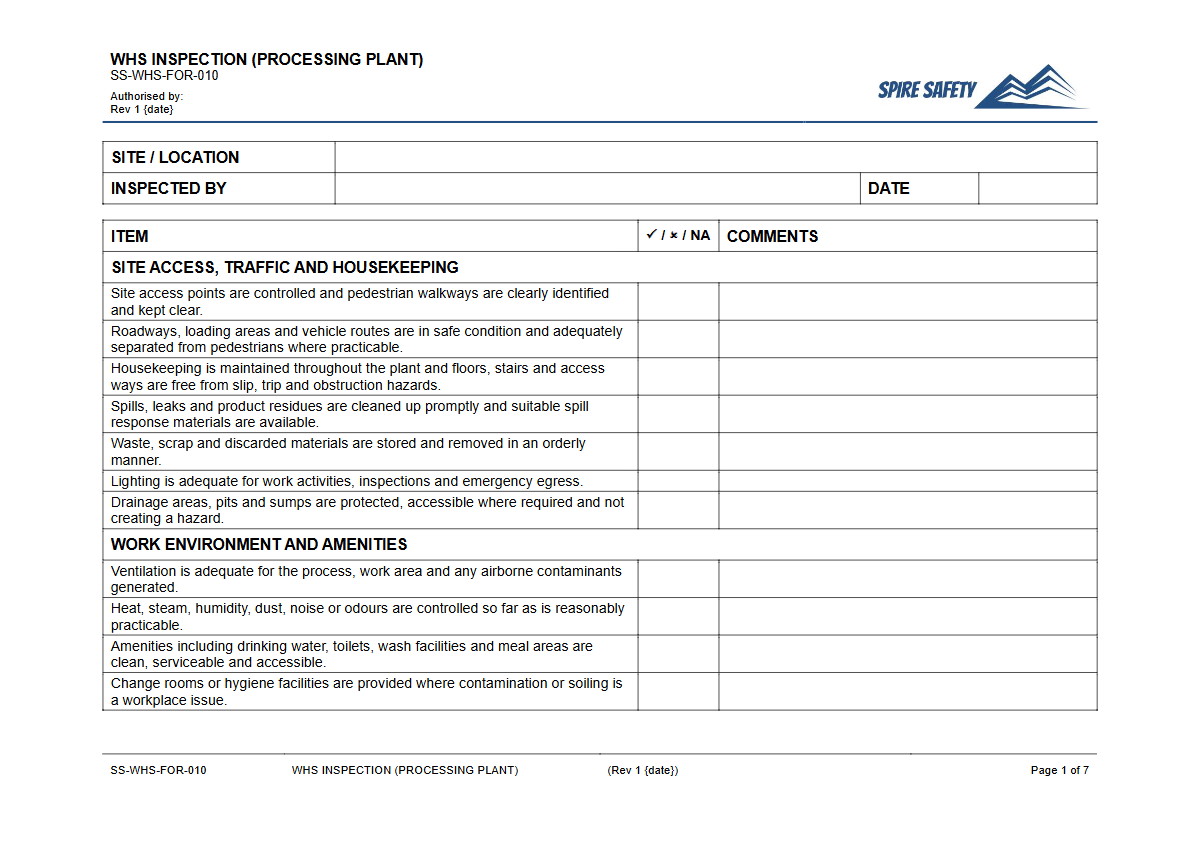
Purpose of the Free WHS Inspection (Processing Plant) Template
A processing plant presents a complex and dynamic risk environment. Our Free WHS Inspection (Processing Plant) Template provides a structured framework for systematically identifying and documenting workplace hazards before they cause harm.
Using this template helps your organisation formalise safety walks, ensure operational risks are controlled, and maintain crucial records for due diligence. It is an essential tool for proactive hazard management, covering areas from machine safety and chemical handling to traffic management and ergonomics.
Integrating regular, documented inspections is a cornerstone of any effective WHS management system. This checklist helps you move beyond ad-hoc checks, creating a repeatable process that supports a positive safety culture and continuous improvement. It provides a clear record of what was checked, what was found, and what corrective actions were assigned, creating an auditable trail of your safety activities.
Video walkthrough
How to use the Free WHS Inspection (Processing Plant) Template
This Inspection template is designed as a comprehensive starting point. To implement it effectively, follow these steps:
- Download: Select your preferred format, DOCX for easy editing or PDF for straightforward printing.
- Customise: Adapt the checklist to your specific site. Add, remove, or modify sections to reflect the unique machinery, production lines, chemicals, and layout of your processing facility.
- Train: Ensure the personnel conducting the inspection understand what they are looking for and how to document findings correctly.
- Implement: Conduct the inspection systematically. Walk through the plant, observe work practices, examine equipment, and talk to workers. Document any identified hazards, non-conformances, or opportunities for improvement.
- Action & Review: Assign clear corrective actions with deadlines for any issues found. Review completed inspection reports to identify trends and inform your overall WHS strategy.
While this template is aligned with Australian WHS principles, its use does not supports your compliance efforts. True effectiveness comes from its customisation and diligent application. To gain an external perspective on your safety processes, consider engaging professionals for formal WHS compliance auditing.
Important Note: This document is a template only. To ensure it is effective, we strongly advise that you customise it to reflect the specific hazards and operational realities of your workplace.
Key Inspection Areas
A thorough processing plant inspection should cover multiple facets of the operation. Key areas included in this template are:
- Machinery & Equipment: Checks for adequate guarding, functional emergency stops, lock-out tag-out (LOTO) provisions, and general condition. For daily equipment checks, you might use a more specific tool like our Free Pre-Start Checklist (Feed Mixer) Template.
- Hazardous Chemicals & Substances: Verification of correct labelling, safe storage, Safety Data Sheet (SDS) availability, and accessible, stocked spill kits. Training is vital for managing chemical risks, which can be supported with our Spill Prevention and Response Toolbox Talk Template.
- Work Environment & Housekeeping: Assessment of lighting, ventilation, noise levels, trip hazards, and clear access to walkways and exits. Specialised areas also need attention; our Free Pre-Start Checklist (Freezer) Template can be adapted for inspecting cold storage zones.
- Emergency Systems: Confirmation that fire extinguishers are accessible and in-date, emergency exits are unobstructed, first aid kits are stocked, and alarms are functional.
When to use it
The frequency of inspections should be based on risk. High-risk areas with heavy machinery or hazardous processes may require weekly or even daily checks, while lower-risk areas like offices could be inspected monthly or quarterly. In addition to regular scheduling, a full plant inspection should also be conducted:
- After an incident, injury, or near-miss.
- When introducing new machinery, substances, or work processes.
- Following significant changes to the workplace layout.
- When concerns are raised by workers or Health and Safety Representatives (HSRs).
Who should use it
Workplace inspections are a shared responsibility. This template can be used by:
- WHS Managers and Safety Officers.
- Supervisors and Team Leaders.
- Health and Safety Representatives (HSRs) and Committee members.
- Competent workers involved in the processes being inspected.
Involving a team with diverse roles often leads to a more thorough inspection, as different people notice different things. For particularly complex or high-risk sites, organisations may also benefit from the objective eye of external WHS consulting professionals to guide the process. For additional safety documentation, you can browse our complete free WHS resources library.
Common mistakes
Common mistakes to avoid
- Using a generic template without customising it for the specific plant and its hazards.
- Failing to assign corrective actions or not following up to ensure they are completed.
- Conducting inspections with only managers, failing to involve the workers who use the equipment daily.
- Poor record-keeping, making it impossible to track trends or demonstrate due diligence over time.
Legal references
Legal considerations
The following legal requirements may be relevant to this type of work.
- Work Health and Safety Act (Harmonised) — Provides the primary duties for protecting workers and other people from work health and safety risks.
- Work Health and Safety Regulations (Harmonised) — Sets out requirements supporting the management of workplace hazards and risks.
The following codes may be relevant to this type of work.
- Managing WHS Risks Code of Practice — Provides practical guidance on identifying hazards, assessing risks and applying effective controls.
- Work Health and Safety Consultation, Cooperation and Coordination Code of Practice — Provides practical guidance on consulting workers and coordinating with other duty holders.
- Managing the Work Environment and Facilities Code of Practice — Provides practical guidance on safe work environments, workplace facilities and related controls.
Did you know
Machine Guarding
Inadequate machine guarding is consistently one of the top causes of serious workplace injuries in Australia, often leading to amputations or fatalities.
Slips, Trips, and Falls
Slips, trips, and falls are the leading cause of non-fatal injuries in manufacturing and processing environments, frequently caused by contaminated floors, poor housekeeping, or uneven surfaces.
FAQ
Frequently asked questions
01What is the difference between a pre-start check and a WHS plant inspection?
02How often should a processing plant be inspected for WHS?
03Who is legally responsible for conducting WHS inspections in Australia?
04Can this template be used for any type of processing plant?
Share this resource
Free WHS Inspection (Processing Plant) Template
Browse Categories
How To Use It
- 1Download and open in Word or PDF.
- 2Replace the placeholders with your business details.
- 3Get it reviewed by a WHS specialist before rollout.
Need it customised?
Our WHS consultants can adapt this template to your site, run a gap analysis, or audit what you already have in place.
Book a Free Consultation WHS consulting servicesor call 1300 156 382