
Free WHS Inspection (Produce Shed) Template
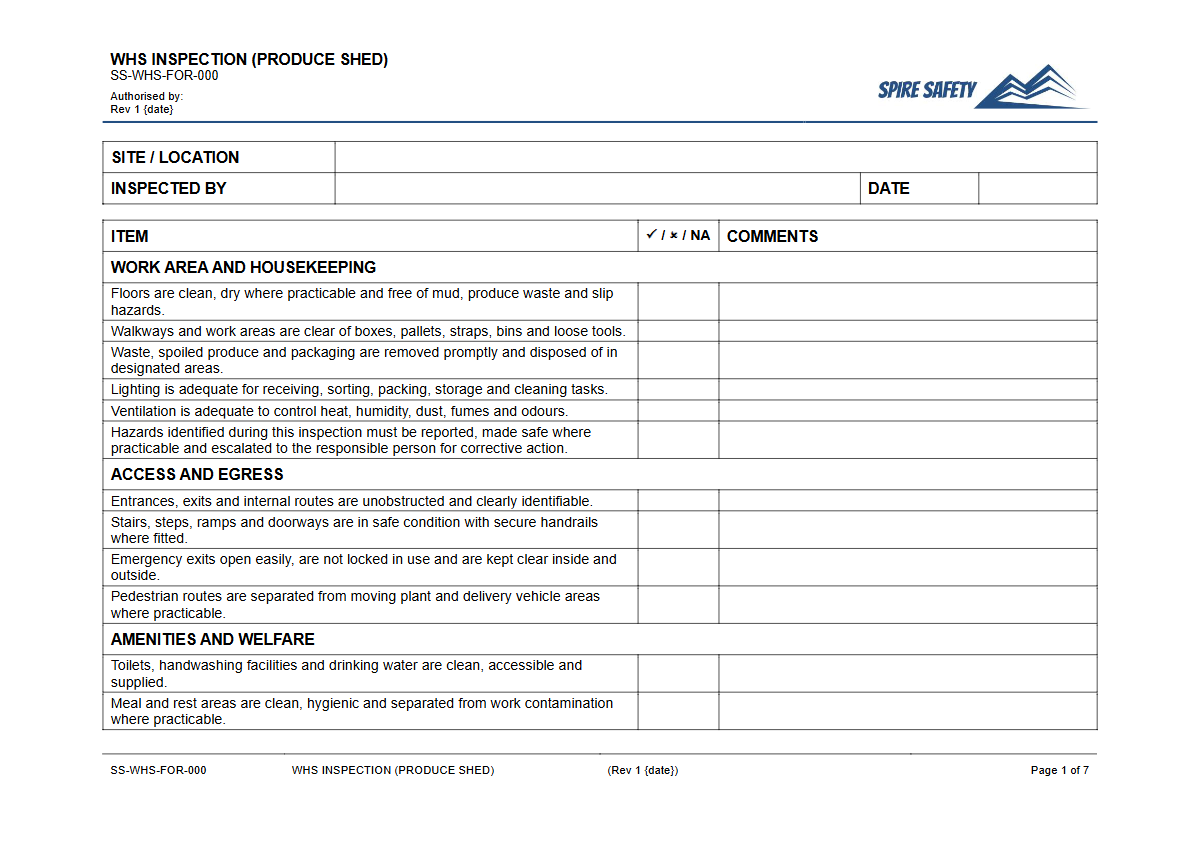
Download our Free WHS Inspection (Produce Shed) Template to formalise safety checks in your agricultural or food processing facility.
Free WHS Inspection (Produce Shed) Template
DOCX • 128 KB + PDF
Updated Oct 2026
No signup required
Purpose of the Free WHS Inspection (Produce Shed) Template
A produce shed is a dynamic environment with numerous hazards, from vehicle movements and manual handling to temperature extremes and machinery operation. This Free WHS Inspection (Produce Shed) Template provides a structured starting point for systematically identifying these hazards before they cause an incident.
Regular, documented inspections are a fundamental component of proactive safety management, helping your organisation meet its duty of care obligations. They create a formal record of your safety efforts and demonstrate due diligence.
Conducting these checks helps foster a positive safety culture by involving workers in hazard identification and risk management. The findings from this inspection checklist should feed into your broader WHS management systems, informing risk assessments, safe work procedures, and training programs.
It’s a practical tool for turning safety principles into on-the-ground action.
Video walkthrough
How to use the Free WHS Inspection (Produce Shed) Template
Using this template effectively involves more than just filling it out. Start by downloading the DOCX file and adapting it to the specific layout, equipment, and processes of your produce shed.
A generic checklist is a good starting point, but true effectiveness comes from customisation.
Walk through the inspection route, observing activities and conditions. For each item on the checklist, assess the situation and note any non-conformances, potential hazards, or areas for improvement.
Include photographic evidence where possible. Once completed, ensure all identified issues are assigned a corrective action with a responsible person and a due date.
The final step is to communicate the findings to relevant managers, supervisors, and the health and safety committee.
Customising the Template
Your produce shed is unique. You must review and modify this document to suit your specific site hazards and operational risks.
We recommend you add, remove, and edit sections to reflect the actual machinery and tasks present. For example, your checklist should include specific items for key equipment.
You might integrate checks from our Free Pre-Start Checklist (Freezer) Template if you have large cold storage units.
Similarly, if your operation involves other agricultural processes, you could incorporate elements from a pre-start checklist for a feed mixer or a checklist for an egg grader. The goal is to create a single, comprehensive inspection document that covers all relevant aspects of your workplace, from general housekeeping to high-risk machinery.
When to use it
The frequency of inspections should be determined by a risk assessment. High-risk areas or activities may require daily or weekly checks, while a full-shed inspection might be conducted monthly or quarterly.
A schedule should be established and followed consistently. In addition to scheduled inspections, this template should be used:
- After an incident, accident, or near miss to identify contributing factors.
- When new machinery, equipment, or work processes are introduced.
- When changes are made to the layout of the shed.
- Following concerns or feedback raised by workers.
Who should use it
Inspections should be conducted by a competent person who has a thorough understanding of the work activities and hazards present in the produce shed. This could be a site supervisor, a manager, or a dedicated WHS officer.
For best results, consider conducting inspections with a team that includes both a manager and a worker representative, as they bring different perspectives.
The completed inspection reports are valuable documents for senior management, as they provide an overview of the site's safety status. They serve as critical evidence and a key input for processes like WHS compliance auditing, helping to verify that safety procedures are being followed and are effective.
Explore our complete free WHS resources library for more tools to support your safety management system.
Common mistakes
Common mistakes to avoid
- Using the template without customising it for the specific shed layout and equipment.
- Inspectors 'ticking and flicking' the checklist without thorough observation.
- Failing to assign and track corrective actions for identified hazards.
- Not providing adequate training to the person conducting the inspection on hazard identification.
Legal references
Legal considerations
The following legal requirements may be relevant to this type of work.
- Work Health and Safety Act (Harmonised) — Provides the primary duties for protecting workers and other people from work health and safety risks.
- Work Health and Safety Regulations (Harmonised) — Sets out requirements supporting the management of workplace hazards and risks.
The following codes may be relevant to this type of work.
- Managing WHS Risks Code of Practice — Provides practical guidance on identifying hazards, assessing risks and applying effective controls.
- Work Health and Safety Consultation, Cooperation and Coordination Code of Practice — Provides practical guidance on consulting workers and coordinating with other duty holders.
- Managing the Work Environment and Facilities Code of Practice — Provides practical guidance on safe work environments, workplace facilities and related controls.
Did you know
Agricultural Industry Risk
According to Safe Work Australia, the agriculture, forestry, and fishing industry consistently has one of the highest rates of worker fatalities and serious workers' compensation claims in the country.
FAQ
Frequently asked questions
01What are the most common hazards in a produce shed?
02How often should I conduct a formal inspection of a produce shed?
03Who is qualified to conduct a produce shed inspection?
04What should happen after an inspection identifies a hazard?
Share this resource
Free WHS Inspection (Produce Shed) Template
Browse Categories
How To Use It
- 1Download and open in Word or PDF.
- 2Replace the placeholders with your business details.
- 3Get it reviewed by a WHS specialist before rollout.
Need it customised?
Our WHS consultants can adapt this template to your site, run a gap analysis, or audit what you already have in place.
Book a Free Consultation WHS consulting servicesor call 1300 156 382