
Free WHS Inspection (Quarry Workshop) Template
Download our Free WHS Inspection (Quarry Workshop) Template to formalise your safety checks. This DOCX & PDF is a structured starting point. Get yours today.
Free WHS Inspection (Quarry Workshop) Template
DOCX • 129 KB + PDF
Updated Oct 2026
No signup required
Purpose of the Free WHS Inspection (Quarry Workshop) Template
Quarry workshops are high-risk environments filled with heavy machinery, hazardous substances, and complex maintenance tasks. A systematic inspection process is essential for proactively identifying and controlling hazards before they cause injury or illness.
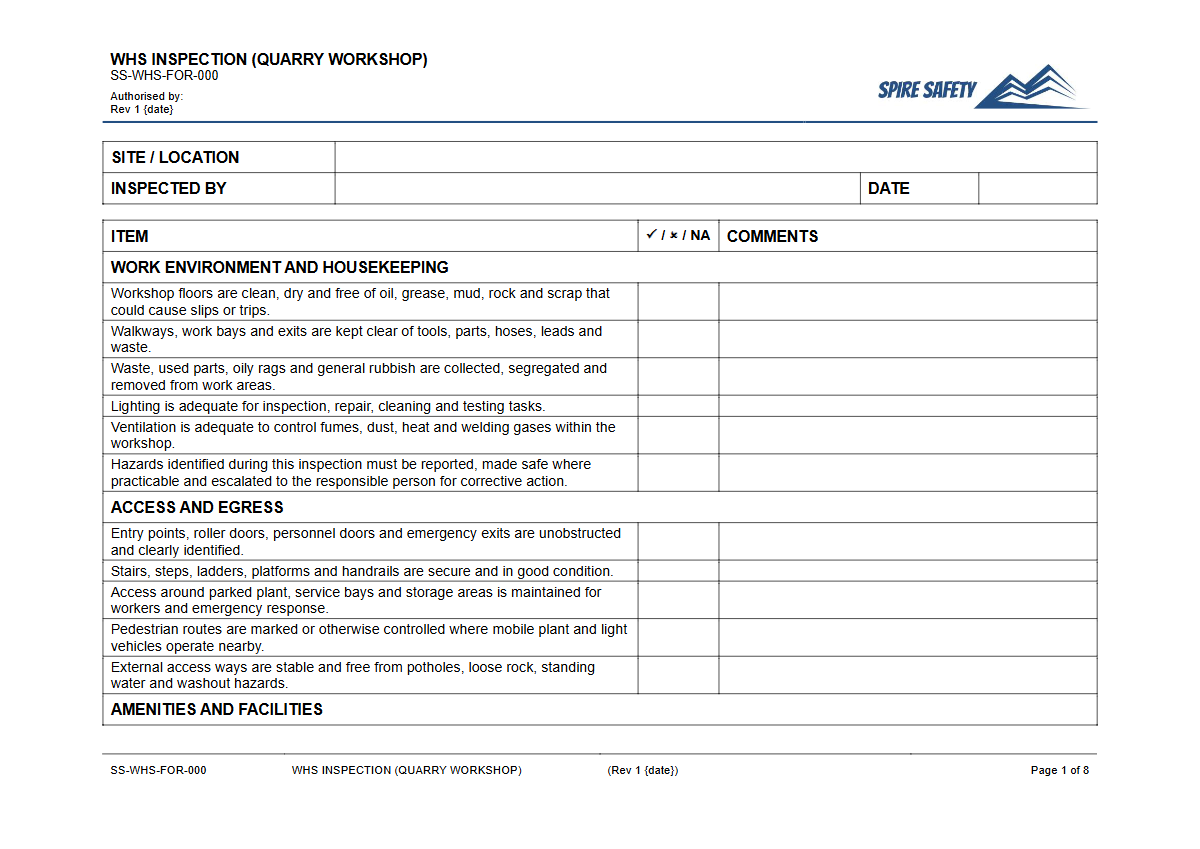
This Free WHS Inspection (Quarry Workshop) Template provides a structured starting point for your organisation to formalise its safety checks, ensuring that potential issues with equipment, structures, and work practices are regularly reviewed and addressed.
Using this template helps a Person Conducting a Business or Undertaking (PCBU) meet their primary duty of care. It encourages a consistent approach to safety, moving beyond ad-hoc checks to a documented, auditable process.
Integrating such inspections is a fundamental component of effective WHS management systems, demonstrating a commitment to workplace health and safety.
Video walkthrough
How to use the Free WHS Inspection (Quarry Workshop) Template
This template is designed to be a comprehensive but adaptable tool for your quarry's specific needs. It covers common areas of concern in a workshop setting, including plant and equipment safety, electrical systems, hazardous substance storage, traffic management, and general housekeeping.
To use it effectively, download the DOCX file and tailor it to the unique layout, machinery, and processes of your site.
Important: This is a template, not a finished document. You must customise it to reflect the specific hazards and control measures relevant to your workplace.
We recommend a competent person, such as a workshop manager or WHS officer, leads this customisation process in consultation with workers. The principles of systematic checking in this template can be applied across various equipment types, similar to our Free Pre-Start Checklist (Electric Hoist) Template.
The Inspection Process:
- Preparation: Before starting, review previous inspection reports to follow up on outstanding corrective actions. Ensure the inspector has the necessary knowledge and authority to conduct the inspection thoroughly.
- Conducting the Inspection: Walk through the workshop systematically. For each item on the checklist, observe the conditions, talk to operators, and assess whether safety standards are being met. Document any non-conformances, hazards, or areas for improvement immediately.
- Documenting Findings: Use the template to clearly record your observations. Note the specific location and nature of each issue. Where possible, attach photos to provide clear evidence and context.
- Implementing Corrective Actions: For each identified issue, assign a corrective action, a responsible person, and a realistic due date. The inspection is only effective if a robust follow-up process ensures all hazards are controlled in a timely manner.
When to use it
The frequency of workshop inspections depends on the level of risk and the nature of the work being performed. A combination of scheduled and unscheduled inspections is often most effective. Consider using this template for:
- Routine weekly or monthly inspections: To ensure ongoing safety standards are maintained.
- Post-maintenance checks: After significant repairs or modifications to plant or the workshop layout.
- Pre-audit preparation: To identify and rectify issues before a formal external audit.
- Incident follow-up: As part of an investigation to identify contributing environmental or equipment factors.
These routine checks supplement, but do not replace, formal assurance activities. For a deeper, independent review of your safety processes, consider engaging professionals for WHS compliance auditing.
Who should use it
This template is designed for use by personnel with responsibilities for safety and operational management within a quarry. This typically includes:
- Workshop Supervisors and Managers: They hold direct responsibility for the safety of their teams and the condition of the work environment.
- WHS/HSE Officers and Advisors: They can use this tool to conduct formal inspections and provide assurance to senior management.
- Health and Safety Representatives (HSRs): HSRs can use the template to perform inspections in their designated work group.
- Maintenance Personnel: They have expert knowledge of the equipment and can provide valuable insights during an inspection.
While this document is a powerful internal tool, some complex hazards may require specialist advice. If your team identifies issues beyond its technical expertise, such as structural integrity concerns or complex machine guarding problems, engaging external WHS consulting services is a prudent step.
You can also browse our complete free WHS resources library for other useful templates.
Common mistakes
Common mistakes to avoid
- Failing to customise the template to the specific workshop environment.
- Conducting a 'tick and flick' exercise without genuine observation and assessment.
- Not assigning clear, time-bound corrective actions for identified hazards.
- Neglecting to follow up and verify that corrective actions have been completed effectively.
Legal references
Legal considerations
The following legal requirements may be relevant to this type of work.
- Work Health and Safety Act (Harmonised) — Provides the primary duties for protecting workers and other people from work health and safety risks.
- Work Health and Safety Regulations (Harmonised) — Sets out requirements supporting the management of workplace hazards and risks.
The following codes may be relevant to this type of work.
- Managing WHS Risks Code of Practice — Provides practical guidance on identifying hazards, assessing risks and applying effective controls.
- Work Health and Safety Consultation, Cooperation and Coordination Code of Practice — Provides practical guidance on consulting workers and coordinating with other duty holders.
- Managing the Work Environment and Facilities Code of Practice — Provides practical guidance on safe work environments, workplace facilities and related controls.
Did you know
Vehicle Incidents
According to Safe Work Australia, collisions involving vehicles, mobile plant, and pedestrians are a leading cause of fatalities and serious injuries in the quarrying industry. This highlights the critical importance of traffic management inspections.
FAQ
Frequently asked questions
01What is the difference between a pre-start check and a workshop inspection?
02How do I customise this quarry workshop inspection template?
03Who is responsible for fixing hazards found during an inspection?
04Do I need to keep records of my workshop inspections?
Share this resource
Free WHS Inspection (Quarry Workshop) Template
Browse Categories
How To Use It
- 1Download and open in Word or PDF.
- 2Replace the placeholders with your business details.
- 3Get it reviewed by a WHS specialist before rollout.
Need it customised?
Our WHS consultants can adapt this template to your site, run a gap analysis, or audit what you already have in place.
Book a Free Consultation WHS consulting servicesor call 1300 156 382