
Free WHS Inspection (Restaurant) Template
Download our Free WHS Inspection (Restaurant) Template to formalise safety checks for your kitchen and front-of-house areas. Get your free DOCX & PDF now.
Free WHS Inspection (Restaurant) Template
DOCX • 127 KB + PDF
Updated Oct 2026
No signup required
Purpose of the Free WHS Inspection (Restaurant) Template
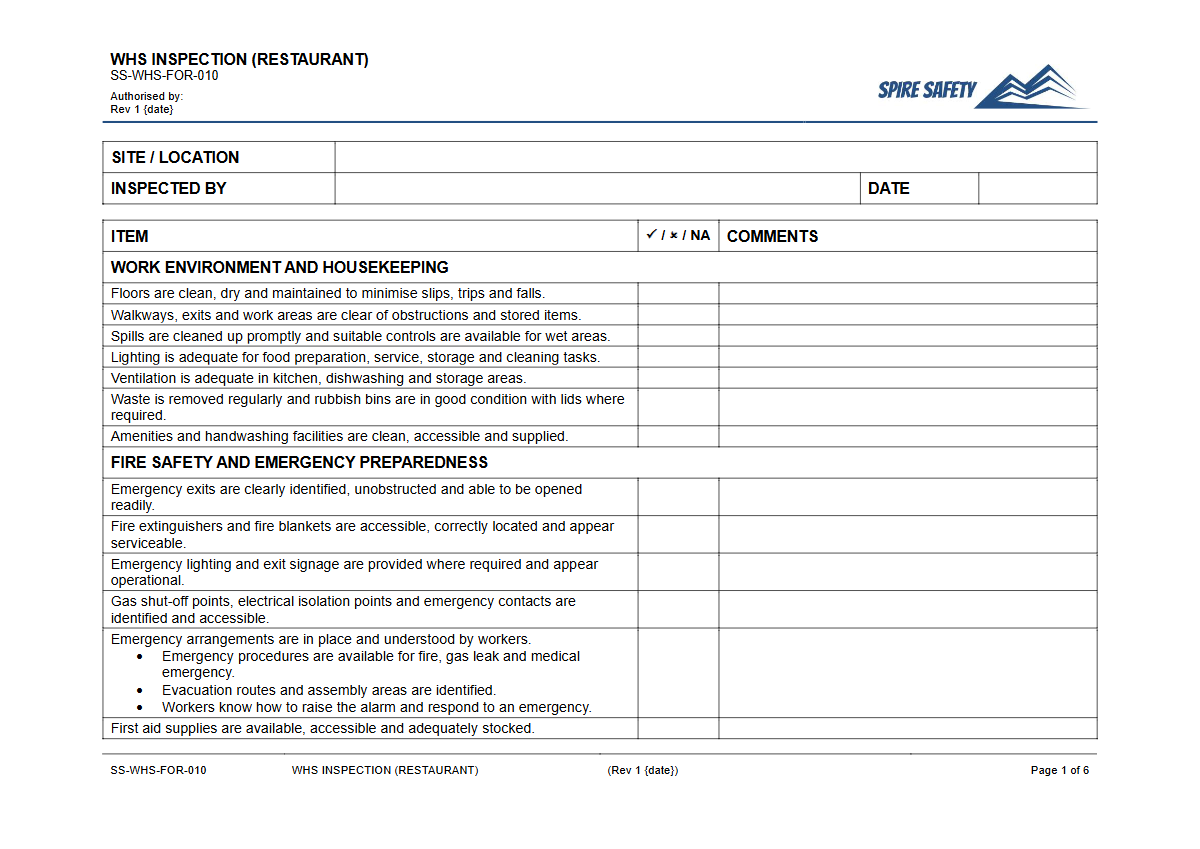
Running a restaurant involves managing a wide range of work health and safety risks, from the fast-paced kitchen to the busy front-of-house area. This Free WHS Inspection (Restaurant) Template provides a structured starting point for systematically identifying and controlling hazards unique to the hospitality environment.
Regular inspections help to prevent incidents like slips, trips, falls, burns, and musculoskeletal injuries before they occur.
Using a formal checklist helps ensure all key areas are reviewed consistently, from kitchen equipment and food storage to staff amenities and emergency exits. It provides a practical way to meet your duty of care and demonstrates a proactive approach to safety management.
Documenting these checks is crucial for identifying trends, assigning corrective actions, and maintaining a safe workplace. For daily checks on specific kitchen equipment, you may also find our Freezer Pre-Start Checklist useful.
Video walkthrough
How to use the Free WHS Inspection (Restaurant) Template
This template is designed to be a comprehensive but adaptable tool. Download the DOCX version to edit it directly, or use the PDF as a print-and-go solution.
The checklist is divided into logical sections such as Front of House, Kitchen (Back of House), Storage Areas, and Staff Facilities to guide a thorough walk-through of your premises.
Important: This is a general template aligned with Australian WHS principles. You must customise it to reflect the specific layout, equipment, tasks, and hazards present in your own restaurant.
We cannot guarantee its suitability for your circumstances without this customisation. Walk through your workplace and add, remove, or modify checklist items to ensure it is relevant.
For example, you might add checks for specific appliances, like those covered in our Blender Pre-Start Checklist, or for unique features of your venue.
The inspection process:
- Prepare: Schedule the inspection and inform relevant staff. Gather any previous inspection reports to review outstanding actions.
- Inspect: Walk through the premises, following the checklist sections. Visually check each item and speak with staff in each area to understand how tasks are performed and if they have any safety concerns.
- Record: Clearly note any hazards or non-conformances identified. Use the comments section to add detail, and take photos where appropriate.
- Report & Act: Assign corrective actions for each identified issue, including a responsible person and a due date. Ensure urgent hazards are controlled immediately.
When to use it
The frequency of inspections should be determined by a risk assessment. High-risk areas or activities may require more frequent checks than lower-risk ones. A typical schedule might include:
- Daily: Quick checks of high-traffic floor areas for slip/trip hazards, and pre-start checks on key kitchen equipment.
- Weekly: A more detailed inspection of kitchen hygiene, chemical storage, and fire safety equipment.
- Monthly: A comprehensive inspection covering all areas of the restaurant as detailed in this template.
Inspections should also be conducted after any incident or near miss, when new equipment is introduced, or when work processes change. These regular activities are a cornerstone of effective WHS management systems, providing vital data for continuous improvement.
Reviewing the completed checklists is as important as conducting them. This analysis helps identify recurring problems and measure the effectiveness of your safety controls. For an independent assessment of your safety processes, consider undertaking periodic WHS compliance auditing.
Who should use it
This inspection template is valuable for anyone with responsibility for safety in a restaurant environment. This includes:
- Restaurant Owners and Managers
- Venue Supervisors and Team Leaders
- Head Chefs and Kitchen Managers
- WHS/OHS Committee Members and Representatives
While a manager or supervisor typically leads the inspection, it is best practice to involve workers from the areas being inspected. Their direct experience provides invaluable insight into day-to-day hazards and the practicality of existing controls.
For organisations looking for expert support in establishing robust safety frameworks, our WHS consulting services can provide tailored guidance. You can also explore our complete collection of checklists and forms in our free WHS resources library to further develop your safety toolkit.
Common mistakes
Common mistakes to avoid
- Using the template without customising it for the specific restaurant layout and equipment.
- Failing to assign and follow up on corrective actions for identified hazards.
- 'Pencil-whipping' the checklist without physically and thoroughly inspecting each item.
- Not involving kitchen staff and floor workers in the inspection process.
Legal references
Legal considerations
The following legal requirements may be relevant to this type of work.
- Work Health and Safety Act (Harmonised) — Provides the primary duties for protecting workers and other people from work health and safety risks.
- Work Health and Safety Regulations (Harmonised) — Sets out requirements supporting the management of workplace hazards and risks.
The following codes may be relevant to this type of work.
- Managing WHS Risks Code of Practice — Provides practical guidance on identifying hazards, assessing risks and applying effective controls.
- Work Health and Safety Consultation, Cooperation and Coordination Code of Practice — Provides practical guidance on consulting workers and coordinating with other duty holders.
- Managing the Work Environment and Facilities Code of Practice — Provides practical guidance on safe work environments, workplace facilities and related controls.
Did you know
Hospitality Hazards
Slips, trips and falls are the highest cause of non-fatal injury in the hospitality industry, accounting for a significant portion of all serious workers' compensation claims.
Young Worker Risk
The hospitality industry has a high proportion of young workers (15-24 years old), who can be at greater risk of injury due to factors like inexperience and a reluctance to speak up about safety concerns.
FAQ
Frequently asked questions
01What are the most common hazards in a restaurant kitchen?
02How often should I conduct a WHS inspection in my restaurant?
03Who is responsible for workplace safety in a restaurant?
04Can I use this template for a cafe, bar, or catering business?
Share this resource
Free WHS Inspection (Restaurant) Template
Browse Categories
How To Use It
- 1Download and open in Word or PDF.
- 2Replace the placeholders with your business details.
- 3Get it reviewed by a WHS specialist before rollout.
Need it customised?
Our WHS consultants can adapt this template to your site, run a gap analysis, or audit what you already have in place.
Book a Free Consultation WHS consulting servicesor call 1300 156 382