
Free WHS Inspection (Retirement Home) Template
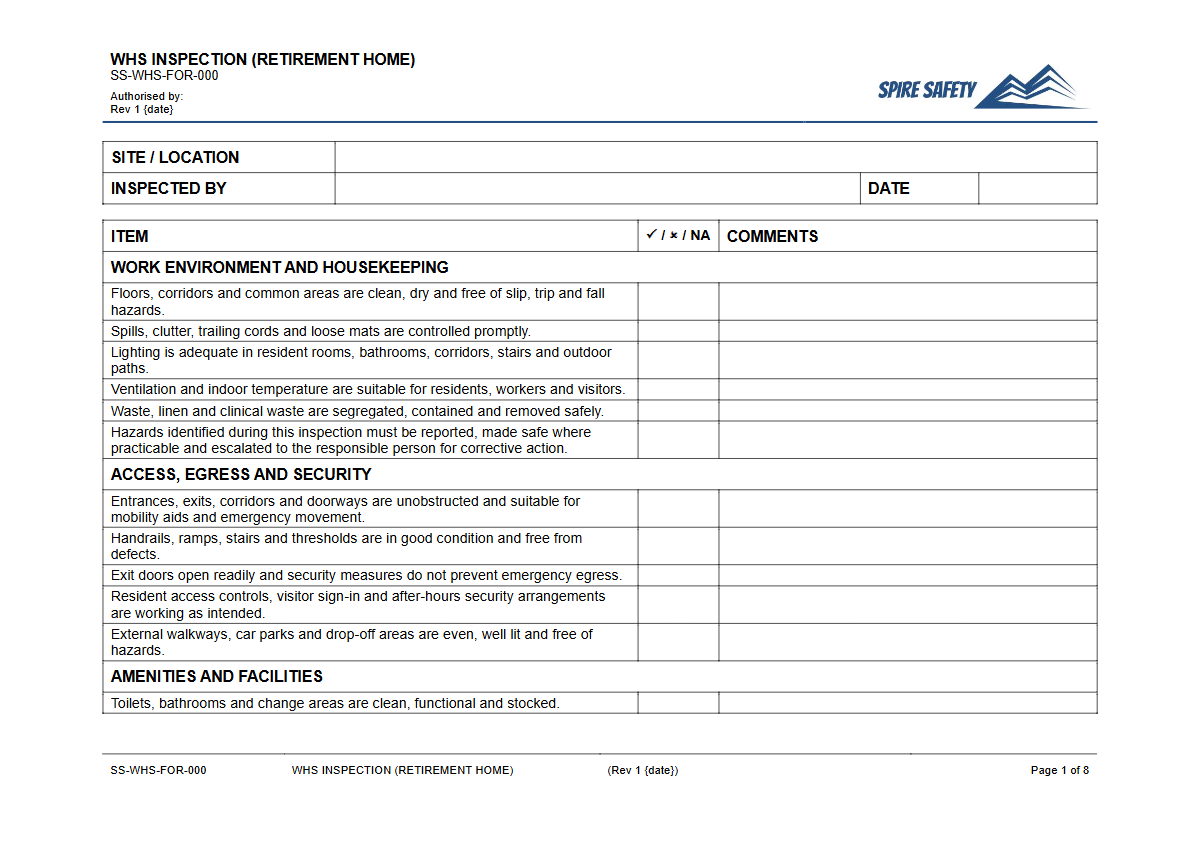
Download our Free WHS Inspection (Retirement Home) Template (DOCX/PDF). A structured starting point to identify hazards and manage WHS risks in aged care.
Free WHS Inspection (Retirement Home) Template
DOCX • 129 KB + PDF
Updated Oct 2026
No signup required
Purpose of the Free WHS Inspection (Retirement Home) Template
Retirement homes and aged care facilities present a unique and complex range of work health and safety risks, affecting both residents and workers. This Free WHS Inspection (Retirement Home) Template provides a structured starting point for systematically identifying and assessing these hazards.
Regular inspections are a cornerstone of proactive safety management, helping your organisation meet its duty of care obligations under Australian WHS legislation.
Using this template helps formalise the inspection process, ensuring key areas are not overlooked. It prompts a thorough review of the physical environment, equipment, and work procedures, from resident rooms and common areas to kitchens and outdoor spaces.
The goal is to find and fix potential problems before they cause an incident, injury, or illness. This documented approach supports continuous improvement and demonstrates a commitment to maintaining a safe environment for everyone in the facility.
Video walkthrough
How to use the Free WHS Inspection (Retirement Home) Template
This resource is available as a DOCX file for easy editing and a PDF for straightforward printing. After downloading, you can begin implementing it into your safety processes.
The document is organised into logical sections covering the diverse environments within a typical aged care facility.
Important: This template is a comprehensive starting point aligned with Australian WHS practice, but it is not exhaustive. Every workplace is unique.
We strongly advise that you customise this template to address the specific hazards, equipment, and operational needs of your facility. This includes adding, removing, or modifying checklist items to reflect your site-specific risks.
Key Inspection Areas Covered
The template guides you through a methodical check of critical areas and risk categories, including:
- General Environment & Access: Reviewing walkways, lighting, flooring, signage, and emergency egress routes for slip, trip, and fall hazards.
- Resident Rooms & Care Areas: Checking beds, mobility aids, and call systems. This includes assessing risks associated with manual tasks and patient handling equipment. For detailed checks on specific machinery, you can use our Free Pre-Start Checklist (Patient Hoist) Template.
- Common Areas (Lounges, Dining Rooms): Inspecting furniture stability, electrical safety, and general housekeeping standards to prevent incidents.
- Kitchens & Food Service: Assessing hygiene standards, fire prevention equipment, and the safe use of commercial appliances. A specific pre-start checklist for a commercial blender can supplement this process. Proper food storage is also critical, which can be monitored with our Pre-Start Checklist (Freezer) Template.
- Grounds & Outdoor Areas: Checking paths, gardens, car parks, and outdoor structures for hazards. If groundskeeping involves machinery, consider using a specific checklist like our Pre-Start Checklist for a Lawn Tractor.
- Infection Control & Waste Management: Verifying that procedures for hand hygiene, cleaning, and disposal of clinical and general waste are being followed.
When to use it
Workplace inspections should be conducted at regular, planned intervals to ensure ongoing safety. The frequency will depend on the level of risk associated with different areas or activities.
A good practice is to schedule comprehensive facility-wide inspections quarterly or bi-annually.
In addition to scheduled checks, this template should be used:
- After a workplace incident, accident, or near miss occurs.
- When new equipment, substances, or work processes are introduced.
- When changes are made to the layout of the workplace.
- In response to concerns raised by workers, residents, or their families.
These inspections form a vital part of your overall safety management program and can be a key input for more comprehensive formal WHS compliance auditing.
Who should use it
This inspection template is designed for use by anyone with responsibility for health and safety within an aged care facility. This typically includes:
- Facility Managers and Directors of Nursing
- Work Health and Safety (WHS) Managers or Coordinators
- Health and Safety Representatives (HSRs)
- Supervisors and Team Leaders
Crucially, inspections should be a consultative process. Involving the workers who perform tasks in different areas provides valuable insight into the real-world hazards they face daily.
Their input is essential for identifying practical and effective control measures. The findings from these inspections should be used to inform and refine your effective WHS management systems, ensuring they remain relevant and robust.
Common mistakes
Common mistakes to avoid
- Using a generic checklist that misses facility-specific hazards like specialised medical equipment.
- Failing to assign clear responsibility and deadlines for corrective actions.
- Conducting inspections without consulting the workers who use the spaces and equipment daily.
- Only focusing on physical hazards while overlooking psychosocial risks like high workload or resident aggression.
Legal references
Legal considerations
The following legal requirements may be relevant to this type of work.
- Work Health and Safety Act (Harmonised) — Provides the primary duties for protecting workers and other people from work health and safety risks.
- Work Health and Safety Regulations (Harmonised) — Sets out requirements supporting the management of workplace hazards and risks.
The following codes may be relevant to this type of work.
- Managing WHS Risks Code of Practice — Provides practical guidance on identifying hazards, assessing risks and applying effective controls.
- Work Health and Safety Consultation, Cooperation and Coordination Code of Practice — Provides practical guidance on consulting workers and coordinating with other duty holders.
- Managing the Work Environment and Facilities Code of Practice — Provides practical guidance on safe work environments, workplace facilities and related controls.
Did you know
Slips, Trips, and Falls
According to Safe Work Australia, slips, trips, and falls are a leading cause of serious injury claims in the healthcare and social assistance industry, which includes aged care.
The Importance of Consultation
WHS laws require PCBUs to consult with workers on matters affecting their health and safety. Involving staff in inspections is not just good practice—it's a legal requirement that leads to better safety outcomes.
FAQ
Frequently asked questions
01Is this template enough for WHS compliance in a retirement home?
02How often should we conduct a WHS inspection in an aged care facility?
03What are the biggest WHS risks in a retirement home?
04Who is responsible for fixing hazards found during an inspection?
Share this resource
Free WHS Inspection (Retirement Home) Template
Browse Categories
How To Use It
- 1Download and open in Word or PDF.
- 2Replace the placeholders with your business details.
- 3Get it reviewed by a WHS specialist before rollout.
Need it customised?
Our WHS consultants can adapt this template to your site, run a gap analysis, or audit what you already have in place.
Book a Free Consultation WHS consulting servicesor call 1300 156 382