
Free WHS Inspection (Roadworks Site) Template
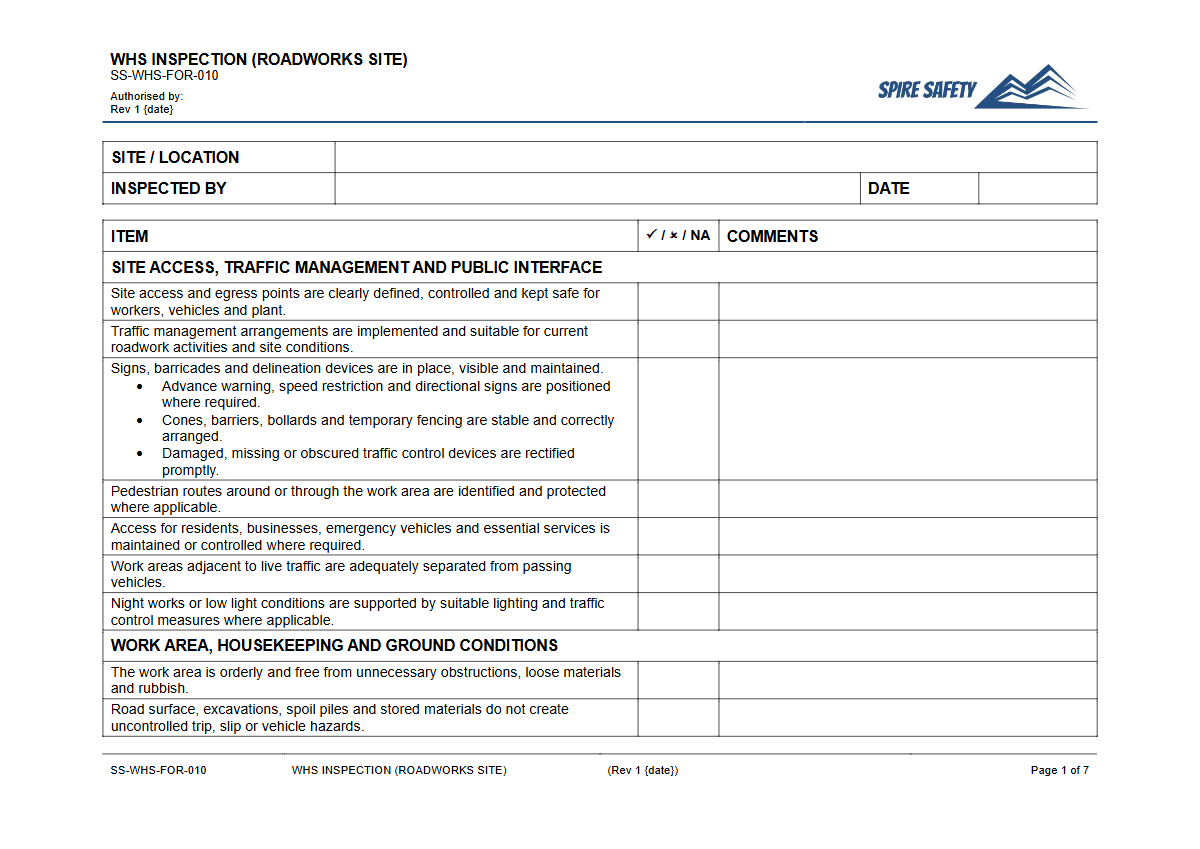
Download our free WHS Inspection (Roadworks Site) Template. This DOCX & PDF resource provides a structured starting point for roadwork safety audits.
Free WHS Inspection (Roadworks Site) Template
DOCX • 128 KB + PDF
Updated Oct 2026
No signup required
Purpose of the Free WHS Inspection (Roadworks Site) Template
Managing a roadworks site involves navigating a unique and dynamic set of risks, from live traffic and heavy machinery to public interaction and environmental factors. This Free WHS Inspection (Roadworks Site) Template provides a structured framework for conducting thorough safety inspections, helping your organisation proactively identify and control hazards before they cause an incident.
It prompts a review of key areas including traffic management, site security, plant and equipment safety, and emergency preparedness. Formalising this process is a key component of building robust WHS management systems that protect workers and the public.
Video walkthrough
How to use the Free WHS Inspection (Roadworks Site) Template
Using this template is straightforward. First, download the document in your preferred format (DOCX or PDF).
Next, and most importantly, review and adapt the checklist to the specific context of your project. This includes adding or removing items based on the machinery in use, the local environment, the scale of the works, and your organisation's specific procedures.
Once customised, the inspection template can be used by site supervisors or WHS personnel to conduct and document regular safety walks.
Important Note: This document is a template and not a complete solution. We have designed it to serve as a comprehensive starting point, but you must customise it to reflect the specific hazards, traffic plans, and operational procedures of your roadworks site.
It should be used in conjunction with your Safe Work Method Statements (SWMS) and risk assessments.
When to conduct a Roadworks Site Inspection
Regular inspections are vital for maintaining a safe work environment. A comprehensive site inspection should be conducted:
- At the start of a new project or a new phase of work.
- On a regular basis (e.g., daily or weekly) as determined by your risk assessment.
- After any significant changes, such as alterations to the traffic management plan, the introduction of new heavy machinery, or extreme weather events.
- Following any incident, near miss, or safety observation to verify that corrective actions are effective.
These formal inspections complement, but do not replace, daily pre-start checks for individual plant and equipment. For specific items like automated barriers, consider using a dedicated resource like our free Pre-Start Checklist (Boom Gate) Template to ensure access controls are functioning correctly.
Who should use this Inspection template
This template is designed for use by individuals with responsibility for safety on a roadworks site. This typically includes:
- Site Supervisors and Forepersons
- Project Managers
- Work Health and Safety (WHS) Officers or Advisors
- Health and Safety Representatives (HSRs)
By using a standardised checklist, everyone involved gains a clear understanding of the safety standards expected on site. The documented findings also serve as a valuable record for demonstrating due diligence and are a key input for regular WHS compliance auditing.
Effective site inspections also involve verifying that workers are aware of key site rules and procedures. This knowledge is often reinforced through regular site meetings.
You can support these discussions with targeted materials like a Site Security and Unauthorised Access Toolbox Talk to address risks from public entry.
Beyond traffic and personnel, roadworks carry significant environmental obligations. Inspections must cover controls for dust, noise, and potential contamination.
For a deeper dive into managing runoff, our Stormwater and Waterway Protection Toolbox Talk template provides a great resource for team training.
For organisations managing complex, high-risk civil construction projects or those needing help to establish their safety frameworks, engaging external expertise can be invaluable. Our team provides specialist WHS consulting to help you develop and implement practical, effective safety solutions tailored to your specific needs.
Common mistakes
Common mistakes to avoid
- Failing to update the inspection checklist after a change in site conditions or traffic management plans.
- Treating the inspection as a 'tick-and-flick' exercise without genuinely investigating the items.
- Neglecting to assign, track, and close out corrective actions identified during the inspection.
- Not adequately considering the interface between the work site, public traffic, and pedestrians.
Legal references
Legal considerations
The following legal requirements may be relevant to this type of work.
- Work Health and Safety Act (Harmonised) — Provides the primary duties for protecting workers and other people from work health and safety risks.
- Work Health and Safety Regulations (Harmonised) — Sets out requirements supporting the management of workplace hazards and risks.
The following codes may be relevant to this type of work.
- Managing WHS Risks Code of Practice — Provides practical guidance on identifying hazards, assessing risks and applying effective controls.
- Work Health and Safety Consultation, Cooperation and Coordination Code of Practice — Provides practical guidance on consulting workers and coordinating with other duty holders.
- Managing the Work Environment and Facilities Code of Practice — Provides practical guidance on safe work environments, workplace facilities and related controls.
Did you know
Traffic Management Guidance
The Austroads Guide to Temporary Traffic Management is a key industry reference for controlling risks to road workers and the public, forming a critical part of any roadworks safety plan.
Environmental Duty of Care
PCBUs have a duty to ensure work does not harm the environment. This includes managing risks like sediment runoff and chemical spills, which are common hazards on roadworks sites.
FAQ
Frequently asked questions
01What is the difference between a site inspection and a pre-start check?
02How often should I inspect a roadworks site?
03Is this roadworks inspection template compliant with Australian WHS laws?
04Can I use this template for both major civil construction and minor road repairs?
Share this resource
Free WHS Inspection (Roadworks Site) Template
Browse Categories
How To Use It
- 1Download and open in Word or PDF.
- 2Replace the placeholders with your business details.
- 3Get it reviewed by a WHS specialist before rollout.
Need it customised?
Our WHS consultants can adapt this template to your site, run a gap analysis, or audit what you already have in place.
Book a Free Consultation WHS consulting servicesor call 1300 156 382