
Free WHS Inspection (Salvage Yard) Template
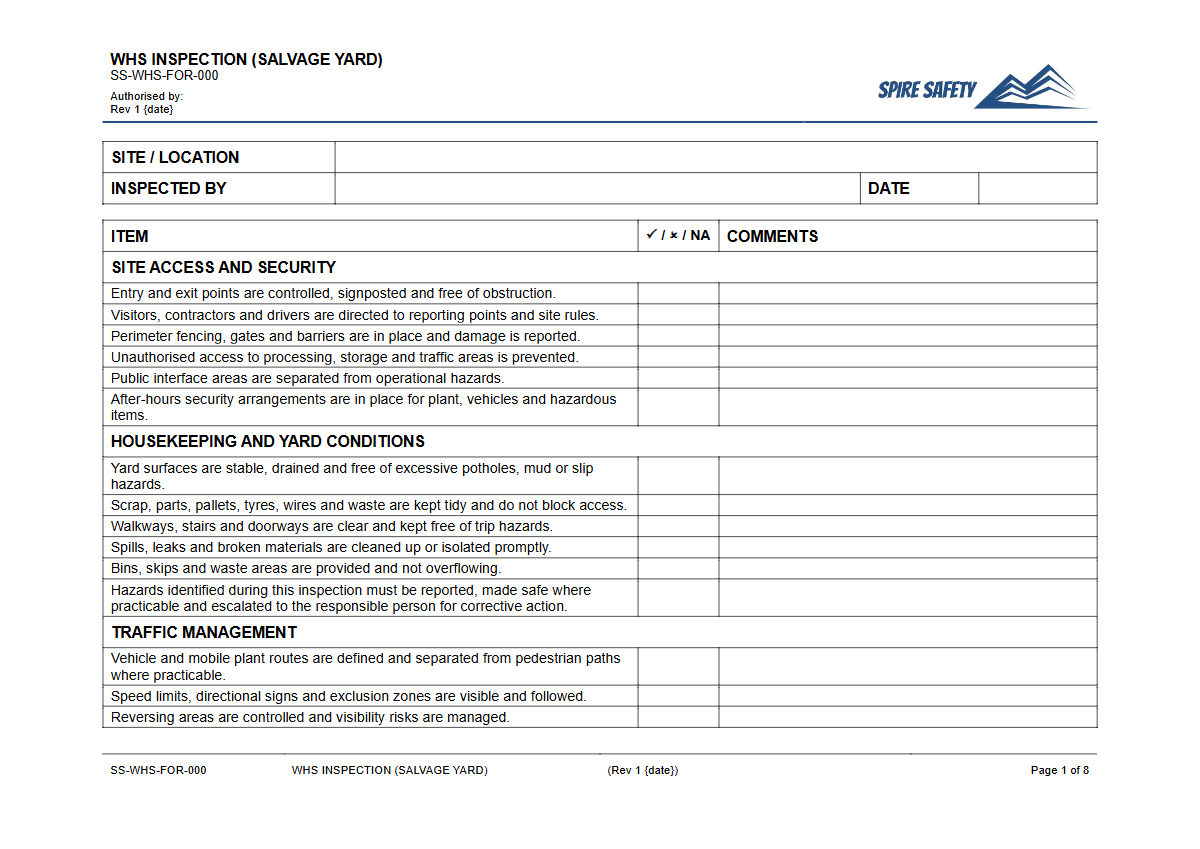
Download our free WHS Inspection (Salvage Yard) Template. This structured checklist helps you formalise safety checks for vehicle dismantling areas.
Free WHS Inspection (Salvage Yard) Template
DOCX • 129 KB + PDF
Updated Oct 2026
No signup required
Purpose of the Free WHS Inspection (Salvage Yard) Template
Salvage yards, auto wreckers, and vehicle dismantling sites are dynamic environments filled with significant WHS hazards. This free WHS Inspection (Salvage Yard) Template provides a structured starting point for systematically identifying and controlling these risks.
Regular inspections are a fundamental part of proactive safety management, helping your organisation meet its duties under WHS law by finding potential issues before they cause harm. Using a formal checklist helps ensure consistency and provides a clear record of your safety efforts.
The template guides you through key areas of concern specific to salvage operations, such as vehicle stability, hazardous material handling, machinery safety, and traffic management. Integrating these routine checks into your daily operations is a key component of a comprehensive WHS management system, demonstrating due diligence and a commitment to worker safety.
Video walkthrough
How to use the Free WHS Inspection (Salvage Yard) Template
Download the template in your preferred format (DOCX or PDF). The DOCX version is fully editable, allowing you to tailor it to the unique layout, equipment, and processes of your specific site.
This customisation is essential for an effective inspection program.
Important: This document is a template, not a complete, ready-to-use solution. You must review and customise it to address the specific hazards present in your workplace.
We recommend a competent person, familiar with both your operations and WHS requirements, leads this customisation process.
Key Areas Covered in the Inspection Template
The checklist prompts a review of several critical risk areas, including:
- Site and Yard Conditions: Assesses housekeeping, ground stability, lighting, and signage.
- Traffic Management: Checks for clear pathways for vehicles and pedestrians, blind spots, and access control. Consider using a specific checklist for a boom gate if you have one.
- Vehicle Storage and Stacking: Focuses on the stability of stacked cars, racking systems, and parts storage to prevent collapse.
- Hazardous Materials: Prompts checks for safe handling and storage of fuel, oils, battery acids, refrigerants, and other chemicals.
- Plant and Equipment: Covers the condition of high-risk machinery like vehicle hoists, forklifts, balers, and cutting tools. A dedicated pre-start checklist for an electric hoist can supplement this section.
- Manual Tasks: Addresses risks associated with lifting and moving heavy or awkward parts.
- Emergency Preparedness: Verifies the accessibility and condition of fire extinguishers, spill kits, and first aid facilities.
When to use it
The frequency of inspections should be based on a risk assessment. High-risk activities or areas, such as active dismantling bays or vehicle stacking zones, may require daily or weekly inspections.
A full site inspection might be conducted monthly or quarterly. It's also critical to conduct an inspection after an incident, a near miss, or when significant changes are made to the site, such as introducing new machinery or altering the yard layout. These routine inspections are distinct from, but provide valuable input for, more in-depth formal WHS compliance audits.
Who should use it
This template is designed for use by Persons Conducting a Business or Undertaking (PCBUs) in the vehicle recycling and salvage industry. The inspections should be carried out by competent personnel who have the knowledge and experience to identify hazards specific to a salvage yard. This typically includes:
- Site Managers or Supervisors
- WHS Officers or Coordinators
- Health and Safety Representatives (HSRs)
- Experienced workers who have received specific training on the inspection process
For complex sites or those with a poor safety record, engaging external specialist WHS consulting can provide an objective assessment and help establish a robust inspection program. You can also explore our wider free WHS resources library for other useful templates and guides.
Common mistakes
Common mistakes to avoid
- Failing to customise the template for site-specific hazards and equipment.
- Using untrained or inexperienced staff to conduct inspections.
- Not documenting or following up on corrective actions for identified hazards.
- Treating the inspection as a 'tick-and-flick' exercise without genuine observation and assessment.
Legal references
Legal considerations
The following legal requirements may be relevant to this type of work.
- Work Health and Safety Act (Harmonised) — Provides the primary duties for protecting workers and other people from work health and safety risks.
- Work Health and Safety Regulations (Harmonised) — Sets out requirements supporting the management of workplace hazards and risks.
The following codes may be relevant to this type of work.
- Managing WHS Risks Code of Practice — Provides practical guidance on identifying hazards, assessing risks and applying effective controls.
- Work Health and Safety Consultation, Cooperation and Coordination Code of Practice — Provides practical guidance on consulting workers and coordinating with other duty holders.
- Managing the Work Environment and Facilities Code of Practice — Provides practical guidance on safe work environments, workplace facilities and related controls.
Did you know
Hidden Dangers
Salvage yards contain numerous hazardous materials, including lead from batteries, mercury from switches, and flammable liquids like fuel and oil, which require specific handling and disposal procedures.
Stacking Risks
Unstable stacks of vehicles or parts are a leading cause of serious incidents in salvage yards. The model WHS Regulations include specific duties related to managing the risk of falling objects.
FAQ
Frequently asked questions
01What is the difference between an inspection and an audit?
02How often should I inspect my salvage yard?
03Is this template suitable for a small auto wreckers yard?
04Do I need to be licensed to conduct a salvage yard inspection?
Share this resource
Free WHS Inspection (Salvage Yard) Template
Browse Categories
How To Use It
- 1Download and open in Word or PDF.
- 2Replace the placeholders with your business details.
- 3Get it reviewed by a WHS specialist before rollout.
Need it customised?
Our WHS consultants can adapt this template to your site, run a gap analysis, or audit what you already have in place.
Book a Free Consultation WHS consulting servicesor call 1300 156 382