
Free WHS Inspection (Scrap Yard) Template
Download our Free WHS Inspection (Scrap Yard) Template.
Free WHS Inspection (Scrap Yard) Template
DOCX • 129 KB + PDF
Updated Oct 2026
No signup required
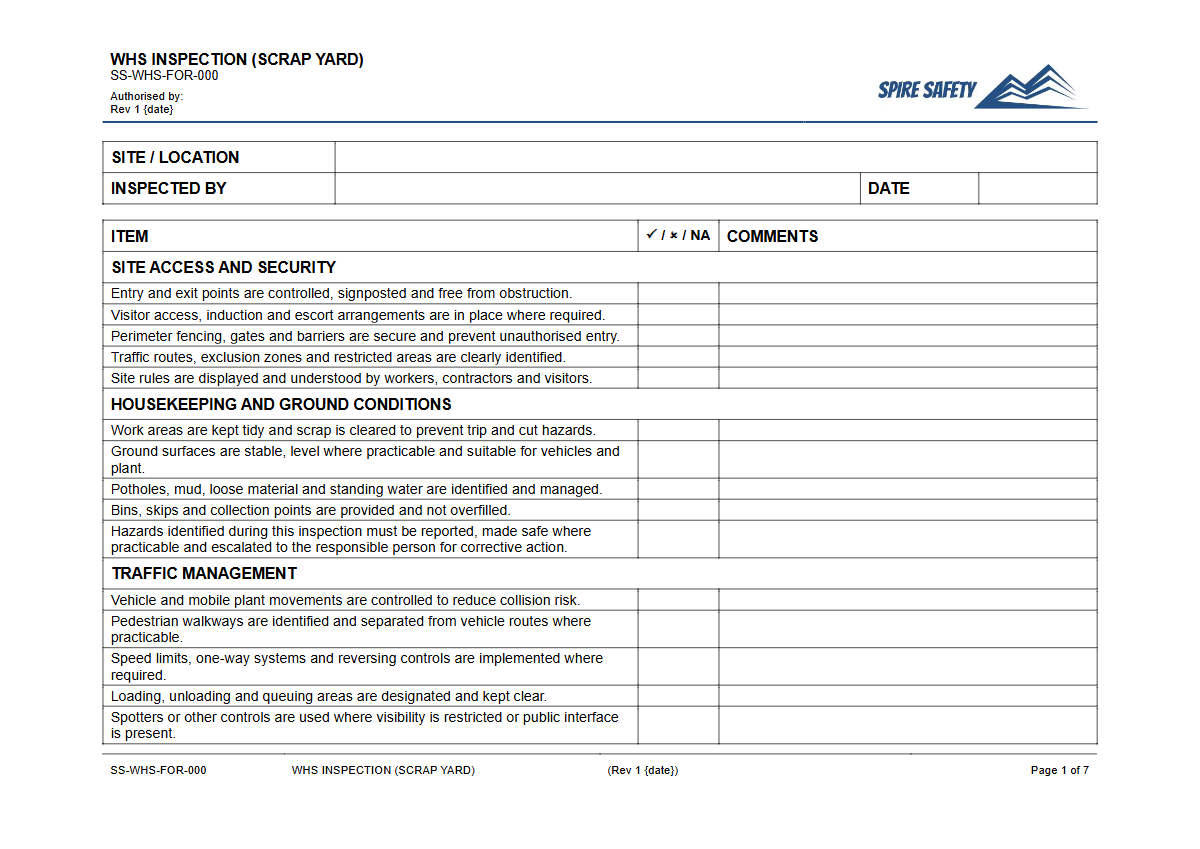
Purpose of the Free WHS Inspection (Scrap Yard) Template
Scrap yards are dynamic and high-risk environments, with hazards ranging from heavy mobile plant and falling objects to hazardous materials and sharp metals. This Free WHS Inspection (Scrap Yard) Template provides a structured starting point for systematically identifying and managing these risks.
Regularly inspecting the workplace is a key requirement for any person conducting a business or undertaking (PCBU) to ensure a safe environment for workers and visitors.
This template is designed to guide you through a thorough check of common areas in a scrap yard, including receiving and sorting areas, processing machinery like balers and shredders, storage bays, and vehicle traffic zones. It prompts you to assess the effectiveness of existing control measures and identify any new or unaddressed hazards.
Formalising this process helps create a documented record of your safety efforts, which is a fundamental part of demonstrating due diligence. Regular inspections form a critical component of robust WHS management systems, helping to prevent incidents before they occur.
Video walkthrough
How to use the Free WHS Inspection (Scrap Yard) Template
This resource is available for download as both a DOCX file for easy editing in Microsoft Word and a PDF for straightforward printing. The checklist is categorised into logical sections to streamline the inspection process, covering topics such as site access, housekeeping, plant and equipment safety, hazardous substances, and emergency procedures.
To get started:
- Download the template in your preferred format.
- Add your company name, the date of the inspection, and the name of the inspector.
- Walk through the site, completing each section of the checklist.
- Record any hazards, potential risks, or non-conformances you identify.
- Assign corrective actions with clear responsibilities and due dates for any issues found.
Important: It is crucial to remember that this is a template. We recommend you customise it to reflect the specific machinery, processes, and risks present in your workplace. For example, your site may have specific checks for lifting equipment, which can be detailed further using a dedicated tool like our Free Pre-Start Checklist (Electric Hoist) Template.
When to use it
The frequency of inspections should be determined by your own risk assessment, considering the nature of the work and the level of risk. A good practice is to implement a tiered inspection schedule. For example:
- Daily/Pre-start checks: For high-risk machinery like excavators, cranes, and balers.
- Weekly checks: For general site conditions, housekeeping, and storage areas.
- Monthly or Quarterly inspections: A comprehensive review of the entire site using this template.
This inspection should also be used following any incident or near-miss, before commissioning new plant or equipment, or when processes are changed. Traffic management controls, such as gates, should be checked daily to ensure they are functioning correctly; our Free Pre-Start Checklist (Boom Gate) Template can assist with this specific task.
Who should use it
Workplace inspections should be conducted by a competent person who has the knowledge and experience to identify hazards specific to a scrap yard environment. This could include:
- Site Managers or Supervisors
- Work Health and Safety (WHS) Officers or Representatives
- Experienced workers who have received specific training on the inspection process
Involving a mix of management and workers in the inspection process can provide a more comprehensive overview and improve safety engagement across the organisation. The process can be strengthened by periodically engaging external experts for WHS compliance auditing to verify the effectiveness of your internal controls.
The principles of guarding and emergency stops apply to all plant on site. While this inspection is broad, for specific processing machinery you might adapt a more focused checklist, using a resource like our Free Pre-Start Checklist (Feed Mixer) Template to focus on interlocks and operational safety. By integrating regular, thorough inspections into your safety program, you take a proactive step towards creating a safer workplace. Explore our extensive free WHS resources library for more tools to support your safety goals.
Common mistakes
Common mistakes to avoid
- Using a generic checklist without customising it for specific site machinery and hazards.
- Failing to assign and track corrective actions for identified issues, rendering the inspection ineffective.
- Only conducting inspections after an incident has already occurred, rather than proactively.
- Not providing adequate training to the person conducting the inspection on how to recognise hazards.
Legal references
Legal considerations
The following legal requirements may be relevant to this type of work.
- Work Health and Safety Act (Harmonised) — Provides the primary duties for protecting workers and other people from work health and safety risks.
- Work Health and Safety Regulations (Harmonised) — Sets out requirements supporting the management of workplace hazards and risks.
The following codes may be relevant to this type of work.
- Managing WHS Risks Code of Practice — Provides practical guidance on identifying hazards, assessing risks and applying effective controls.
- Work Health and Safety Consultation, Cooperation and Coordination Code of Practice — Provides practical guidance on consulting workers and coordinating with other duty holders.
- Managing the Work Environment and Facilities Code of Practice — Provides practical guidance on safe work environments, workplace facilities and related controls.
Did you know
Hidden Hazards
Scrap vehicles and appliances can contain residual hazardous materials like oils, fuels, battery acid, and refrigerants. These substances require specific handling and disposal procedures to prevent harm to workers and the environment.
Tyre Fires
Stockpiles of tyres at scrap yards pose a significant fire risk that is notoriously difficult to extinguish. Proper storage, separation, and fire prevention strategies are critical safety controls for any yard that accepts tyres.
FAQ
Frequently asked questions
01What is the difference between a workplace inspection and a WHS audit?
02How often should I inspect my scrap yard?
03Is this template suitable for all types of scrap yards?
04Who is responsible for fixing issues found during an inspection?
Share this resource
Free WHS Inspection (Scrap Yard) Template
Browse Categories
How To Use It
- 1Download and open in Word or PDF.
- 2Replace the placeholders with your business details.
- 3Get it reviewed by a WHS specialist before rollout.
Need it customised?
Our WHS consultants can adapt this template to your site, run a gap analysis, or audit what you already have in place.
Book a Free Consultation WHS consulting servicesor call 1300 156 382