
Free WHS Inspection (Seafood Plant) Template
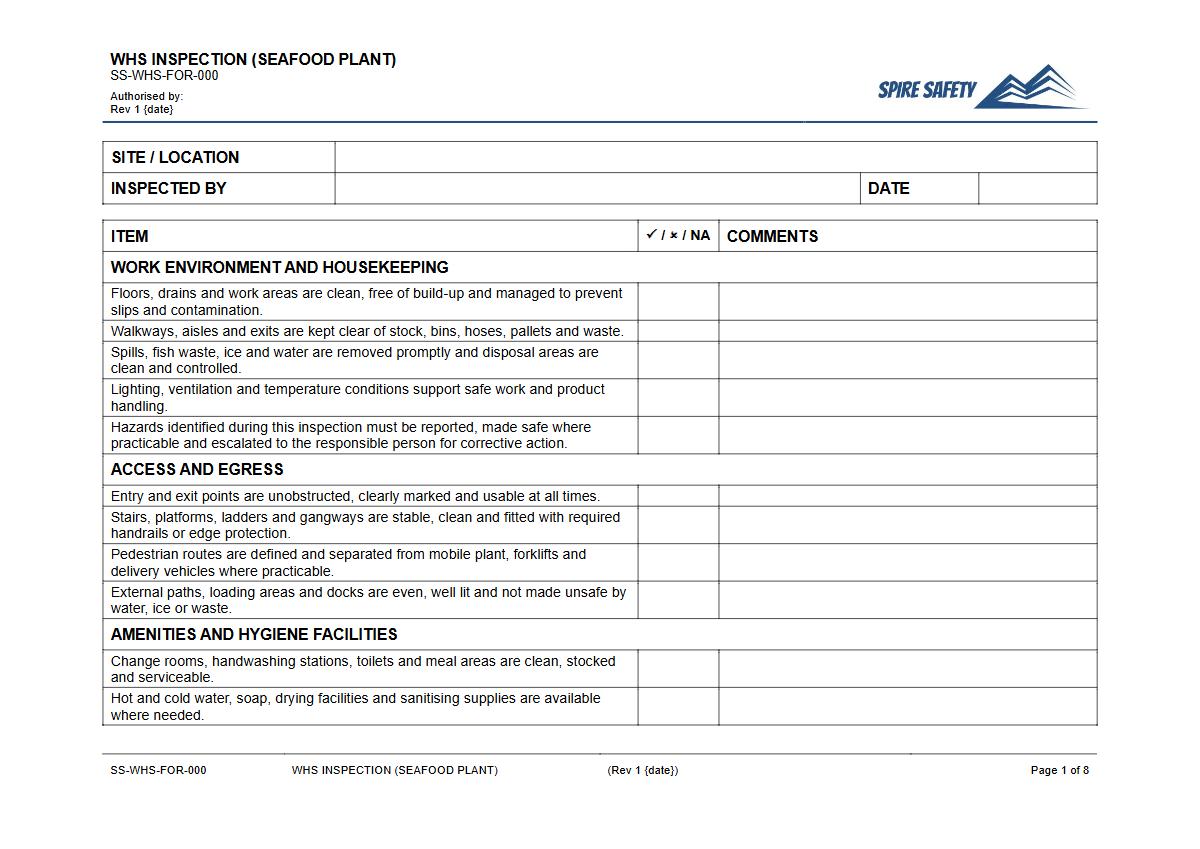
Download our free WHS Inspection (Seafood Plant) Template. This DOCX & PDF checklist helps you formalise safety inspections in seafood processing plants.
Free WHS Inspection (Seafood Plant) Template
DOCX • 129 KB + PDF
Updated Oct 2026
No signup required
Purpose of the Free WHS Inspection (Seafood Plant) Template
This Free WHS Inspection (Seafood Plant) Template provides a structured starting point for identifying and assessing workplace health and safety hazards specific to seafood processing environments. Seafood plants present unique risks, including wet and slippery surfaces, sharp equipment, cold storage conditions, and manual handling of heavy loads.
Using a formal checklist helps systematically review these hazards, ensuring nothing is overlooked. This template, available as a customisable DOCX and a ready-to-use PDF, is designed to be integrated into your broader WHS management systems, promoting a consistent approach to safety inspections and risk management.
Video walkthrough
How to use the Free WHS Inspection (Seafood Plant) Template
Regularly inspecting your facility is a key part of maintaining a safe workplace. This template is designed to make that process more efficient.
Start by downloading the DOCX file and adapting it to your specific operational context. This step is crucial for effectiveness.
- Review and Customise: Go through each item on the checklist. Add specific plant and equipment unique to your site, such as particular models of filleting machines, oyster shuckers, or packaging lines. Remove any items that are not relevant to your operations.
- Consult Your Team: Involve your workers, supervisors, and Health and Safety Representatives (HSRs) in the customisation process. They have firsthand knowledge of the tasks, equipment, and potential hazards.
- Schedule and Conduct: Use the customised template to conduct regular inspections. Document all findings, including both compliant aspects and areas requiring corrective action.
- Assign and Track Actions: For every hazard identified, assign a corrective action to a specific person and set a clear deadline for completion. Follow up to ensure all issues have been resolved.
Note: This document is a template only. It must be customised to your specific workplace, equipment, and processes.
We are not responsible for your health and safety obligations. You must consult with your workers and ensure the control measures you implement are specific to the hazards at your site.
When to use this Inspection Template
A WHS inspection schedule should be based on the level of risk associated with different areas and activities in your seafood plant. This template is versatile enough for various scenarios, including scheduled audits, post-incident reviews, or assessments of new processes.
For example, it is essential for checking controls related to wet floors, a common issue in processing plants. A targeted spill prevention and response toolbox talk can supplement these inspections by reinforcing safe work practices among staff.
What to Look For During a Seafood Plant Inspection
A thorough inspection covers multiple facets of the work environment. Use this checklist as a guide to focus your attention on high-risk areas and activities common in seafood processing.
Work Environment
- Floors and Surfaces: Check for water, ice, fish scraps, or oil that could cause slips, trips, or falls. Ensure drainage is adequate and clear.
- Lighting: Confirm that all work areas, especially around sharp equipment and inspection tables, are well-lit.
- Ventilation: Assess air quality and flow, particularly in areas with cooking, cleaning chemicals, or poor natural circulation.
- Temperature: Monitor conditions in both hot processing areas and cold storage zones like freezers and cool rooms. Consistent pre-start checks for freezers are vital for equipment safety and temperature control.
Plant and Equipment
- Machine Guarding: Verify that all guards and safety devices on conveyors, slicers, filleting machines, and packaging equipment are in place and functioning correctly.
- Tools: Inspect the condition of knives, sharpening steels, and other hand tools. Ensure they are stored safely when not in use. Many food processing facilities use industrial-scale blenders or mixers, which require their own safety checks similar to those found in a pre-start checklist for blenders.
- Electrical Safety: Check that all electrical cords, outlets, and equipment are in good condition and protected from water exposure.
Processes and Behaviours
- Manual Tasks: Observe workers lifting crates, tubs, and boxes. Assess for risky lifting techniques, awkward postures, or repetitive motions that could lead to musculoskeletal injuries.
- Chemicals: Ensure all cleaning agents and other hazardous substances are stored, labelled, and used correctly, with Safety Data Sheets (SDS) readily accessible.
- Personal Protective Equipment (PPE): Confirm that appropriate PPE (e.g., non-slip boots, cut-resistant gloves, aprons, eye protection) is available, in good condition, and being used correctly by all staff.
Who should use this Inspection Template
This resource is designed for anyone with responsibility for workplace health and safety in a seafood processing facility. This includes WHS Managers, Production Supervisors, Team Leaders, and Health and Safety Representatives (HSRs). It's also a valuable tool for business owners who need a practical way to meet their duty of care. For organisations seeking a higher level of assurance, engaging external experts for periodic WHS compliance auditing can validate internal processes and identify opportunities for improvement. The template provides a solid foundation for your internal audit program.
Common mistakes
Common mistakes to avoid
- Using a generic checklist without customising it for the specific filleting, packaging, and processing equipment on site.
- Failing to involve workers who operate the machinery and perform manual tasks in the inspection process.
- Completing the checklist as a paper exercise without assigning and tracking corrective actions to fix identified hazards.
- Not reviewing and updating the inspection template after an incident, near miss, or the introduction of new equipment.
Legal references
Legal considerations
The following legal requirements may be relevant to this type of work.
- Work Health and Safety Act (Harmonised) — Provides the primary duties for protecting workers and other people from work health and safety risks.
- Work Health and Safety Regulations (Harmonised) — Sets out requirements supporting the management of workplace hazards and risks.
The following codes may be relevant to this type of work.
- Managing WHS Risks Code of Practice — Provides practical guidance on identifying hazards, assessing risks and applying effective controls.
- Work Health and Safety Consultation, Cooperation and Coordination Code of Practice — Provides practical guidance on consulting workers and coordinating with other duty holders.
- Managing the Work Environment and Facilities Code of Practice — Provides practical guidance on safe work environments, workplace facilities and related controls.
Did you know
Slips, Trips and Falls
Slips, trips and falls are one of the leading causes of serious injury in the Australian food processing industry, with wet and contaminated floors being a primary contributor.
Manual Task Risks
Handling fish and seafood often involves repetitive and forceful movements, which account for a significant portion of musculoskeletal injuries in the industry. Proper task design and training are crucial for prevention.
FAQ
Frequently asked questions
01What are the most common hazards in a seafood processing plant?
02How often should safety inspections be conducted in a seafood facility?
03Is this seafood plant inspection template suitable for small operators?
04Can I use this template for my HACCP audit?
Share this resource
Free WHS Inspection (Seafood Plant) Template
Browse Categories
How To Use It
- 1Download and open in Word or PDF.
- 2Replace the placeholders with your business details.
- 3Get it reviewed by a WHS specialist before rollout.
Need it customised?
Our WHS consultants can adapt this template to your site, run a gap analysis, or audit what you already have in place.
Book a Free Consultation WHS consulting servicesor call 1300 156 382