
Free WHS Inspection (Service Station) Template
Download our free WHS Inspection Template for Service Stations.
Free WHS Inspection (Service Station) Template
DOCX • 128 KB + PDF
Updated Oct 2026
No signup required
Purpose of the Free WHS Inspection (Service Station) Template
Service stations present a unique mix of high-risk hazards, from flammable liquids and hazardous chemicals to vehicle traffic and public interaction. A systematic approach to safety is essential.
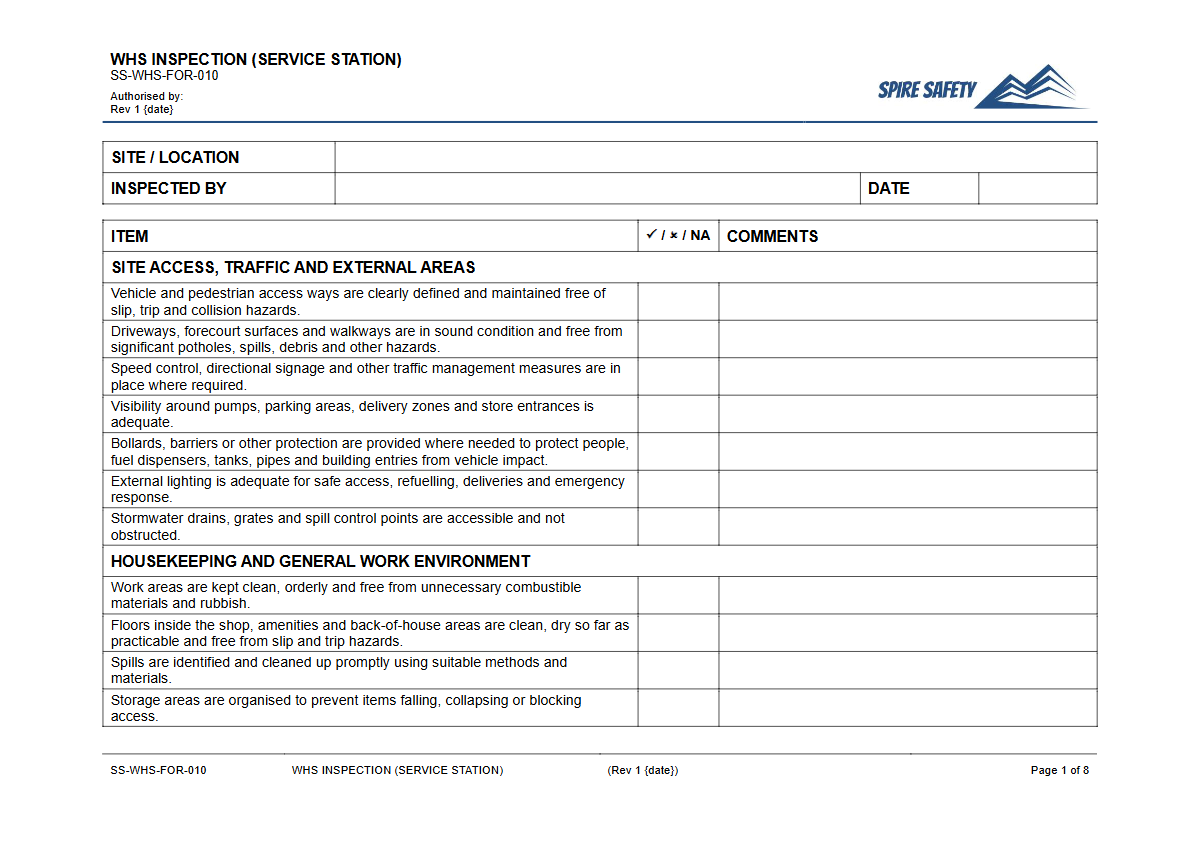
This Free WHS Inspection (Service Station) Template provides a structured starting point for identifying and controlling risks across your entire site, including the forecourt, retail shop, storage areas, and amenities. Regular inspections help a Person Conducting a Business or Undertaking (PCBU) meet their primary duty of care by proactively managing workplace health and safety.
Using this template helps formalise your safety processes, moving beyond ad-hoc checks to a documented system of hazard identification. It serves as a critical record-keeping tool, demonstrating due diligence and forming a key component of a comprehensive WHS management system. By systematically reviewing your site, you can identify potential issues before they lead to incidents, injuries, or non-compliance.
Video walkthrough
How to use the Free WHS Inspection (Service Station) Template
This document is designed to be a foundation for your site-specific safety checks. After downloading the DOCX or PDF file, you should adapt it to reflect the unique layout, equipment, and procedures of your service station.
A generic checklist is not enough; customisation is essential for effective risk management.
- Review and Customise: Go through each section and item. Add, remove, or modify checklist points to match the specific plant and equipment at your location, such as different types of fuel dispensers, car wash systems, or air and water stations.
- Assign Responsibilities: Clearly define who is responsible for conducting the inspection, who reviews the findings, and who is tasked with implementing corrective actions.
- Set a Schedule: Determine the appropriate frequency for inspections. Some areas may require daily checks (e.g., spill kits), while others might be weekly or monthly (e.g., fire equipment servicing).
- Train Your Team: Ensure that the person or people performing the inspection are competent to do so. They must understand the hazards they are looking for and the procedure for reporting them.
Important: This template is a starting point. We have provided a framework based on common Australian WHS practices, but you must customise it to address all specific hazards and operational procedures at your workplace.
Spire Safety assumes no liability for how this template is used or modified.
What to add to your Inspection
When customising the template, consider adding specific checks for all equipment and areas on your site. For example, if your service station has automated entry and exit points, you may need a dedicated boom gate pre-start checklist. Other areas to consider adding detail on include:
- Specific models of fuel pumps and LPG dispensers.
- Cash handling and security protocols.
- Food preparation areas and associated equipment.
- Checks for any walk-in cold storage, which can be managed with a pre-start checklist for freezers.
- Site-specific traffic management plans and pedestrian walkways.
- Procedures for deliveries and tanker unloading.
- Waste management and environmental controls.
When to use it
Workplace inspections should be a regular, scheduled activity. The frequency depends on the level of risk associated with a particular area or task. For a service station, a tiered approach is often best:
- Daily Checks: Forecourt cleanliness, spill kit readiness, clear walkways, and functioning safety signage.
- Weekly Checks: Fire extinguisher pressure gauges, emergency stop functionality, and a more detailed check of fuel dispensing equipment.
- Monthly Checks: Review of incident logs, inspection of electrical equipment, and assessment of security measures.
In addition to scheduled checks, an inspection should also be conducted after any significant incident, when new equipment is introduced, or when work processes are changed. These checks are distinct from, but can inform, more in-depth regular WHS compliance audits.
Who should use it
This template is designed for use by anyone with responsibility for health and safety at a service station. This typically includes:
- Site Managers and Franchisees: For overseeing the entire WHS process and ensuring compliance.
- WHS Managers and Safety Officers: For implementing and managing the inspection program.
- Team Leaders and Supervisors: For conducting routine checks within their areas of responsibility.
Effective inspections rely on the competence of the inspector. Providing adequate training on hazard identification and your site's specific reporting procedures is crucial.
If your organisation lacks the internal expertise to establish these processes, consider engaging expert WHS consulting services for guidance. You can also explore our wider free WHS resources library for other useful templates and guides.
Common mistakes
Common mistakes to avoid
- Failing to customise the template for the specific site layout and equipment.
- Completing the checklist without physically verifying each item (a 'tick and flick' exercise).
- Not documenting or following up on the corrective actions required for identified hazards.
- Neglecting to train the staff who are responsible for conducting the inspections.
Legal references
Legal considerations
The following legal requirements may be relevant to this type of work.
- Work Health and Safety Act (Harmonised) — Provides the primary duties for protecting workers and other people from work health and safety risks.
- Work Health and Safety Regulations (Harmonised) — Sets out requirements supporting the management of workplace hazards and risks.
The following codes may be relevant to this type of work.
- Managing WHS Risks Code of Practice — Provides practical guidance on identifying hazards, assessing risks and applying effective controls.
- Work Health and Safety Consultation, Cooperation and Coordination Code of Practice — Provides practical guidance on consulting workers and coordinating with other duty holders.
- Managing the Work Environment and Facilities Code of Practice — Provides practical guidance on safe work environments, workplace facilities and related controls.
Did you know
Spill Control is Critical
Even a small fuel spill can create a significant slip hazard and a large vapour cloud, which is a major fire risk. Regulations require service stations to have spill kits and trained personnel ready to respond immediately.
Traffic Management
The majority of non-fuel related incidents at service stations involve slow-speed vehicle collisions and interactions between vehicles and pedestrians. Clear line marking, signage, and defined pedestrian zones are crucial controls.
FAQ
Frequently asked questions
01What are the biggest WHS risks at a service station?
02How often should I inspect a service station?
03Is this service station inspection template compliant with WHS law?
04What is the difference between a workplace inspection and an audit?
Share this resource
Free WHS Inspection (Service Station) Template
Browse Categories
How To Use It
- 1Download and open in Word or PDF.
- 2Replace the placeholders with your business details.
- 3Get it reviewed by a WHS specialist before rollout.
Need it customised?
Our WHS consultants can adapt this template to your site, run a gap analysis, or audit what you already have in place.
Book a Free Consultation WHS consulting servicesor call 1300 156 382