
Free WHS Inspection (Shopping Centre) Template
Download our free WHS Inspection (Shopping Centre) Template.
Free WHS Inspection (Shopping Centre) Template
DOCX • 128 KB + PDF
Updated Oct 2026
No signup required
Purpose of the Free WHS Inspection (Shopping Centre) Template
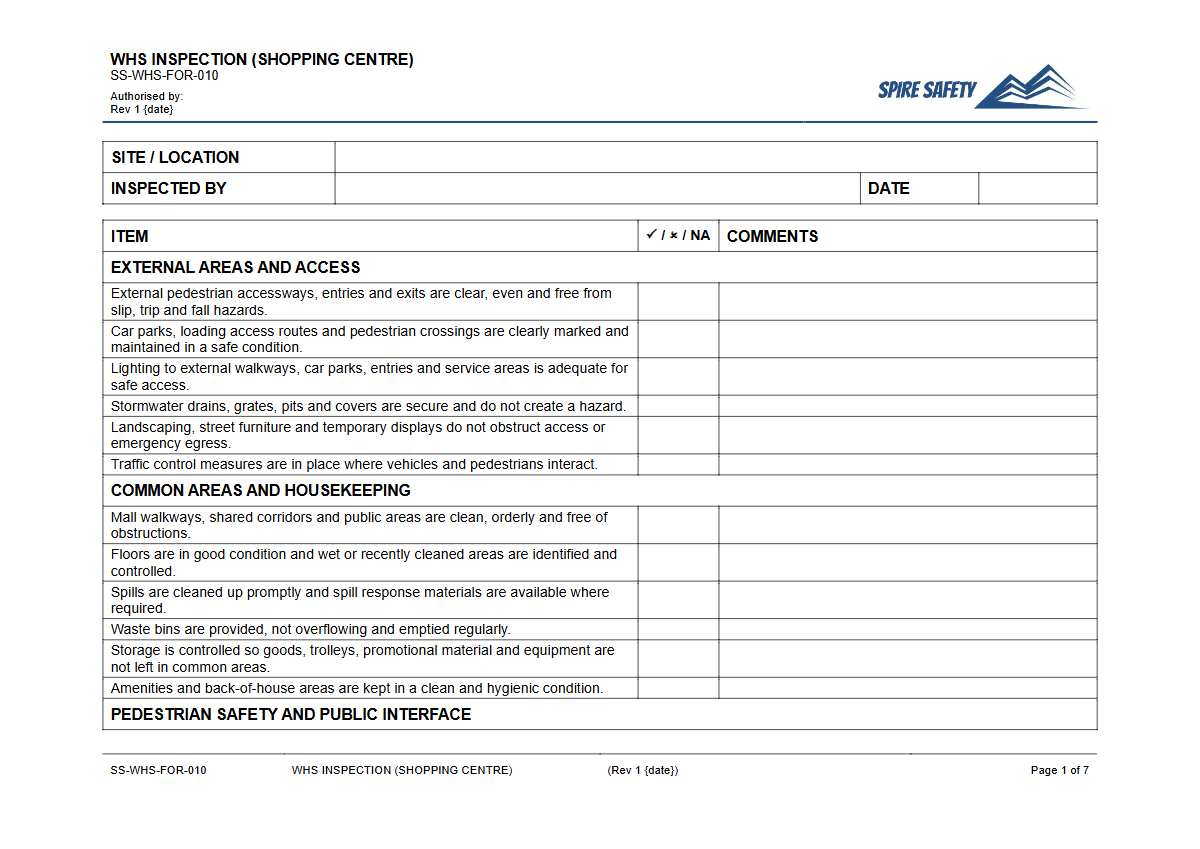
Managing work health and safety in a shopping centre is a complex task. This Free WHS Inspection (Shopping Centre) Template provides a structured starting point for identifying and controlling the diverse hazards present in a busy retail environment.
From public liability risks like slips and trips to back-of-house machinery, a systematic inspection process is essential. Using this template helps a Person Conducting a Business or Undertaking (PCBU) demonstrate due diligence by proactively managing risks to workers, contractors, tenants, and the public.
This formalised approach is a key component of effective WHS management systems, turning safety from a reactive task into a planned, preventive activity.
What this Inspection Template Covers
This template is designed to be comprehensive, providing prompts for inspecting a wide range of areas and potential hazards common to shopping centres, including:
- Common Areas and Malls (e.g., flooring, lighting, seating, signage)
- Entrances, Exits, and Walkways
- Car Parks and Pedestrian Crossings
- Food Courts and Amenities (e.g., toilets, parents' rooms)
- Lifts, Escalators, and Travelators
- Loading Docks and Waste Management Areas
- Plant Rooms and Back-of-House Corridors
- Emergency and Fire Safety Systems
Video walkthrough
How to use the Free WHS Inspection (Shopping Centre) Template
Begin by downloading the template in your preferred format (DOCX for easy editing or PDF). The key to its effectiveness lies in customisation.
While this document is aligned with Australian WHS principles, it must be adapted to your specific site.
Important: This template is a guide and starting point only. We have included common inspection items, but you must customise it to reflect the unique layout, equipment, tenancy mix, and risks of your specific centre.
This includes adding, removing, or modifying checklist items to ensure they are relevant to your operations. For example, your centre may have specific plant that requires its own checks, such as a regular boom gate pre-start checklist for vehicle entry points.
When to use this Inspection Template
The frequency of inspections should be based on risk. A combination of regular and event-driven inspections is best practice. Consider a schedule such as:
- Daily Checks: Quick walkthroughs of high-traffic, high-risk areas like food court floors, main entrances, and amenities to spot immediate hazards like spills or obstructions.
- Weekly or Monthly Inspections: A comprehensive, documented inspection using this template to cover all areas of the centre. This provides a regular baseline of the site's safety performance.
- Ad-Hoc Inspections: Conduct an inspection after an incident or near-miss, following major tenant fit-out work, before or after a large-scale public event, or when new equipment is introduced. These inspections help verify that risks remain controlled after a significant change. Routine maintenance might involve equipment that needs its own checks, like an electric hoist pre-start checklist.
Who should use this Template
This inspection template is designed for anyone with responsibility for safety and facility management in a retail property context. This includes:
- Centre Managers
- Operations Managers
- Facility Managers
- WHS Advisors or Officers
- Maintenance Supervisors
It can also be used to guide conversations with and observations of tenants and contractors, ensuring their activities do not introduce uncontrolled risks into the environment. The completed records from these inspections are valuable evidence during a formal WHS compliance auditing process, demonstrating a commitment to proactive safety management.
Adapting for Different Equipment
Your centre will have a variety of plant and equipment. While this general inspection covers their state and location, specific machinery requires dedicated checks.
For example, kitchen tenants may have appliances that need a freezer pre-start checklist, or groundskeeping may use equipment requiring a lawn tractor pre-start checklist. This template helps identify the need for these more specific procedures. You can find many more specific templates in our free WHS resources library to support your overall safety system.
Common mistakes
Common mistakes to avoid
- Using a generic checklist without customising it for the centre's specific layout and risks.
- Failing to document findings and track corrective actions through to completion.
- Only inspecting during quiet periods, missing hazards that arise during peak trading hours.
- Neglecting back-of-house areas like loading docks and waste zones, where many serious incidents occur.
Legal references
Legal considerations
The following legal requirements may be relevant to this type of work.
- Work Health and Safety Act (Harmonised) — Provides the primary duties for protecting workers and other people from work health and safety risks.
- Work Health and Safety Regulations (Harmonised) — Sets out requirements supporting the management of workplace hazards and risks.
The following codes may be relevant to this type of work.
- Managing WHS Risks Code of Practice — Provides practical guidance on identifying hazards, assessing risks and applying effective controls.
- Work Health and Safety Consultation, Cooperation and Coordination Code of Practice — Provides practical guidance on consulting workers and coordinating with other duty holders.
- Managing the Work Environment and Facilities Code of Practice — Provides practical guidance on safe work environments, workplace facilities and related controls.
Did you know
Slips, Trips & Falls
Slips, trips and falls are the most common cause of public liability claims in Australian shopping centres, frequently caused by spills, unsuitable floor surfaces, or poor lighting.
PCBU's Duty of Care
As the PCBU, shopping centre management has a primary duty of care to ensure the health and safety of all persons in the centre, including workers, shoppers, and contractors, so far as is reasonably practicable.
FAQ
Frequently asked questions
01What should be included in a shopping centre WHS inspection?
02How often should shopping centre safety inspections be conducted?
03Is this template compliant with my state's WHS laws?
04Can this template help with managing contractor safety?
Share this resource
Free WHS Inspection (Shopping Centre) Template
Browse Categories
How To Use It
- 1Download and open in Word or PDF.
- 2Replace the placeholders with your business details.
- 3Get it reviewed by a WHS specialist before rollout.
Need it customised?
Our WHS consultants can adapt this template to your site, run a gap analysis, or audit what you already have in place.
Book a Free Consultation WHS consulting servicesor call 1300 156 382