
Free WHS Inspection (Sign Workshop) Template
Download our Free WHS Inspection (Sign Workshop) Template to systematically identify and control hazards in your sign-making facility. Get your DOCX & PDF now.
Free WHS Inspection (Sign Workshop) Template
DOCX • 128 KB + PDF
Updated Oct 2026
No signup required
Purpose of the Free WHS Inspection (Sign Workshop) Template
A sign workshop presents a unique combination of hazards, from large format printers and vinyl cutters to hazardous chemicals and manual tasks. Systematically managing these risks is essential for maintaining a safe workplace.
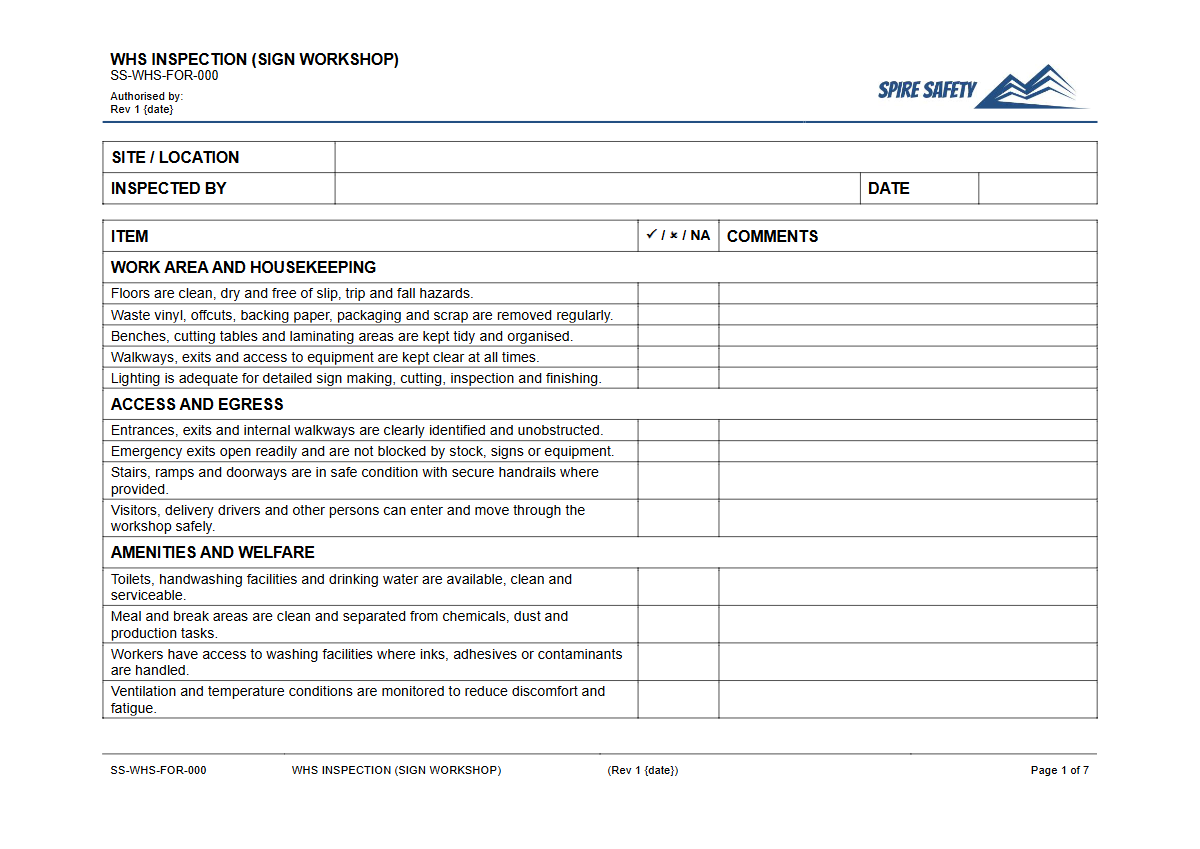
Our Free WHS Inspection (Sign Workshop) Template provides a structured starting point for your organisation to formalise its safety inspection process. This document is designed to guide a competent person through a thorough check of the workshop environment, equipment, and work practices.
Using this template helps you proactively identify potential issues before they lead to an incident, injury, or illness. It covers key areas common to sign-making facilities, including general housekeeping, electrical safety, chemical storage, machine guarding, and emergency procedures.
Regular inspections form a critical component of effective WHS management systems, demonstrating due diligence and a commitment to worker safety. This tool helps ensure that safety is not an afterthought but an integrated part of your daily operations.
Video walkthrough
How to use the Free WHS Inspection (Sign Workshop) Template
This template is provided as a downloadable DOCX and PDF file. To get the most value and ensure it's relevant to your specific operations, you must tailor it to your workplace.
Start by walking through your sign workshop and adding or removing items from the checklist to reflect the actual equipment, chemicals, and processes you use. This might include adding specific checks for wide-format UV printers, CNC routers, laminators, or welding equipment if applicable.
Involve your team in the customisation process; the workers who use the equipment daily often have the most valuable insights into potential hazards. Once customised, the template can be used for regular scheduled inspections.
The designated inspector should walk through the site, completing each item on the list, making notes of non-conformances, and assigning corrective actions with due dates. Note: We always recommend you customise this template to reflect the specific hazards, equipment, and processes in your own workplace.
If you need expert help tailoring your safety documents, our WHS consulting team can assist.
When to use it
The frequency of workshop inspections depends on the level of risk and the nature of the work being performed. As a general guide, a comprehensive sign workshop inspection should be conducted at regular intervals, such as weekly or monthly.
More frequent checks may be necessary for high-risk equipment or processes. It's also good practice to conduct an inspection after any significant change in the workplace, such as the installation of new machinery, the introduction of a new chemical, or a change in workshop layout.
Furthermore, an inspection should be carried out following any incident, near miss, or reported hazard to identify root causes and prevent recurrence. The completed inspection records should be filed and reviewed periodically as part of your ongoing safety management activities.
These records are invaluable during a formal WHS compliance auditing process, providing tangible evidence of your hazard management efforts.
Who should use it
This inspection template should be used by a person deemed competent to identify the hazards associated with a sign workshop. This is typically a Workshop Manager, a Health and Safety Representative (HSR), a supervisor, or another worker who has received adequate training and has a thorough understanding of the workshop's operations.
It is crucial that the inspector is familiar with the relevant safety standards for plant and machinery, chemical handling, and safe work procedures.
Where specific high-risk plant is in use, such as hoists for moving large substrates or finished signs, operators should use dedicated checklists. For example, our Free Pre-Start Checklist (Electric Hoist) Template can be used for daily checks on lifting equipment.
Likewise, for site-wide elements, other specific checklists may be useful, such as a Free Pre-Start Checklist (Boom Gate) Template for facility entrances. Involving various team members in inspections over time can also help to build a stronger safety culture across the organisation. For more templates and safety tools, browse our complete free WHS resources library.
Common mistakes
Common mistakes to avoid
- Using a generic checklist without customising it for your specific machinery and chemicals.
- Failing to assign clear responsibility and deadlines for corrective actions.
- Conducting the inspection as a 'tick-and-flick' exercise without genuine observation or worker consultation.
- Not filing and reviewing completed inspection reports to identify recurring issues or trends.
Legal references
Legal considerations
The following legal requirements may be relevant to this type of work.
- Work Health and Safety Act (Harmonised) — Provides the primary duties for protecting workers and other people from work health and safety risks.
- Work Health and Safety Regulations (Harmonised) — Sets out requirements supporting the management of workplace hazards and risks.
The following codes may be relevant to this type of work.
- Managing WHS Risks Code of Practice — Provides practical guidance on identifying hazards, assessing risks and applying effective controls.
- Work Health and Safety Consultation, Cooperation and Coordination Code of Practice — Provides practical guidance on consulting workers and coordinating with other duty holders.
- Managing the Work Environment and Facilities Code of Practice — Provides practical guidance on safe work environments, workplace facilities and related controls.
Did you know
The Hierarchy of Control
When you find a hazard, the most effective control measure is elimination (removing the hazard entirely). Relying on Personal Protective Equipment (PPE) is considered the least effective control and should always be the last resort.
Machine Guarding
According to Safe Work Australia, machinery and equipment are a leading cause of workplace injury. Ensuring all guards are in place and effective is one of the most critical checks during any workshop inspection.
FAQ
Frequently asked questions
01What specific hazards are common in a sign workshop?
02How often should I conduct a sign workshop inspection?
03Does this template cover chemical safety for printing inks and solvents?
04Who is responsible for fixing the problems found during an inspection?
Share this resource
Free WHS Inspection (Sign Workshop) Template
Browse Categories
How To Use It
- 1Download and open in Word or PDF.
- 2Replace the placeholders with your business details.
- 3Get it reviewed by a WHS specialist before rollout.
Need it customised?
Our WHS consultants can adapt this template to your site, run a gap analysis, or audit what you already have in place.
Book a Free Consultation WHS consulting servicesor call 1300 156 382