
Free WHS Inspection (Storage Yard) Template
Systematically inspect your storage yard for hazards with our Free WHS Inspection (Storage Yard) Template. Aligned with Australian WHS practice. Download now.
Free WHS Inspection (Storage Yard) Template
DOCX • 128 KB + PDF
Updated Oct 2026
No signup required
Purpose of the Free WHS Inspection (Storage Yard) Template
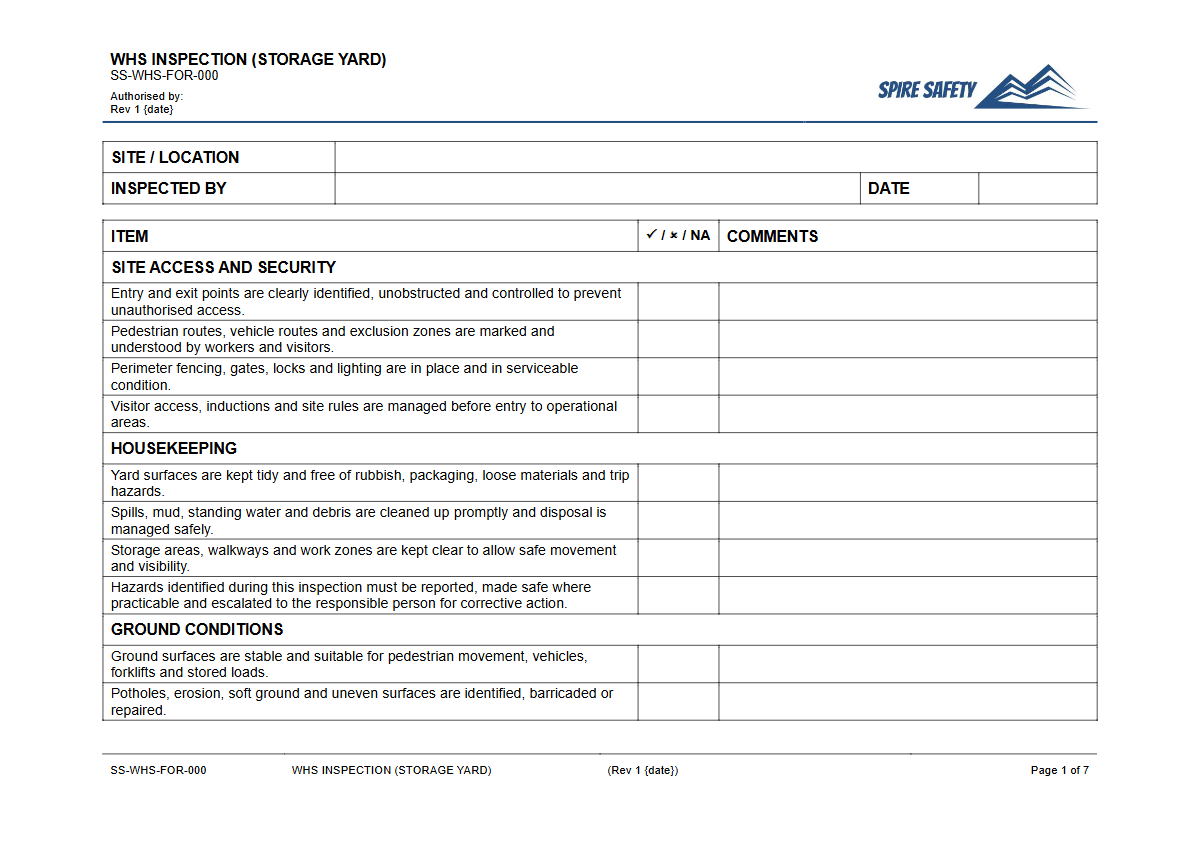
Storage yards, whether for materials, equipment, or vehicles, present a unique combination of workplace health and safety (WHS) risks. This free WHS Inspection (Storage Yard) Template provides a structured starting point for systematically identifying and controlling these hazards.
Regular inspections help a Person Conducting a Business or Undertaking (PCBU) meet their primary duty of care by proactively managing risks related to traffic management, material storage, manual handling, and the general state of the yard. Using a formal checklist helps ensure no area is overlooked and creates a valuable record of safety management activities.
This document is designed to guide a thorough walk-through of your storage area, prompting checks on everything from racking integrity and ground surfaces to emergency procedures and vehicle safety. The goal is to create a safer environment, prevent incidents, and support your broader safety framework. A well-maintained and regularly inspected yard is fundamental to effective operational safety and is a core component of robust WHS management systems.
Video walkthrough
How to use the Free WHS Inspection (Storage Yard) Template
This Inspection template is available for download in both DOCX and PDF formats. The DOCX version is fully editable, allowing you to tailor the checklist to the specific layout, equipment, and materials found in your workplace.
The PDF is ideal for quick printing and use on the go.
To effectively use this resource, download the DOCX file and adapt it to your operational context. You may need to add or remove sections based on the specific hazards present.
For example, if your yard has specific protocols for handling flammable liquids or heavy machinery, these should be explicitly included in your customised checklist.
Important: This template is a guide based on general WHS principles. We cannot know the specific hazards of your workplace.
You must customise this document to reflect your unique site, equipment, tasks, and control measures to ensure it is fit for purpose. It is not a substitute for a comprehensive risk assessment.
When to use this Inspection
Regular, scheduled inspections are key to maintaining safety in a dynamic storage yard environment. The ideal frequency depends on the level of activity and the types of hazards present, but a common schedule is monthly or quarterly. In addition to routine checks, this inspection should be conducted:
- After a near miss or incident has occurred.
- When there are significant changes to the yard layout or traffic flow.
- Before introducing new types of materials, equipment, or storage systems.
- Following extreme weather events that could affect the structural integrity or ground surface of the yard.
- As part of periodic internal or external WHS compliance auditing processes.
Who should use this Inspection
This Inspection template is designed for use by anyone with responsibility for workplace safety. This typically includes:
- Supervisors and Site Managers: They hold direct responsibility for the day-to-day safety of the storage yard and its workers.
- Health and Safety Representatives (HSRs): HSRs can use this tool to conduct formal inspections as part of their role in representing their work group.
- WHS Officers or Advisors: Safety professionals can use this template to standardise the inspection process across one or more sites.
- Business Owners or PCBUs: Small business owners can use this document to formalise their safety walk-throughs and demonstrate due diligence.
Common Storage Yard Hazards to Identify
A thorough inspection involves more than just a quick glance. It requires a systematic check for specific hazards. Use the template to guide your focus, paying close attention to:
- Traffic Management: Look for clear signage, designated walkways for pedestrians, separation from moving vehicles, and effective blind spot controls. Ensure entry and exit points are controlled, perhaps using our Free Pre-Start Checklist (Boom Gate) Template for automated gates.
- Storage and Racking: Check for signs of damage to pallet racking, such as bent uprights or beams. Ensure loads are stable, within weight limits, and not overhanging into aisles. Verify that shelving and storage systems are appropriate for the materials being stored.
- Material Handling: Observe how materials are moved. Ensure mechanical aids like forklifts or cranes are used correctly and that workers are trained. Our Free Pre-Start Checklist (Electric Hoist) Template can assist with formalising equipment checks.
- Slips, Trips, and Falls: Inspect ground surfaces for potholes, cracks, spills, or accumulated debris. Check that drainage is adequate and that lighting is sufficient for the hours of operation.
- Grounds and Maintenance: The overall condition of the yard, including fencing and landscaping, can impact safety. For example, overgrown vegetation can obscure vision. Formalising checks on groundskeeping equipment like those in our Free Pre-Start Checklist (Aerator) Template contributes to site upkeep.
- Hazardous Substances: Ensure chemicals are correctly labelled, stored in designated, bunded areas, and that Safety Data Sheets (SDS) are readily accessible.
- Emergency Equipment: Verify that fire extinguishers, first aid kits, and emergency eyewash stations are unobstructed, serviced, and clearly signed.
By using this Inspection template as a guide, you can methodically address these common risks and improve safety outcomes. For more tools to support your safety processes, explore our complete free WHS resources library.
Common mistakes
Common mistakes to avoid
- Overlooking gradual damage to pallet racking until it fails catastrophically.
- Failing to update traffic management plans after the yard layout changes.
- Neglecting to inspect and maintain adequate lighting for night or low-light operations.
- Completing the checklist but failing to assign and track corrective actions for identified hazards.
Legal references
Legal considerations
The following legal requirements may be relevant to this type of work.
- Work Health and Safety Act (Harmonised) — Provides the primary duties for protecting workers and other people from work health and safety risks.
- Work Health and Safety Regulations (Harmonised) — Sets out requirements supporting the management of workplace hazards and risks.
The following codes may be relevant to this type of work.
- Managing WHS Risks Code of Practice — Provides practical guidance on identifying hazards, assessing risks and applying effective controls.
- Work Health and Safety Consultation, Cooperation and Coordination Code of Practice — Provides practical guidance on consulting workers and coordinating with other duty holders.
- Managing the Work Environment and Facilities Code of Practice — Provides practical guidance on safe work environments, workplace facilities and related controls.
Did you know
A Leading Cause of Workplace Fatalities
According to Safe Work Australia, being hit by moving vehicles is a leading cause of workplace fatalities. Storage yards, with their mix of pedestrians and mobile plant, are high-risk areas for these types of incidents.
Unstable Ground
Uneven or poorly maintained ground surfaces in storage yards don't just cause slips and trips. They can also lead to the instability and toppling of mobile equipment like forklifts and elevated work platforms, especially when carrying a load.
FAQ
Frequently asked questions
01What should a storage yard safety inspection include?
02How often should storage yards be inspected for WHS?
03Who is responsible for safety in a storage yard?
04Is this storage yard inspection template suitable for all industries?
Share this resource
Free WHS Inspection (Storage Yard) Template
Browse Categories
How To Use It
- 1Download and open in Word or PDF.
- 2Replace the placeholders with your business details.
- 3Get it reviewed by a WHS specialist before rollout.
Need it customised?
Our WHS consultants can adapt this template to your site, run a gap analysis, or audit what you already have in place.
Book a Free Consultation WHS consulting servicesor call 1300 156 382