
Free WHS Inspection (Supermarket) Template
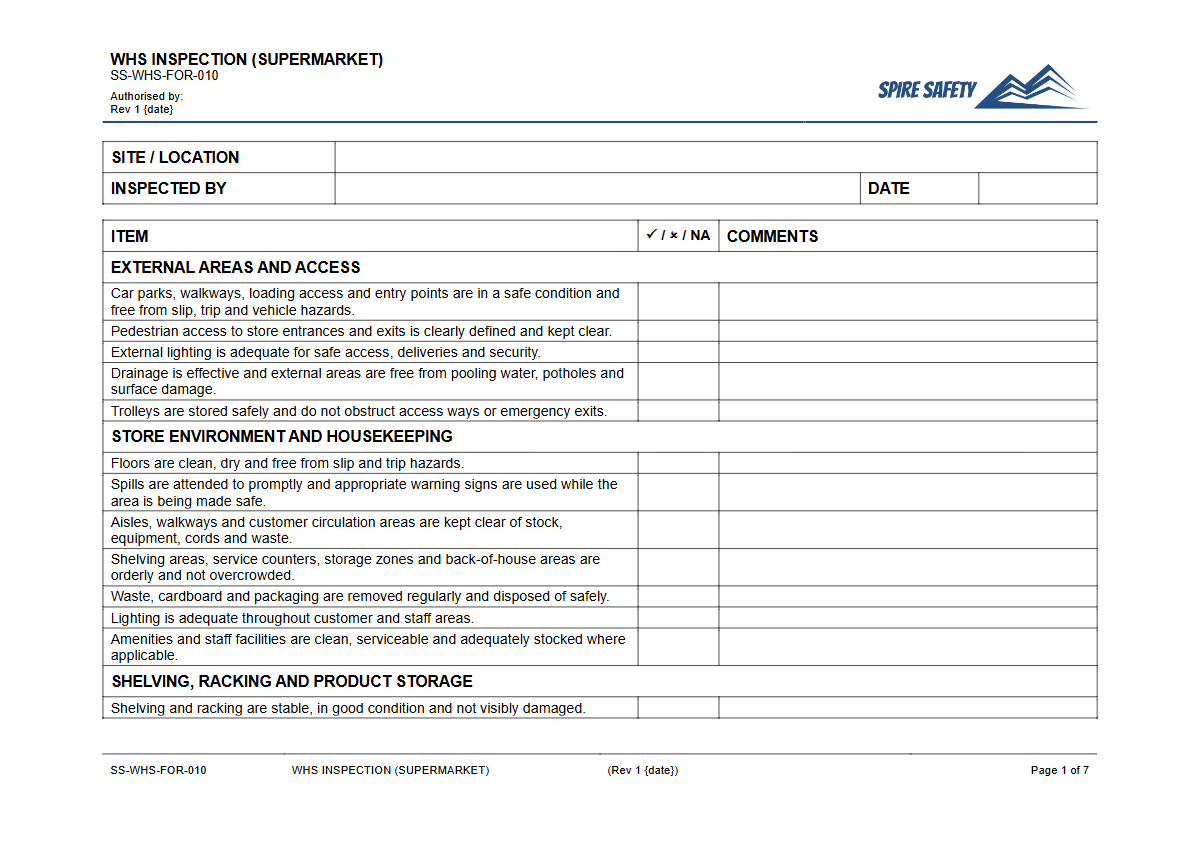
Download our free WHS Inspection (Supermarket) Template to formalise safety checks for aisles, storage, and equipment.
Free WHS Inspection (Supermarket) Template
DOCX • 128 KB + PDF
Updated Oct 2026
No signup required
Purpose of the Free WHS Inspection (Supermarket) Template
Supermarkets are dynamic environments with a unique mix of risks affecting both workers and the public. This free WHS Inspection (Supermarket) Template provides a structured starting point for systematically identifying and controlling hazards across your entire premises.
Regular inspections are fundamental to proactive safety management, helping your organisation meet its duty of care obligations. Using a formal checklist helps ensure consistency and accountability, covering key areas from front-of-house trip hazards to back-of-house manual tasks and plant operation.
It transforms safety from a reactive task to a planned, preventive activity, forming a critical part of a robust safety framework.
This Inspection template is designed to be integrated into your broader safety program, helping document due diligence and drive continuous improvement. By formalising your inspection process, you create a reliable record of your safety efforts, which is essential for incident investigations and compliance verification.
It provides a practical tool to support a positive safety culture where potential issues are found and fixed before they can cause harm. Effective implementation of such checks is a core component of successful WHS management systems.
Video walkthrough
How to use the Free WHS Inspection (Supermarket) Template
To get the most value from this resource, it must be adapted to the specific layout, equipment, and work practices of your supermarket. A generic checklist cannot account for every unique risk in your workplace.
- Download and Customise: Open the DOCX file and walk through your site. Add, remove, or modify checklist items to reflect your specific environment. Consider areas like the deli, bakery, loading dock, car park, and staff amenities.
- Consult with Your Team: Involve workers, supervisors, and Health and Safety Representatives in the customisation process. They have direct experience with daily tasks and potential hazards.
- Establish a Schedule: Determine the appropriate frequency for inspections (e.g., daily, weekly, monthly) based on the level of risk in each area.
- Train Relevant Personnel: Ensure that everyone responsible for conducting inspections understands how to use the checklist correctly and what to do when a hazard is identified.
- Implement and Review: Use the checklist to conduct your inspections. Most importantly, ensure a process is in place to assign and track corrective actions for any issues found. Regularly review inspection findings to identify trends and update the checklist as your workplace changes.
Important: We have provided a comprehensive starting point, but this template must be customised to your specific site, equipment, and procedures. We are not liable for any incidents or compliance failures arising from the use of this document.
It is your responsibility to ensure it is fit for your purpose.
What to Inspect
Your customised checklist should cover all relevant areas of the supermarket. Consider grouping items by location or hazard type for clarity:
- Customer Areas: Check for clean and dry floors, clear aisles free of obstructions, stable product displays, adequate lighting, and safe operation of entry/exit doors. For sites with controlled parking, this also includes checks similar to those in our Free Pre-Start Checklist (Boom Gate) Template.
- Storage and Back of House: Inspect pallet racking for damage, ensure clear access to loading docks, verify safe stacking of stock, and check housekeeping in storage rooms and corridors.
- Plant and Equipment: Verify that safety guards are in place on equipment like deli slicers, mixers, and compactors. For food preparation areas, you might use specific checklists like our Free Pre-Start Checklist (Blender) Template to ensure kitchen equipment is safe for use.
- Temperature-Controlled Areas: Regularly check that cool rooms and freezers are functioning correctly, with accessible emergency releases and appropriate lighting. For a more detailed daily check, consider our Free Pre-Start Checklist (Freezer) Template.
- Emergency and Safety Systems: Ensure fire extinguishers are accessible and in-date, first aid kits are fully stocked, and emergency exits and paths are unobstructed.
When to use it
The frequency of your supermarket inspections should be based on risk. High-traffic, high-risk areas require more frequent attention than stable, low-risk ones. A tiered approach is often most effective:
- Daily: Quick walk-throughs before opening to check for slip/trip hazards in main aisles, spills in the produce section, and operational readiness of checkout counters.
- Weekly: More detailed inspections of storage areas, back-of-house cleanliness, the condition of mobile plant like pallet jacks, and checks of first aid supplies.
- Monthly: A comprehensive review covering all items on the checklist, including less-used areas, emergency lighting tests, and reviewing past corrective actions to ensure they were effective. These documented checks are often a key input for higher-level WHS compliance auditing.
Who should use it
Safety inspections should be conducted by competent personnel who are familiar with the areas they are inspecting. Responsibilities can be assigned to various roles within the supermarket:
- Department Managers or Supervisors: Ideal for conducting daily and weekly inspections within their specific areas of control (e.g., Deli Manager, Produce Manager).
- Store Manager or Assistant Manager: Often responsible for overseeing the entire inspection program and conducting comprehensive monthly reviews.
- Health and Safety Representatives (HSRs): Can use the template as part of their functions to monitor workplace safety and consult with management on hazards.
- WHS Officer or Coordinator: For larger organisations, a dedicated safety professional may manage the inspection program, analyse findings, and report to senior management.
For more specialised safety documents and checklists, you can browse our complete free WHS resources library.
Common mistakes
Common mistakes to avoid
- Using a generic template without customising it for the specific store layout and equipment.
- Failing to assign responsibility and a deadline for fixing identified hazards.
- "Pencil-whipping" the checklist without physically inspecting the items.
- Not involving workers, who have firsthand knowledge of daily risks, in the inspection process.
Legal references
Legal considerations
The following legal requirements may be relevant to this type of work.
- Work Health and Safety Act (Harmonised) — Provides the primary duties for protecting workers and other people from work health and safety risks.
- Work Health and Safety Regulations (Harmonised) — Sets out requirements supporting the management of workplace hazards and risks.
The following codes may be relevant to this type of work.
- Managing WHS Risks Code of Practice — Provides practical guidance on identifying hazards, assessing risks and applying effective controls.
- Work Health and Safety Consultation, Cooperation and Coordination Code of Practice — Provides practical guidance on consulting workers and coordinating with other duty holders.
- Managing the Work Environment and Facilities Code of Practice — Provides practical guidance on safe work environments, workplace facilities and related controls.
Did you know
Slips, Trips, and Falls
Slips, trips, and falls are the most common cause of serious injury in the retail industry. Proactive floor inspections and prompt spill clean-up are among the most effective controls.
Manual Tasks
According to Safe Work Australia, injuries resulting from manual tasks are a leading cause of workers' compensation claims in retail, particularly when stocking shelves and moving goods in storage areas.
FAQ
Frequently asked questions
01What is a supermarket safety inspection?
02How often should I carry out a supermarket WHS inspection?
03Who is responsible for WHS in a supermarket?
04What are the most common hazards in a supermarket?
Share this resource
Free WHS Inspection (Supermarket) Template
Browse Categories
How To Use It
- 1Download and open in Word or PDF.
- 2Replace the placeholders with your business details.
- 3Get it reviewed by a WHS specialist before rollout.
Need it customised?
Our WHS consultants can adapt this template to your site, run a gap analysis, or audit what you already have in place.
Book a Free Consultation WHS consulting servicesor call 1300 156 382