
Free WHS Inspection (Theatre) Template
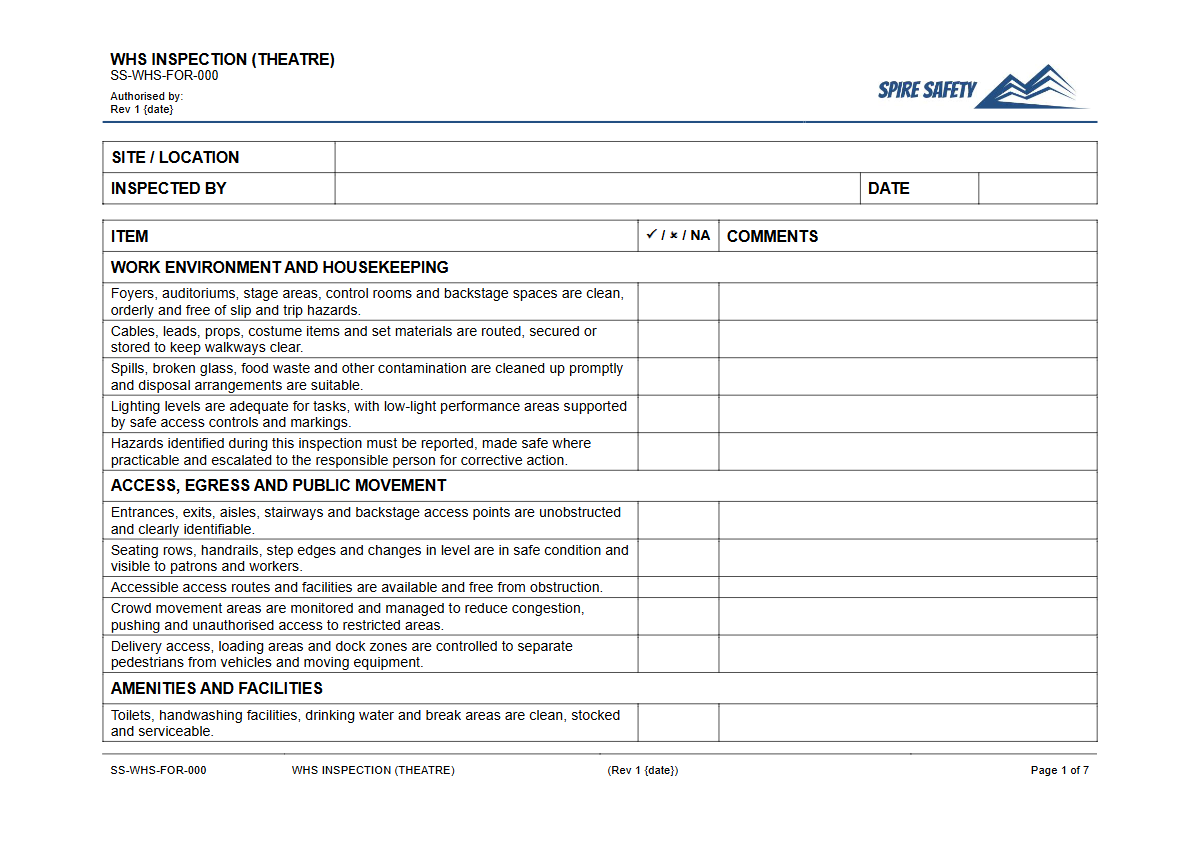
Download our free WHS Inspection (Theatre) Template to formalise safety checks for stages, rigging, and back-of-house areas.
Free WHS Inspection (Theatre) Template
DOCX • 129 KB + PDF
Updated Oct 2026
No signup required
Purpose of the Free WHS Inspection (Theatre) Template
Theatrical and live performance environments contain a unique combination of hazards, from working at height on lighting rigs to complex electrical systems and manual handling of heavy stage props. This Free WHS Inspection (Theatre) Template provides a structured starting point for systematically identifying and managing these risks.
Using a formal checklist helps ensure that safety checks are conducted consistently and that nothing is overlooked. It creates a documented record of your safety diligence, forming a critical component of your overall WHS management systems and demonstrating a proactive approach to safety.
The template is designed to guide a competent person through a thorough check of key areas, including:
- Front of house and public areas
- Stage and performance areas (including flooring and trip hazards)
- Backstage, wings, and dressing rooms
- Rigging, fly systems, and working at heights
- Lighting and electrical equipment
- Audio and communication systems
- Props and scenery storage
- Loading docks and workshops
- Emergency procedures and equipment
Video walkthrough
How to use the Free WHS Inspection (Theatre) Template
To get the most value from this resource, follow a clear process. First, download the template in your preferred format (DOCX or PDF).
The DOCX file is fully editable, allowing for extensive customisation. This step is crucial; you must adapt the checklist to reflect the specific layout, equipment, and production activities of your venue.
Generic checklists can miss site-specific hazards. We have included common theatrical items, but your venue will have its own unique characteristics that need to be added.
Once customised, ensure the person or team conducting the inspection is competent to do so—they should understand the specific risks associated with theatrical environments. During the inspection, they should meticulously check each item, noting any non-conformance, damage, or potential hazards.
For any issues identified, detail the problem and assign a corrective action, including a responsible person and a due date. This creates an auditable trail of hazard identification and control.
For specialised equipment like hoists, a more detailed check such as a pre-start checklist for an electric hoist may also be required before each use.
When to use it
The frequency of theatre inspections should be determined by a risk assessment. As a general guide, inspections should be conducted at regular intervals and in response to specific triggers.
Consider scheduling inspections before the start of a new production's bump-in, before a show opens to the public, and periodically throughout a long run. A full venue inspection might be appropriate quarterly or bi-annually, supplementing more frequent departmental checks.
Additional inspections are also warranted after any significant changes to the venue or stage setup, after an incident or near-miss occurs, or when new equipment is introduced. The goal is to identify and control risks before they can cause harm to cast, crew, or the public.
You might also integrate checks for related infrastructure, such as using a pre-start checklist for a boom gate in the venue's loading dock or car park.
Who should use it
This inspection template is designed for use by individuals with responsibility for safety in a performance venue. This typically includes roles such as the Venue Manager, Technical Director, Production Manager, or a designated WHS Officer.
The person conducting the inspection must be 'competent', meaning they have the necessary training, knowledge, and experience to identify the hazards specific to a theatre.
In smaller organisations, this responsibility may fall to a senior crew member. It is essential that the person understands not just the items on the checklist but the underlying risks they represent.
For complex areas like structural rigging or high-voltage electrical systems, it may be necessary to engage specialist external experts as part of the inspection process. If you need assistance defining roles and responsibilities, engaging with a WHS consulting service can provide clarity and expert guidance.
Regular inspections are a fundamental part of a healthy safety culture. They are also a key piece of evidence reviewed during formal safety reviews or WHS compliance auditing, showing that the organisation is actively monitoring its work environment.
In addition to broad venue inspections, don't forget checks for ancillary areas like kitchens or bars, where a pre-start checklist for a commercial blender can help manage specific appliance risks.
This document is one of many templates available to help you build a robust safety system. We encourage you to explore our complete free WHS resources library for other useful checklists, forms, and policies.
Common mistakes
Common mistakes to avoid
- Using the template without customising it for the specific venue and production.
- Assigning the inspection to a person who lacks the competence to identify theatre-specific hazards.
- Completing the checklist as a paper exercise without genuinely looking for unsafe conditions.
- Failing to document, assign, and track corrective actions for identified issues.
Legal references
Legal considerations
The following legal requirements may be relevant to this type of work.
- Work Health and Safety Act (Harmonised) — Provides the primary duties for protecting workers and other people from work health and safety risks.
- Work Health and Safety Regulations (Harmonised) — Sets out requirements supporting the management of workplace hazards and risks.
The following codes may be relevant to this type of work.
- Managing WHS Risks Code of Practice — Provides practical guidance on identifying hazards, assessing risks and applying effective controls.
- Work Health and Safety Consultation, Cooperation and Coordination Code of Practice — Provides practical guidance on consulting workers and coordinating with other duty holders.
- Managing the Work Environment and Facilities Code of Practice — Provides practical guidance on safe work environments, workplace facilities and related controls.
Did you know
Entertainment Industry Hazards
The 'Arts and Recreation Services' industry in Australia often reports a high incidence rate of serious injury claims, with key risks including falls, manual handling, and being hit by moving objects.
Stage Terminology
Many stage directions, like 'stage left' and 'stage right', are from the actor's perspective as they face the audience. This standardisation is a safety feature, ensuring clear and unambiguous communication during performances.
FAQ
Frequently asked questions
01What's the difference between a pre-start check and a workplace inspection?
02How often should theatre safety inspections be conducted?
03Does this template cover fire safety?
04Who is a 'competent person' to conduct a theatre inspection?
Share this resource
Free WHS Inspection (Theatre) Template
Browse Categories
How To Use It
- 1Download and open in Word or PDF.
- 2Replace the placeholders with your business details.
- 3Get it reviewed by a WHS specialist before rollout.
Need it customised?
Our WHS consultants can adapt this template to your site, run a gap analysis, or audit what you already have in place.
Book a Free Consultation WHS consulting servicesor call 1300 156 382