
Free WHS Inspection (Transport Depot) Template
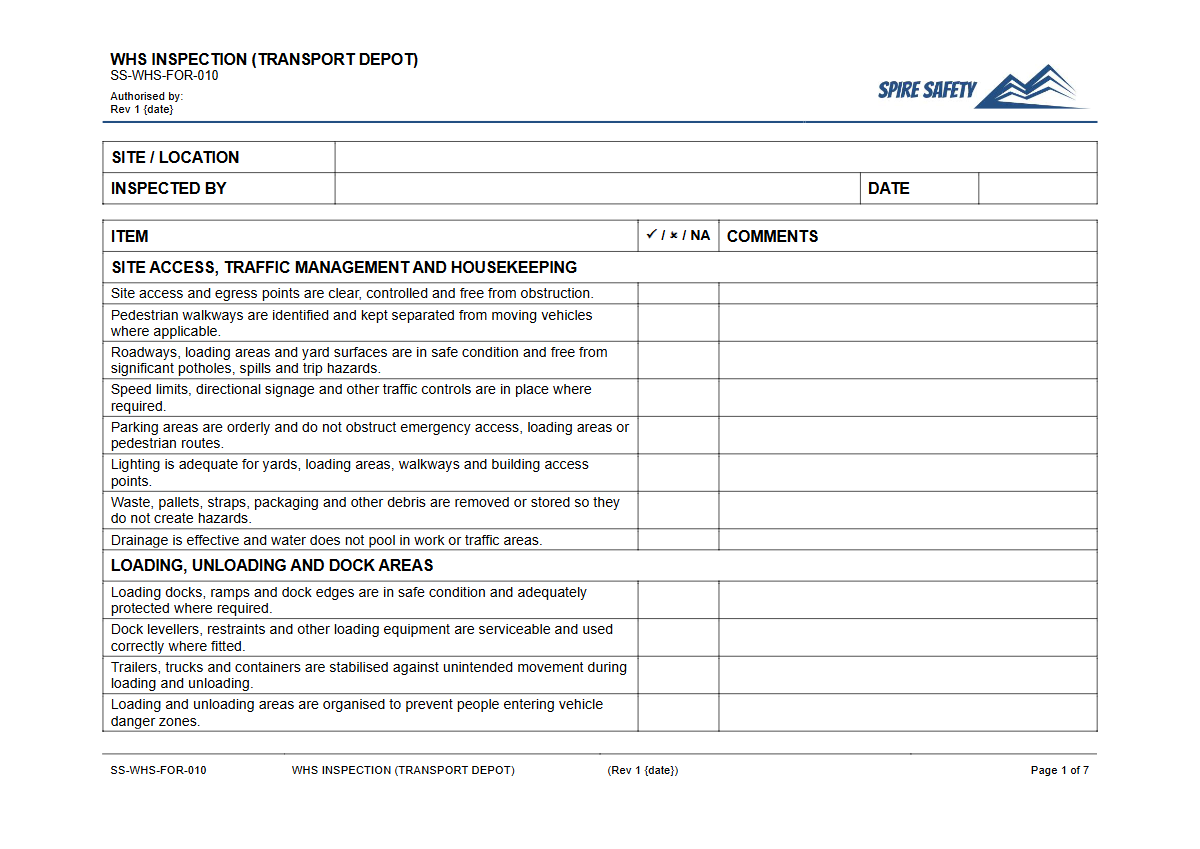
Proactively manage safety in your transport depot with our free WHS Inspection Template. This structured DOCX helps you identify hazards and control risks.
Free WHS Inspection (Transport Depot) Template
DOCX • 128 KB + PDF
Updated Oct 2026
No signup required
Purpose of the Free WHS Inspection (Transport Depot) Template
A transport depot is a dynamic environment with significant work health and safety risks. This Free WHS Inspection (Transport Depot) Template provides a structured framework for systematically identifying and assessing hazards specific to these workplaces.
The primary purpose is to move beyond reactive incident reporting towards a proactive system of hazard identification and risk control. Using this template helps an organisation demonstrate due diligence and a commitment to providing a safe workplace for employees, contractors, and visitors.
Key risks in a transport depot include vehicle and pedestrian interaction, loading and unloading operations, hazardous manual tasks, and the storage of goods. A methodical inspection process helps to ensure that controls for these risks are in place and remain effective.
It formalises the review of critical safety elements such as traffic management plans, lighting, housekeeping, emergency procedures, and the condition of plant and equipment. Integrating these regular checks into your overall WHS management systems creates a culture of continuous improvement and safety awareness.
Video walkthrough
How to use the Free WHS Inspection (Transport Depot) Template
This document serves as a comprehensive starting point. To use it effectively, follow these steps:
- Download and Customise: Download the template in your preferred format (DOCX or PDF). The DOCX file is fully editable. It is crucial that you customise the checklist to reflect the specific layout, equipment, and operational procedures of your transport depot. We cannot know the unique risks of your workplace, so you must add or remove items to make the document fit for your purpose.
- Define Scope and Schedule: Determine which areas of the depot the inspection will cover and establish a regular schedule (e.g., weekly, monthly, or quarterly) for conducting the inspections.
- Assign and Train: Assign responsibility for conducting the inspections to competent personnel, such as supervisors or WHS representatives. Ensure they are trained on how to use the checklist and what to look for.
- Conduct the Inspection: The inspector should walk through the designated areas, systematically checking each item on the list, making notes of any non-conformances or hazards observed.
- Document and Act: Document all findings. For every identified hazard or issue, assign a corrective action, a person responsible, and a due date for completion. This follow-up process is the most critical part of any inspection.
Your depot may also have specific equipment that requires daily checks before use. For example, a pre-start checklist for boom gates at the entrance ensures traffic control systems are functioning correctly from the start of the day.
When to use it
Regular, scheduled inspections are fundamental to good WHS management. This template should be used as part of a planned inspection program. The frequency should be determined by a risk assessment, but a typical schedule may include:
- Weekly: For high-risk areas or activities, such as loading bays, forklift operating zones, or main pedestrian walkways.
- Monthly or Quarterly: For a comprehensive, wall-to-wall inspection of the entire depot.
- Following an Incident: An inspection should be conducted after any accident, incident, or near miss to identify contributing factors and prevent recurrence.
- When Changes Occur: Use the template to review safety before or after changes are made to the workplace layout, equipment, or work procedures.
The documented results of these inspections provide valuable data for management review and can be a key piece of evidence during external WHS compliance audits.
Who should use it
This inspection template is designed for use by any person responsible for safety in a transport depot environment. This includes:
- Depot Managers and Supervisors: They hold primary responsibility for the safety of their operational areas and can use the template to fulfil their WHS duties.
- WHS Managers and Advisors: Safety professionals can use this document to guide and formalise the site inspection program.
- Health and Safety Representatives (HSRs): HSRs can use the template to conduct inspections of their designated work group's area.
- Competent Workers: Involving experienced workers in the inspection process can provide valuable insights, as they have hands-on knowledge of the tasks and associated risks.
The effectiveness of an inspection relies on the competency of the inspector. They should have a thorough understanding of the workplace, the relevant hazards, and the control measures required.
For specialised areas or complex risks, seeking external WHS consulting services can provide expert guidance. In addition to general site checks, ensure you have processes for specific plant, such as a daily pre-start checklist for electric hoists used in your maintenance workshop.
You can find more templates and tools in our free WHS resources library to build out your safety toolkit.
Common mistakes
Common mistakes to avoid
- Using a generic checklist without customising it for specific site hazards and traffic flow.
- Failing to follow up and close out identified corrective actions in a timely manner.
- Not involving drivers and yard workers in the inspection process.
- Conducting inspections as a 'tick-box' exercise without genuine observation or investigation.
Legal references
Legal considerations
The following legal requirements may be relevant to this type of work.
- Work Health and Safety Act (Harmonised) — Provides the primary duties for protecting workers and other people from work health and safety risks.
- Work Health and Safety Regulations (Harmonised) — Sets out requirements supporting the management of workplace hazards and risks.
The following codes may be relevant to this type of work.
- Managing WHS Risks Code of Practice — Provides practical guidance on identifying hazards, assessing risks and applying effective controls.
- Work Health and Safety Consultation, Cooperation and Coordination Code of Practice — Provides practical guidance on consulting workers and coordinating with other duty holders.
- Managing the Work Environment and Facilities Code of Practice — Provides practical guidance on safe work environments, workplace facilities and related controls.
Did you know
Traffic Management
The transport, postal, and warehousing industry has one of the highest rates of serious workers' compensation claims in Australia, with vehicle incidents being a major cause.
Slips and Trips
Simple housekeeping issues, like oil spills or pallets left in walkways, are a leading cause of injuries in depot environments, often resulting in sprains, strains, and fractures.
FAQ
Frequently asked questions
01What are the most common hazards in a transport depot?
02How often should I inspect my transport depot?
03Is this template enough for WHS compliance?
04Who is responsible for conducting a transport depot inspection?
Share this resource
Free WHS Inspection (Transport Depot) Template
Browse Categories
How To Use It
- 1Download and open in Word or PDF.
- 2Replace the placeholders with your business details.
- 3Get it reviewed by a WHS specialist before rollout.
Need it customised?
Our WHS consultants can adapt this template to your site, run a gap analysis, or audit what you already have in place.
Book a Free Consultation WHS consulting servicesor call 1300 156 382