
Free WHS Inspection (Vet Hospital) Template
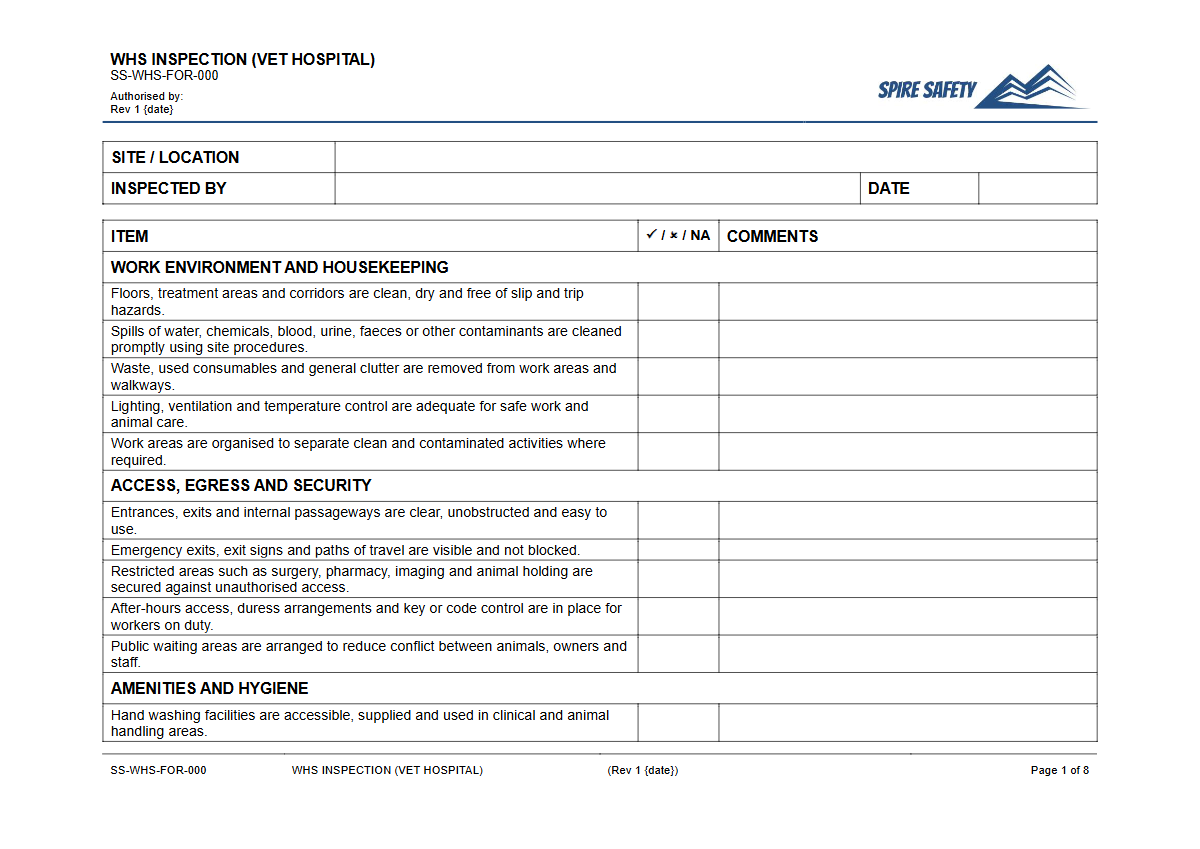
Download our Free WHS Inspection (Vet Hospital) Template to systematically identify and control risks in your veterinary practice.
Free WHS Inspection (Vet Hospital) Template
DOCX • 129 KB + PDF
Updated Oct 2026
No signup required
Purpose of the Free WHS Inspection (Vet Hospital) Template
Veterinary hospitals are dynamic workplaces with a unique combination of hazards. This Free WHS Inspection (Vet Hospital) Template provides a structured framework for systematically identifying and assessing risks specific to the veterinary environment.
Using a comprehensive checklist helps ensure that no area or task is overlooked, from clinical zones to administrative offices. The primary goal is to proactively manage WHS risks, prevent injuries and illnesses, and foster a safer environment for staff, clients, and animal patients.
A consistent inspection program is a cornerstone of effective health and safety management. It allows practice managers to document findings, track corrective actions, and demonstrate due diligence.
This process supports the development of robust WHS management systems by providing essential data on workplace conditions and the effectiveness of existing controls. Regularly reviewing areas like chemical storage, manual handling procedures, and infection control helps maintain a high standard of safety and operational excellence.
Video walkthrough
How to use the Free WHS Inspection (Vet Hospital) Template
This template is designed for ease of use. After downloading the DOCX or PDF file, you can begin your inspection by walking through each area of your facility.
The checklist is categorised by common veterinary hospital zones and hazard types, prompting you to observe and record the state of equipment, work practices, and the physical environment. For each item, you can note whether it is compliant, non-compliant, or not applicable, and add specific comments or photographic evidence.
It is critical to remember that this template is a starting point. You must customise it to reflect the specific hazards, equipment, and layout of your workplace.
We cannot guarantee its suitability for your specific circumstances without customisation. For example, if your clinic uses specialised lifting aids, you may want to integrate checks from a dedicated resource like our free patient hoist pre-start checklist to ensure those specific items are covered in detail.
Identified hazards should be documented clearly, with a risk rating assigned and corrective actions proposed. Assign responsibility for each action to a specific person and set a realistic due date for completion.
This transforms the inspection from a simple check into an actionable improvement plan. Storing and maintaining specific equipment like drug or sample refrigerators is also crucial; using a freezer pre-start checklist can complement this general inspection for high-risk assets.
When to use it
Regular, scheduled inspections are key to maintaining a safe workplace. The frequency depends on the size of your practice, the nature of the risks, and any legislative requirements.
A common schedule is monthly or quarterly. In addition to routine checks, this inspection template should be used:
- After an incident, accident, or near miss to identify contributing factors.
- When new equipment, substances, or work procedures are introduced.
- When there are changes to the layout of the practice.
- Before a formal audit to identify and rectify issues in advance.
Conducting these checks proactively helps you stay ahead of potential issues. For organisations seeking to formalise their safety processes further, inspections are a key input for more comprehensive WHS compliance auditing, which provides a deeper, third-party assessment of your entire safety system.
Who should use it
This template is valuable for anyone with responsibility for health and safety in a veterinary setting. This typically includes:
- Practice Owners and Managers: For fulfilling their duties as a Person Conducting a Business or Undertaking (PCBU) and overseeing workplace safety.
- WHS Representatives and Committees: As a tool for conducting their scheduled inspections and reporting to management.
- Senior Veterinarians or Head Nurses: For leading safety checks within their specific departments, such as surgery or kennel areas.
- External WHS Consultants: As a foundational document for conducting safety assessments. For complex situations or incident investigations, engaging professional WHS consulting services can provide expert guidance.
Effective use involves not just one person, but a team-based approach where workers are encouraged to report hazards they observe daily. Training staff on how to use checklists for specific equipment, such as an electric hoist pre-start checklist for lifting large animals, empowers them to take ownership of safety in their roles.
You can find more templates like this in our free WHS resources library to build out your safety toolkit.
Common mistakes
Common mistakes to avoid
- Failing to customise the template to the specific layout, equipment, and activities of the clinic.
- Only inspecting clinical areas and neglecting offices, storage, car parks, and external grounds.
- Not assigning clear corrective actions with due dates and responsible persons for identified hazards.
- Treating the inspection as a 'tick-and-flick' exercise without genuine observation or worker consultation.
Legal references
Legal considerations
The following legal requirements may be relevant to this type of work.
- Work Health and Safety Act (Harmonised) — Provides the primary duties for protecting workers and other people from work health and safety risks.
- Work Health and Safety Regulations (Harmonised) — Sets out requirements supporting the management of workplace hazards and risks.
The following codes may be relevant to this type of work.
- Managing WHS Risks Code of Practice — Provides practical guidance on identifying hazards, assessing risks and applying effective controls.
- Work Health and Safety Consultation, Cooperation and Coordination Code of Practice — Provides practical guidance on consulting workers and coordinating with other duty holders.
- Managing the Work Environment and Facilities Code of Practice — Provides practical guidance on safe work environments, workplace facilities and related controls.
Did you know
Zoonotic Risk
Veterinary workers are at a higher risk of contracting zoonotic diseases—illnesses passed from animals to humans. Regular inspections help ensure controls like Personal Protective Equipment (PPE) and hand hygiene stations are effective and accessible.
Lifting and Handling
Manual handling injuries from lifting and restraining animals are one of the most common causes of injury for veterinary staff. This highlights the critical need for proper lifting equipment, team lifts, and regular training.
FAQ
Frequently asked questions
01What are the most common WHS hazards in a veterinary clinic?
02How often should I conduct a WHS inspection in my vet hospital?
03Is this vet hospital inspection template a legal document?
04Who is responsible for WHS in a veterinary practice?
Share this resource
Free WHS Inspection (Vet Hospital) Template
Browse Categories
How To Use It
- 1Download and open in Word or PDF.
- 2Replace the placeholders with your business details.
- 3Get it reviewed by a WHS specialist before rollout.
Need it customised?
Our WHS consultants can adapt this template to your site, run a gap analysis, or audit what you already have in place.
Book a Free Consultation WHS consulting servicesor call 1300 156 382