
Free WHS Inspection (Water Plant) Template
Formalise safety checks at your water treatment facility with our Free WHS Inspection (Water Plant) Template. A structured starting point. Download now.
Free WHS Inspection (Water Plant) Template
DOCX • 129 KB + PDF
Updated Oct 2026
No signup required
Purpose of the Free WHS Inspection (Water Plant) Template
Operating a water treatment or pumping plant involves significant WHS risks, from hazardous chemicals and confined spaces to high-voltage equipment and manual handling. A systematic inspection process is crucial for proactively identifying and controlling these hazards.
This Free WHS Inspection (Water Plant) Template provides a structured starting point for your organisation to formalise its safety checks, helping to ensure a safer working environment for all personnel.
Regular inspections help move your safety culture from reactive to proactive, identifying potential issues before they result in an incident or injury. Using a standardised checklist ensures consistency and accountability in your safety processes.
It forms a critical part of your overall risk management strategy, complementing documents like our free water pump risk assessment template, which focuses on specific pieces of plant.
Video walkthrough
How to use the Free WHS Inspection (Water Plant) Template
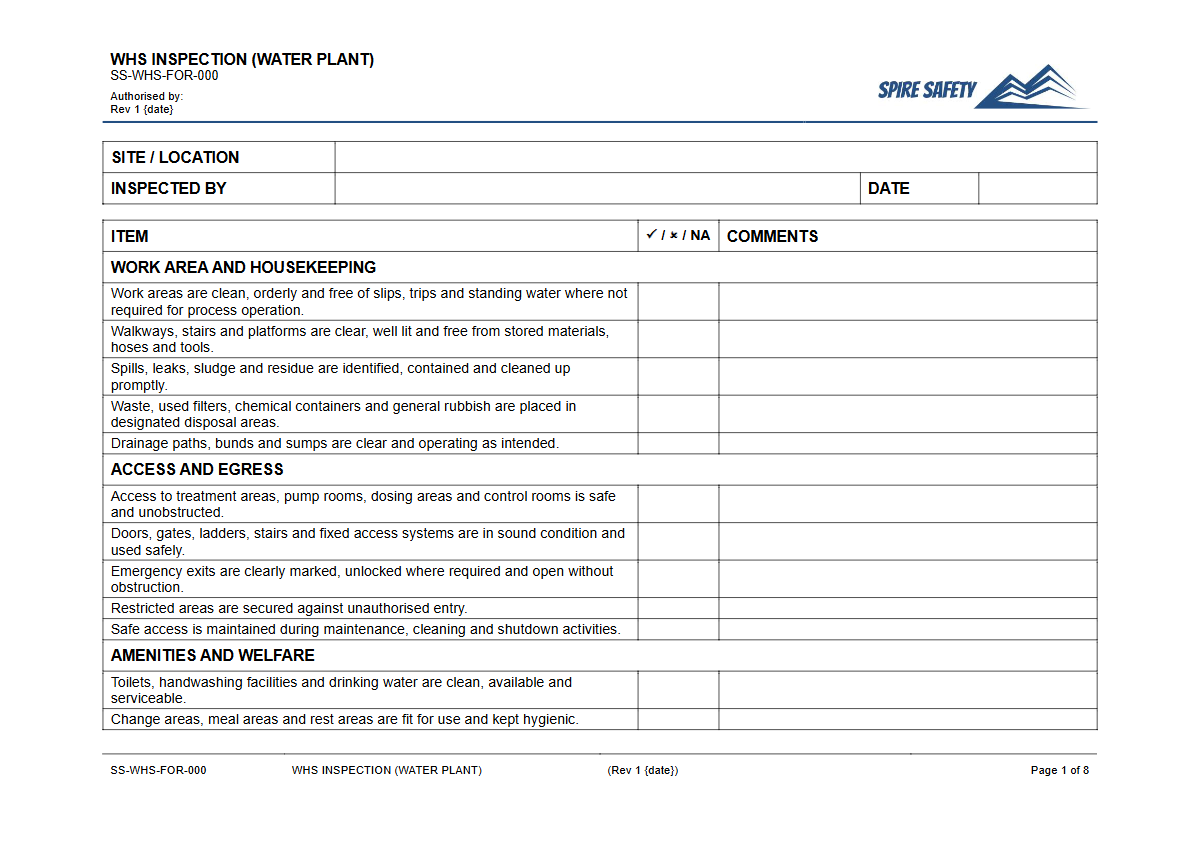
This template is designed to be a comprehensive guide for inspecting key areas of a water plant. It covers a range of common checkpoints, from general housekeeping and access to specific items like chemical storage, pump operations, and emergency equipment.
To use it, simply download the DOCX or PDF file and integrate it into your regular safety schedule. The person conducting the inspection walks through the designated area, checking each item and noting any conformances, non-conformances, or observations.
A dedicated section for corrective actions allows you to assign responsibility and track the closure of identified issues, ensuring that problems are not just noted but rectified. This creates a documented trail of hazard identification and control, which is a cornerstone of effective WHS management systems.
Customisation is Essential
Please note: this is a template, not a finished document. We have designed it to be a comprehensive starting point, but you must customise it to reflect the specific plant, equipment, chemicals, and procedures unique to your worksite.
Every water plant is different, so review and adapt the checklist items to ensure they are relevant and sufficient for your operational context.
When to use it
The frequency of inspections depends on the level of risk associated with the area or equipment being checked. High-traffic areas, critical machinery, or chemical dosing zones may require daily or weekly checks.
Less critical areas might be scheduled for monthly or quarterly inspections. This template can be used for:
- Routine scheduled safety tours by supervisors or WHS representatives.
- Pre-start checks before operating specific machinery or systems.
- Post-maintenance verification to ensure equipment is safe to return to service.
- Part of an incident investigation to identify contributing environmental factors.
Regular safety communication is also vital. For addressing specific hazards like chemical spills, which are a significant risk in water plants, consider holding regular sessions using a Spill Prevention and Response Toolbox Talk to reinforce safe procedures.
Who should use it
This inspection template is beneficial for several roles within a water plant facility. It is primarily designed for use by:
- Plant Operators: Who can use it for daily checks of their work areas and equipment.
- Maintenance Staff: To verify safety before and after maintenance tasks.
- Supervisors and Managers: To conduct formal workplace inspections and safety tours.
- WHS Officers and Committee Members: As a tool for monitoring compliance and identifying systemic safety issues.
It's crucial that anyone using this checklist is trained and competent to do so. They must understand the hazards they are looking for and know the procedure for reporting and escalating issues. For mobile plant that might be used on site, this includes ensuring operators are competent, which can be documented using a tool like a Verification of Competency for a water cart.
Key Elements of a Water Plant Inspection
A thorough inspection should cover all aspects of the operating environment. While our template provides a detailed list, key focus areas include:
- Chemical Safety: Correct storage, bunding, labelling, Safety Data Sheet (SDS) availability, and PPE.
- Plant and Equipment: Machine guarding, emergency stops, operational integrity of pumps, valves, and filters.
- Electrical Hazards: Condition of switchboards, cabling, use of lock-out tag-out (LOTO) procedures.
- Confined Spaces: Correct signage, permit systems in use, and availability of rescue equipment.
- Access and Egress: Clear, well-lit walkways, secure ladders and platforms, and good housekeeping.
- Emergency Preparedness: Accessibility and serviceability of fire extinguishers, eyewash stations, and first aid kits.
For high-risk activities, your inspection process should also verify that relevant control documents, such as a water proofing SWMS, are in place and being followed by workers. For a higher level of assurance, your organisation might consider periodic professional WHS compliance auditing to get an independent view of your systems. You can find more templates and guides like this in our complete free WHS resources library.
Common mistakes
Common mistakes to avoid
- Using a generic checklist without customising it for the site's specific machinery and chemicals.
- Failing to establish a clear process for tracking and closing out corrective actions.
- Inspectors 'pencil-whipping' the form without physically verifying each checklist item.
- Not providing adequate training to inspectors on hazard recognition and reporting procedures.
Legal references
Legal considerations
The following legal requirements may be relevant to this type of work.
- Work Health and Safety Act (Harmonised) — Provides the primary duties for protecting workers and other people from work health and safety risks.
- Work Health and Safety Regulations (Harmonised) — Sets out requirements supporting the management of workplace hazards and risks.
The following codes may be relevant to this type of work.
- Managing WHS Risks Code of Practice — Provides practical guidance on identifying hazards, assessing risks and applying effective controls.
- Work Health and Safety Consultation, Cooperation and Coordination Code of Practice — Provides practical guidance on consulting workers and coordinating with other duty holders.
- Managing the Work Environment and Facilities Code of Practice — Provides practical guidance on safe work environments, workplace facilities and related controls.
Did you know
Slips, Trips, and Falls
Due to the constant presence of water, wet floors are a major hazard in water plants. Slips, trips, and falls are one of the most common causes of injury in these environments, making good housekeeping and non-slip surfaces critical.
Invisible Danger
Water treatment can generate hazardous gases like chlorine or hydrogen sulfide, which can be toxic or flammable. Many of these gases are heavier than air and can accumulate in low-lying areas or confined spaces, posing a serious risk if not monitored.
FAQ
Frequently asked questions
01What is the main purpose of a WHS inspection checklist for a water plant?
02How often should inspections be conducted in a water treatment facility?
03Who is responsible for completing the water plant inspection template?
04Can this template be used for any type of water plant?
Share this resource
Free WHS Inspection (Water Plant) Template
Browse Categories
How To Use It
- 1Download and open in Word or PDF.
- 2Replace the placeholders with your business details.
- 3Get it reviewed by a WHS specialist before rollout.
Need it customised?
Our WHS consultants can adapt this template to your site, run a gap analysis, or audit what you already have in place.
Book a Free Consultation WHS consulting servicesor call 1300 156 382