
Free WHS Inspection (Works Depot) Template
Download our free WHS Inspection Template for works depots. This structured DOCX & PDF helps formalise safety checks for workshops, storage and vehicle areas.
Free WHS Inspection (Works Depot) Template
DOCX • 128 KB + PDF
Updated Oct 2026
No signup required
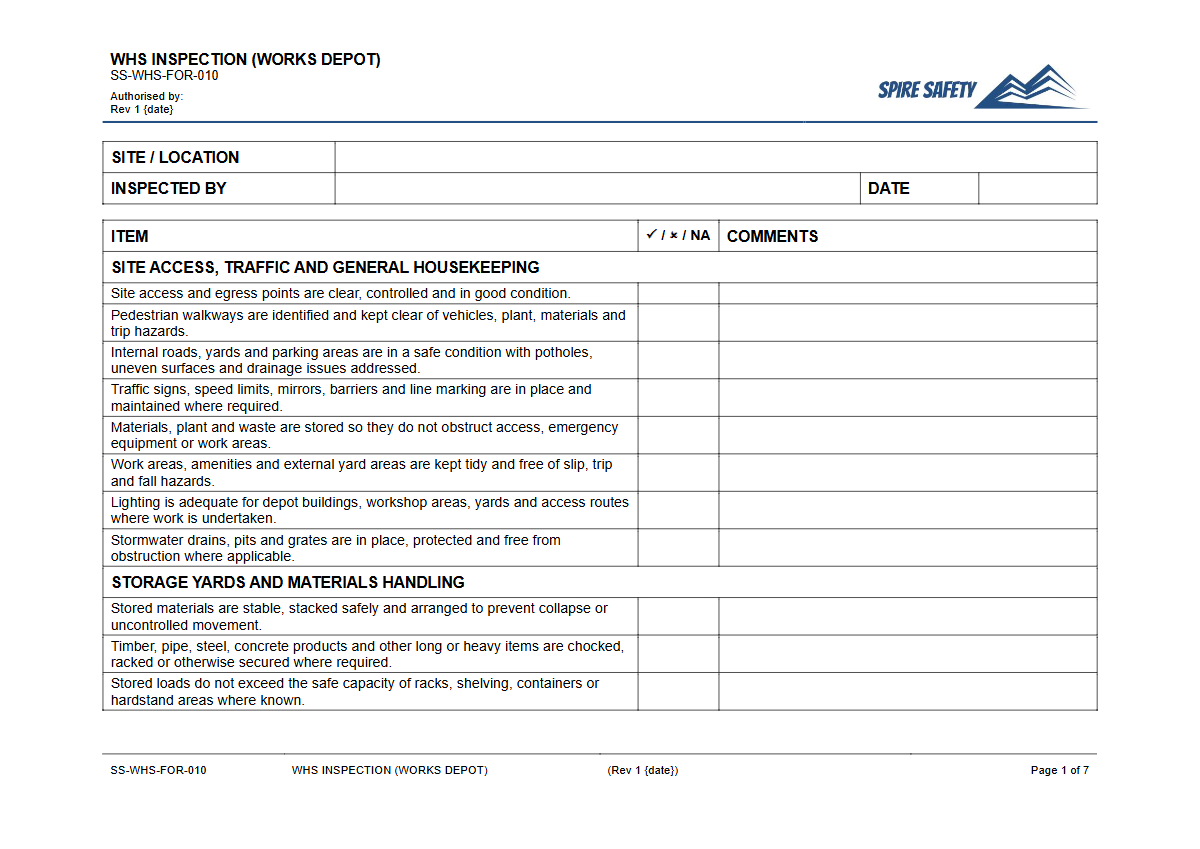
Purpose of the Free WHS Inspection (Works Depot) Template
This Free WHS Inspection (Works Depot) Template provides a structured starting point for systematically checking the safety of your works depot, council depot, or maintenance yard. Works depots are dynamic environments with a diverse range of hazards, from vehicle movements and heavy machinery to chemical storage and workshop activities.
Regular, formalised inspections are crucial for proactively identifying these hazards and implementing control measures before they cause injury or illness.
Using this template helps an organisation demonstrate its commitment to safety and meet its due diligence obligations. The goal is to identify unsafe conditions, equipment, or work practices and assign corrective actions to prevent incidents.
This proactive process is a cornerstone of an effective WHS management system, helping to foster a positive safety culture where hazards are reported and controlled as a matter of routine.
Video walkthrough
How to use the Free WHS Inspection (Works Depot) Template
This template is designed as a guide to be adapted to your specific operational needs. A generic checklist can never cover all the unique hazards present in a particular workplace. Follow these steps for effective implementation:
- Download and Customise: Download the template in your preferred format (DOCX or PDF). Thoroughly review the sections and add, remove, or modify checklist items to reflect the specific plant, equipment, chemicals, storage areas, and work processes at your depot.
- Consult Your Team: Involve workers and their Health and Safety Representatives (HSRs) in customising the template. They have firsthand knowledge of the tasks and associated risks.
- Train the Inspectors: Ensure anyone conducting the inspection is competent to do so. They must understand the items on the checklist and be able to identify non-conformances and potential hazards.
- Schedule and Conduct Inspections: Integrate the inspection into your regular safety schedule. During the inspection, walk through the designated areas, physically check each item, and record your findings clearly. Note any hazards or areas for improvement.
- Document and Action Findings: For every issue identified, record a clear corrective action, assign it to a specific person, and set a realistic completion date. This creates a documented trail and ensures accountability.
- Review and Improve: Regularly review completed inspection reports to identify recurring issues or negative trends. The data from these inspections can provide valuable input for more comprehensive WHS compliance auditing.
Important: You must customise this template for your workplace. We are not a law firm and this document is a template, not legal advice.
It is your responsibility to ensure the final document is fit for purpose and meets your operational and legislative requirements.
What a Good Inspection Covers
A thorough works depot inspection should be systematic and cover all relevant operational areas. While your customised checklist will be specific, it should address these key domains:
General Site and Housekeeping
This includes clear access and egress routes, good lighting, trip hazard management, waste disposal, and general site tidiness. A clean and organised site is a safe site.
Plant and Equipment
Check that machinery is in good condition, guards are in place, and maintenance records are up to date. This also includes checks for specific high-risk plant, such as those covered in our Free Pre-Start Checklist (Electric Hoist) Template, which should be inspected before each use.
Traffic Management
Assess the separation of vehicles and pedestrians, signage, speed limits, and the condition of roadways and parking areas. This includes site entry and exit points which might be managed by equipment like that in our boom gate pre-start checklist.
Chemical and Hazardous Substance Storage
Inspect chemical stores for correct segregation, labelling, ventilation, and availability of Safety Data Sheets (SDS). Ensure spill kits are stocked and accessible.
Emergency Preparedness
Verify that fire extinguishers are tested and in-date, emergency exits are clear, and first aid kits are fully stocked and easily accessible to all workers.
When to use it
Works depot inspections should be conducted on a regular schedule, with the frequency determined by a risk assessment. For example, high-traffic or high-risk areas like a vehicle workshop might require weekly inspections, while lower-risk storage areas could be inspected monthly or quarterly.
In addition to scheduled inspections, this template should be used:
- After an incident or near miss to identify contributing factors.
- When new plant, substances, or work processes are introduced.
- When there are significant changes to the layout of the depot.
- As part of a manager or supervisor's regular workplace safety walk-through.
Who should use it
This template is designed for use by a range of personnel responsible for workplace safety, including:
- Site Supervisors and Foremen
- WHS Managers and Advisors
- Health and Safety Representatives (HSRs)
- Safety Committee Members
- Operations and Depot Managers
It's best practice for inspections to be conducted by a team that includes both a manager/supervisor and a worker representative. This combines formal authority with practical, on-the-ground experience, covering everything from small tools to larger mobile plant like those covered in our lawn tractor pre-start checklist. Explore our full free WHS resources library for more tools to support your safety processes.
Common mistakes
Common mistakes to avoid
- Failing to customise the template to the specific depot, its equipment, and unique hazards.
- "Pencil-whipping" the checklist without physically verifying each item is safe and compliant.
- Not assigning corrective actions to specific individuals with clear, realistic deadlines for completion.
- Forgetting to review past inspection reports to identify recurring issues and systemic safety problems.
Legal references
Legal considerations
The following legal requirements may be relevant to this type of work.
- Work Health and Safety Act (Harmonised) — Provides the primary duties for protecting workers and other people from work health and safety risks.
- Work Health and Safety Regulations (Harmonised) — Sets out requirements supporting the management of workplace hazards and risks.
The following codes may be relevant to this type of work.
- Managing WHS Risks Code of Practice — Provides practical guidance on identifying hazards, assessing risks and applying effective controls.
- Work Health and Safety Consultation, Cooperation and Coordination Code of Practice — Provides practical guidance on consulting workers and coordinating with other duty holders.
- Managing the Work Environment and Facilities Code of Practice — Provides practical guidance on safe work environments, workplace facilities and related controls.
Did you know
Depot Design Drives Safety
The layout of a works depot, particularly the design of traffic management systems to separate vehicles and pedestrians, is one of the most critical factors in preventing serious incidents.
The Hierarchy of Control
When you find a hazard during an inspection, you must apply the hierarchy of control. The most effective controls eliminate the hazard entirely, while the least effective (but still necessary) controls are PPE and administrative actions.
FAQ
Frequently asked questions
01What's the difference between a WHS inspection and an audit?
02How often should I inspect our works depot?
03Who is responsible for fixing issues found during an inspection?
04Can I use this template for a construction site?
Share this resource
Free WHS Inspection (Works Depot) Template
Browse Categories
How To Use It
- 1Download and open in Word or PDF.
- 2Replace the placeholders with your business details.
- 3Get it reviewed by a WHS specialist before rollout.
Need it customised?
Our WHS consultants can adapt this template to your site, run a gap analysis, or audit what you already have in place.
Book a Free Consultation WHS consulting servicesor call 1300 156 382